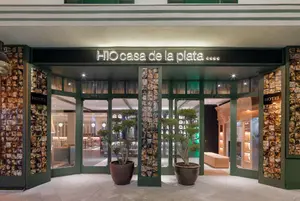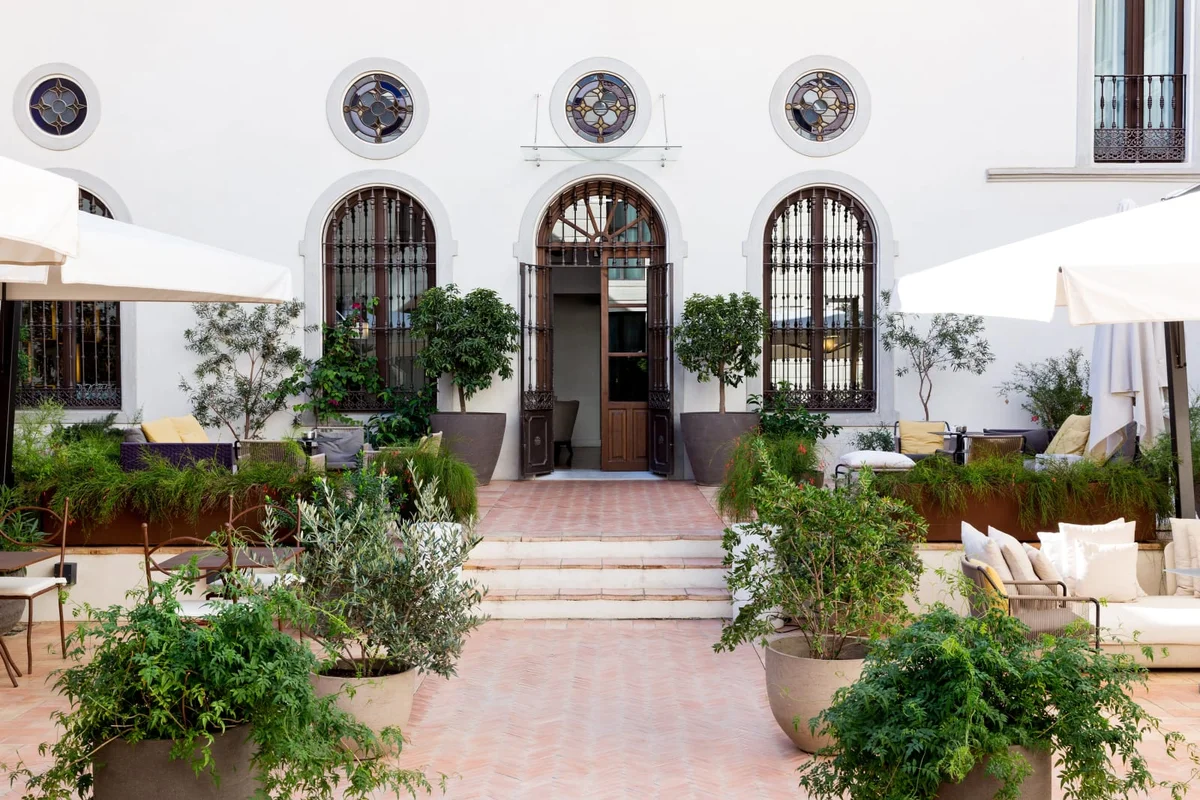
CoolRooms Palacio Villapanés 5 GL
When you book CoolRooms Palacio Villapanés 5 GL in Seville, Spain, through our COOLROOMS partnership, your stay includes daily breakfast for two. You also receive early check-in and late check-out when available. No premium credit card or membership needed: request a quote and our advisor books it at the same rate as booking direct.
Exclusive Booking Perks
These perks are included with your stay at the same rate as booking direct with the hotel.
- Complimentary daily breakfast for two, included throughout your stay
- Priority early check-in and late check-out, subject to availability
Guest feedback
9.4/10 from 761 guest reviews
By category
Guests liked
- Friendly staff
- Great location
- Unique concept
Points to consider
- Dark rooms
- High breakfast price
- Small pool
Location
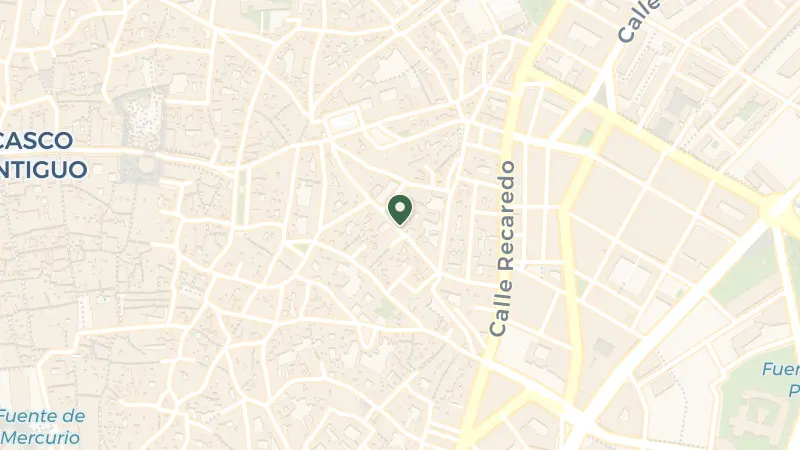
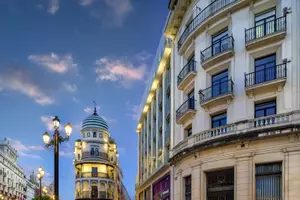
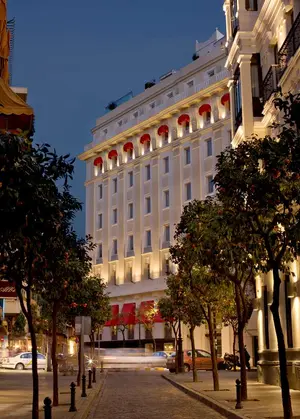
The Palacio Villapanés stands in the Santa Catalina quarter of Seville's Casco Antiguo, where narrow lanes twist between ochre-washed facades and the scent of orange blossom drifts through wrought-iron rejas. This is the old city, hemmed by the slow curve of the Guadalquivir and layered with centuries of Moorish, Christian, and Renaissance history. The air hums with the staccato of flamenco guitars from basement tablaos, the bell towers of parish churches punctuating a skyline of barrel-tile roofs.
Walk south half a kilometre and you reach the cathedral's Giralda tower, part of the UNESCO-inscribed complex that includes the Alcázar palace and the General Archive of the Indies, monuments to Seville's evolution from Roman Hispalis through the independent Taifa of Seville to its role as gateway to the New World. The Museo de Bellas Artes sits 1.5 kilometres north in a former convent, its galleries hung with Zurbarán and Murillo. Nearby, Casa de Pilatos, completed in 1483, blends Mudéjar azulejos with Italian Renaissance marbles.
Seville Airport lies nine kilometres to the northeast, a short taxi ride that threads through suburbs before depositing you in the heart of Andalusia's restless, sun-scorched capital.
Within half a kilometre, Abantal earns its Michelin star with creative cooking that channels emotion and technical precision into every plate. The restaurant takes its name from the old Andalusian word for apron, a nod to craft and heritage. Seven hundred metres southeast, Cañabota applies the same rigour to seafood, its gastro-bar setting beside the Capilla de San Andrés proving that simplicity, when executed with absolute conviction, achieves excellence. Book a table early; both draw serious attention.
The Mercado de la Encarnación, half a kilometre north beneath the Metropol Parasol's timber canopy, pulses with vendors hawking jamón ibérico and chilled manzanilla. The Roman ruins of Italica sprawl 7.7 kilometres northwest, where amphitheatre stones bake under the same sun that warmed Trajan and Hadrian. Palacio de las Dueñas and Casa de Pilatos offer cooler refuge, their tile-clad courtyards and jasmine-scented gardens distilling centuries of aristocratic Sevillian life. For a longer drive, Ochando in Tocina, 31 kilometres north, translates years of fine-dining apprenticeship into contemporary Andalusian cooking worth the detour.
July and August punish the city with highs routinely above 36°C, the kind of heat that empties streets by mid-afternoon and sends locals into shuttered interiors until evening. September softens the edge, temperatures dropping into the low thirties while terrace life resumes after dark.
Spring, from March through May, delivers Seville at its most generous: warm days in the low to mid twenties, jasmine blooming in every patio, and Semana Santa processions filling the Casco Antiguo with incense and drumbeats. April is the prime window, rain tapering off just as the city prepares for Feria de Abril.
Winter remains mild, daytime highs in the mid to upper teens, though nights cool enough for a jacket. The occasional downpour washes the cobblestones clean, and the low winter light turns the cathedral's stonework golden by late afternoon.
Frequently Asked Questions

Quotes are personally reviewed by Natasha Hardy, founder of The Uncommon Traveller
5.0 rating · 8 Google reviewsThere is no fee or markup. The hotel pays our commission.
Request a Quote 3 Bib Gourmand