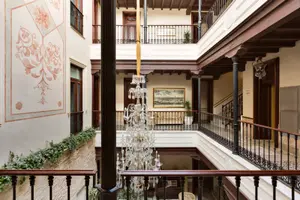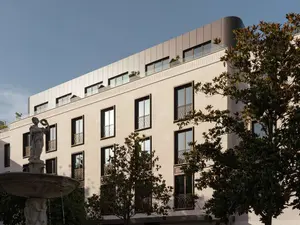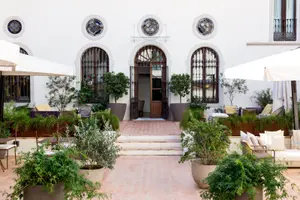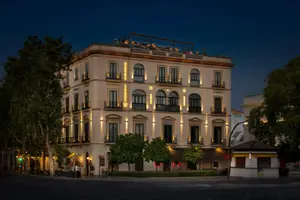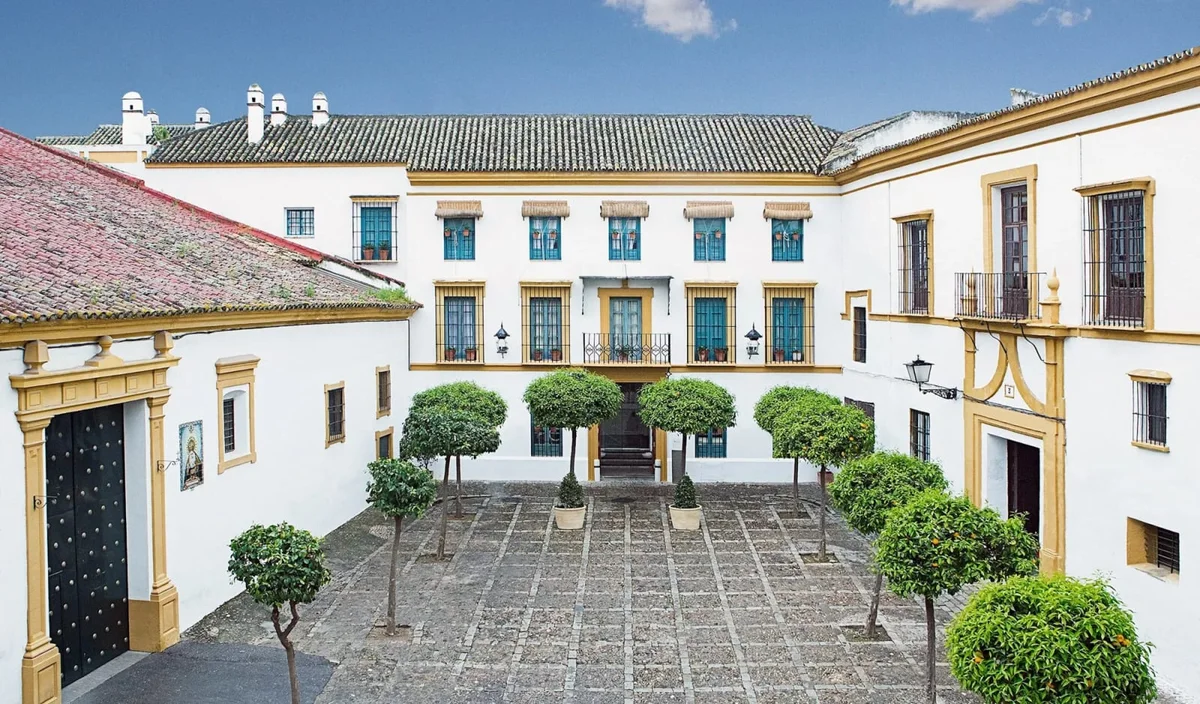
Hospes Las Casas del Rey de Baeza
When you book Hospes Las Casas del Rey de Baeza in Seville, Spain, through our Design Hotels Collective partnership, your stay includes daily breakfast for two. No premium credit card or membership needed: request a quote and our advisor books it at the same rate as booking direct.
Exclusive Booking Perks
These perks are included with your stay at the same rate as booking direct with the hotel.
- Daily breakfast for two
- Room upgrade/early check-in/late check-out (subject to availability)
- For Rooms: Fruit basket, chocolates and cava bottle
- For Suites: Champagne or Fino/Manzanilla bottle with Serrano ham and cheese
Guest feedback
9.1/10 from 586 guest reviews
Read what guests commentedBy category
Guests liked
- Excellent service
- Great location
Points to consider
- Concerns with cleanliness
- Dining experience issues
Location
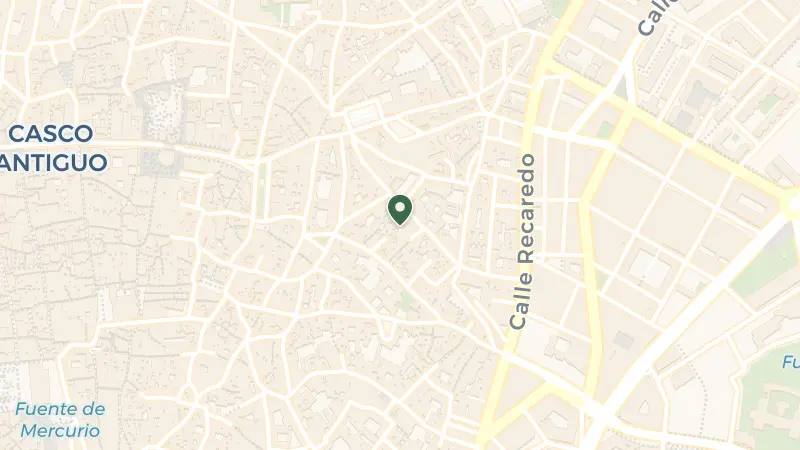
Hospes Las Casas del Rey de Baeza stands in the Santa Catalina quarter of Seville's Casco Antiguo, a district where cobbled lanes and wrought-iron balconies preserve the layered history of Moorish Al-Andalus and the Christian Reconquest. The Ancient District unfolds along the eastern bank of the Guadalquivir, a neighbourhood where the scent of orange blossom drifts from hidden courtyards and the call to prayer once echoed from minarets now converted to bell towers. The Cathedral, Alcázar, and Archivo de Indias form a monumental complex a kilometre south, their walls imbued with Moorish craftsmanship from the Reconquest of 1248 onward.
Seville's character emerges in the rhythm of its streets: the clatter of horse-drawn carriages on plaza stones, the flamenco guitars spilling from tascas at dusk, the afternoon heat that empties the streets until the paseo hour arrives. The Casco Antiguo bridges connect eastward to Macarena and Nervión, westward across the river to Triana's ceramic workshops and Los Remedios. This is Andalusia's capital, where bullfighting posters still line the Plaza de Toros de la Maestranza and the Semana Santa processions transform every street into theatre.
Seville Airport lies nine kilometres north, a twenty-minute drive through eucalyptus-lined roads. Jerez Airport, seventy-two kilometres southwest, serves as an alternative gateway to western Andalusia.
The neighbourhood shelters two Michelin-starred tables within walking distance. Abantal, half a kilometre away, earns its star with creative plates that channel the chefs' intrinsic emotion; the restaurant's name derives from the linguistic ancestor of delantal, the Spanish word for apron. Cañabota, seven hundred metres from the property beside the Capilla de San Andrés (known locally as the Hermandad de los Panaderos), proves that simplicity can achieve excellence through its gastro-bar approach to Andalusian seafood. Book a table at either for a lesson in restraint and regional precision. For a longer journey, Ochando in Tocina, thirty-one kilometres away, showcases contemporary technique honed at Atrio and Casa Marcial.
The Cathedral and Alcázar complex, a kilometre south and inscribed as a World Heritage Site in 1987, preserves the architectural dialogue between Moorish artisans and Christian monarchs. Wander the Mercado de la Encarnación, half a kilometre away, where vendors stack jamón ibérico and Manchego beneath the modernist Metropol Parasol canopy. The Roman ruins of Italica, seven and a half kilometres north, display mosaics and amphitheatre stones from Hadrian's birthplace. Doñana National Park, fifty-nine kilometres southwest, protects lagoons and marshes along the Guadalquivir estuary, a refuge for migratory birds crossing between Europe and Africa.
Spring arrives with temperatures climbing from eighteen degrees in March to twenty-five in May, the air softened by occasional rain that greens the plaza gardens and fills the patios with jasmine. April through June offer the most comfortable walking weather, though Semana Santa and Feria de Abril draw crowds that pack the narrow streets.
Summer transforms Seville into a furnace. July and August reach thirty-six degrees, the kind of heat that empties the city between two and five in the afternoon when locals retreat behind shuttered windows. Rain disappears almost entirely; the river shrinks and the light turns white and unforgiving.
Autumn brings relief by October, temperatures settling around twenty-five degrees with occasional showers. Winter remains mild, hovering in the mid-teens, though December mornings can feel surprisingly cool under grey skies. The low season reveals a quieter city where tapas bars serve regulars and the Cathedral's queues vanish.
Frequently Asked Questions

Quotes are personally reviewed by Natasha Hardy, founder of The Uncommon Traveller
5.0 rating · 8 Google reviewsThere is no fee or markup. The hotel pays our commission.
Request a Quote 3 Bib Gourmand