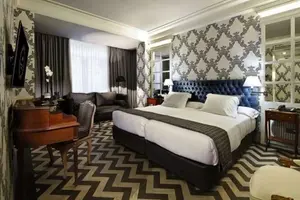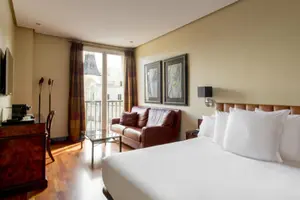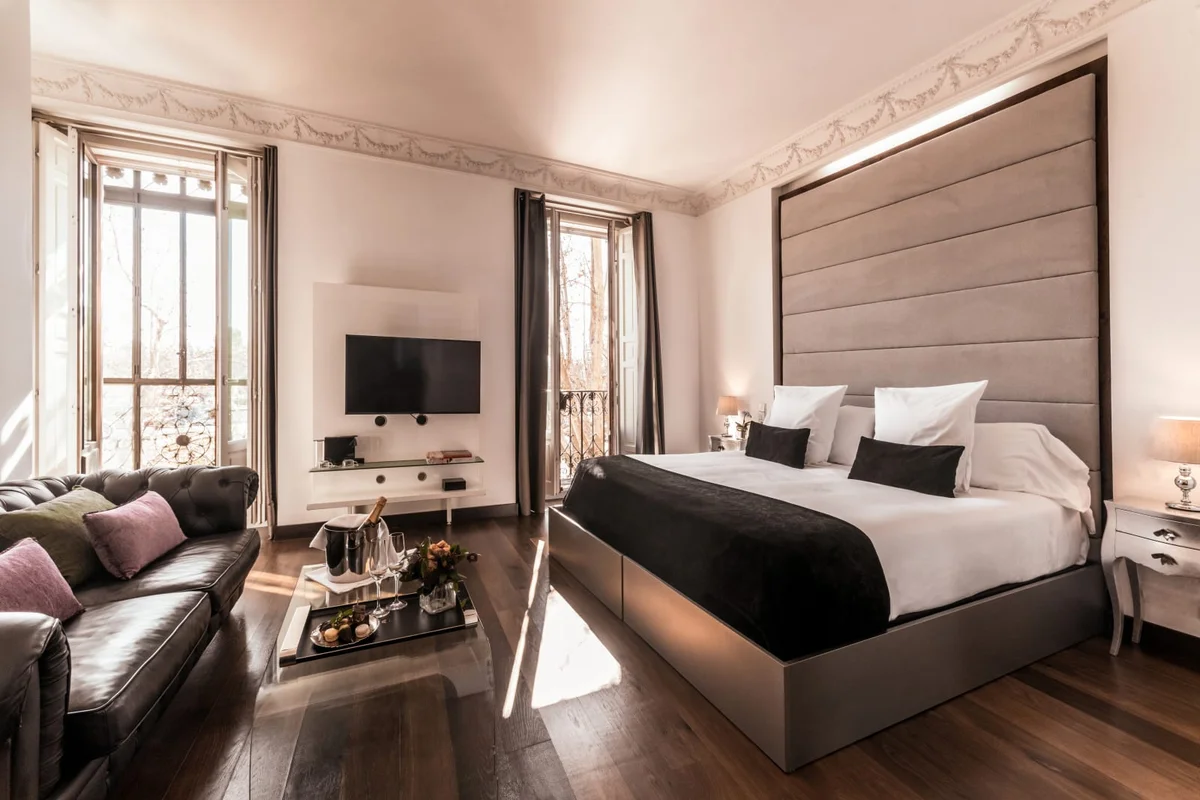
Hospes Puerta de Alcalá
When you book Hospes Puerta de Alcalá in Madrid, Spain, through our Design Hotels Collective partnership, your stay includes daily breakfast for two. No premium credit card or membership needed: request a quote and our advisor books it at the same rate as booking direct.
Exclusive Booking Perks
These perks are included with your stay at the same rate as booking direct with the hotel.
- VIP status
- Daily breakfast for two
- Room upgrade/early check-in/late check-out (subject to availability)
- For Rooms: Fruit basket, chocolates and cava bottle
- For Suites: Champagne or Fino/Manzanilla bottle with Serrano ham and cheese
Guest feedback
8.9/10 from 509 guest reviews
By category
Guests liked
- Excellent location
- Helpful staff
Points to consider
- Loud renovations
- High prices for some amenities
Location
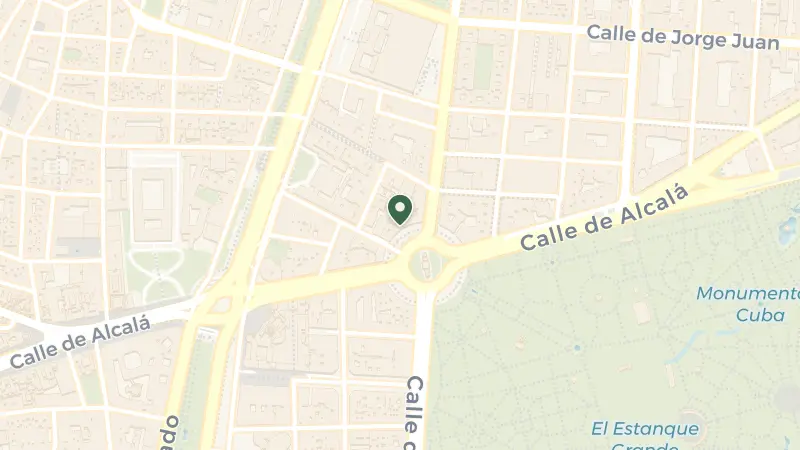
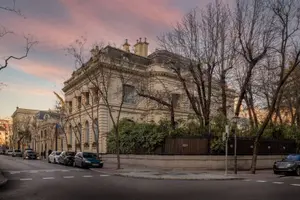
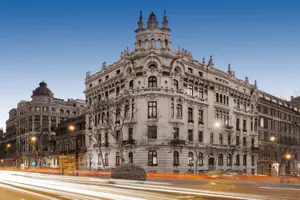
The Salamanca district unfolds in elegant grids: wide pavements lined with plane trees, Belle Époque façades, and discreet entrance awnings marking some of Europe's most serious shopping. This is Madrid's most polished quarter, where the city's financial elite and old families have maintained addresses since the late 19th century. The neighbourhood takes its name from the Marquis of Salamanca, whose vision of a planned residential district outside the historic core established the template for bourgeois Madrid. Calle de Serrano and Calle de Ortega y Gasset form the axis of luxury retail; side streets conceal galleries, antique dealers, and tailors who have dressed generations of the same clients.
Recoletos blurs into Salamanca's western edge, where the tree-lined paseos open onto views of the Buen Retiro gardens. The Paseo del Prado, a UNESCO-inscribed cultural landscape just one kilometre south, anchors the city's museum mile: the Prado, Thyssen-Bornemisza, and Reina Sofía form a triangle of European masterworks. Madrid's primitive walled core, a 9th-century Moorish fortress on the Manzanares, lies further west; this is a city that became Spain's capital only in 1561, yet wears its centrality with confidence. The Puerta de Alcalá, a neoclassical triumphal arch commissioned by Carlos III, stands a few streets away, marking the old eastern entrance to the city.
Adolfo Suárez Madrid–Barajas Airport sits 13 kilometres northeast, connected by metro and taxi in under thirty minutes.
Ramón Freixa Atelier, 600 metres north in the heart of Salamanca, holds two Michelin stars for its haute cuisine. The Catalan chef's tasting menus reflect both his heritage and his adopted city's influence; reserve well ahead. Deessa, also two-starred and 600 metres away at the Mandarin Oriental Ritz, sets the gourmet standard for Madrid's luxury hotel dining. For a more radical experience, DiverXO, Dabiz Muñoz's three-starred temple of creative chaos four kilometres northwest, serves dishes like "Galician lobster waking up on the beaches of Goa" in a setting that breaks every convention of fine dining. Book a table at any of these months in advance; Madrid's serious eaters plan accordingly.
The Paseo del Prado's museum mile lies one kilometre south. The Prado alone holds Velázquez's Las Meninas, Goya's Black Paintings, and Bosch's Garden of Earthly Delights; the Thyssen fills gaps in Spanish collections with Northern Renaissance and Impressionist works. Closer to hand, Mercado de San Antón, 700 metres west, stacks three floors of market stalls, tapas counters, and a rooftop terrace into a converted 1940s structure. Start with jamón ibérico de bellota and vermouth; the neighbourhood's older residents still shop the ground-floor produce stands each morning.
July and August push past 32 degrees, the city emptying as Madrileños flee for the coast or mountains. The light turns white and harsh; café terraces fold their awnings tight. These are months for museum interiors and late dinners that start near midnight, when the streets finally cool and the plazas fill again.
Spring and autumn bring the best of Madrid. April through May sees highs near 17 to 20 degrees, the Retiro gardens in full bloom, terrace tables filling by midday. September through October reverses the rhythm: warm days, cooler evenings, the city returning from summer exile with renewed energy. The quality of light softens, golden on the Hapsburg stonework.
Winter is short and dry, temperatures dipping near freezing overnight but climbing to 10 degrees by afternoon. December through February see occasional rainfall; the city never quite empties, though the pace slows. This is when locals reclaim their own restaurants and the Prado's halls grow quieter.
Frequently Asked Questions

Quotes are personally reviewed by Natasha Hardy, founder of The Uncommon Traveller
5.0 rating · 8 Google reviewsThere is no fee or markup. The hotel pays our commission.
Request a Quote 19 Bib Gourmand