Relais & Châteaux Heritage Madrid
When you book Relais & Châteaux Heritage Madrid in Spain through our Relais & Châteaux partnership, complimentary perks are included with your stay. No premium credit card or membership needed: request a quote and our advisor books it at the same rate as booking direct.
Exclusive Booking Perks
These perks are included with your stay at the same rate as booking direct with the hotel.
- Complimentary Continental or Buffet Breakfast per night and per person
- VIP Welcome per room and per stay
- Reservations must be made at least 72 hours prior to arrival and are subject to availability. All offers are subject to the booking and cancellation conditions of each individual property.
Guest feedback
9.6/10 from 134 guest reviews
By category
Guests liked
- High-end finishes
- Professional and friendly staff
- Great location
Points to consider
- Room size is small
- Mediocre food quality
Location
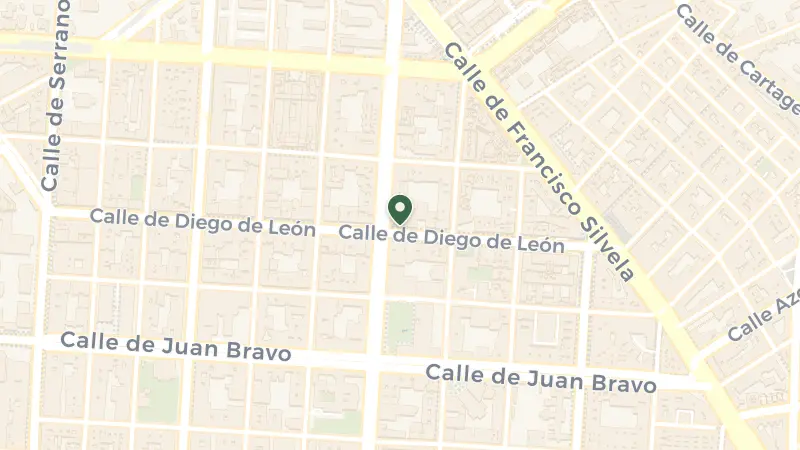
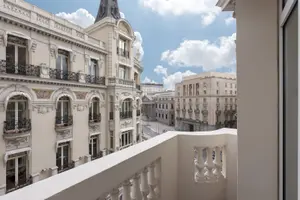
Relais & Châteaux properties prize heritage, culinary excellence, and a singular sense of place, and this ethos takes root naturally in Madrid's refined Salamanca district. The neighbourhood unfolds in geometric elegance: wide boulevards lined with independent galleries, specialist bookshops, and quietly confident cafés where conversation flows over cortado and tostada. Lista, within Salamanca's bounds, sits slightly east of the district's famous Golden Mile shopping corridor, offering a residential calm just minutes from the Paseo del Prado. This UNESCO-listed avenue, a prototype of the Hispanic alameda tradition, runs two kilometres west and anchors Madrid's most significant museums and gardens. The Buen Retiro park spreads its formal parterres and rowboat lake nearby, while the city's Baroque and neoclassical façades rise against the Castilian plateau's sharp blue sky.
Madrid's origins as a 9th-century Moorish fortress on the Manzanares evolved into a royal capital in 1561, when Philip II relocated the Hispanic Monarchy's court here. That decision transformed a modest Castilian town into the political and cultural heart of Spain, a role it has never relinquished. The streets still hum with the centralising energy of centuries past, though today's Madrid pulses with contemporary art, global finance, and a dining scene that rivals any European capital.
Adolfo Suárez Madrid–Barajas Airport lies eleven kilometres northeast, with metro and taxi links delivering arrivals to Salamanca in under thirty minutes.
The hotel sits within easy reach of Coque, the Sandoval brothers' two-Michelin-starred showcase just over a kilometre away, where Mario commands the kitchen, Diego orchestrates the dining room, and Rafael selects wines with sommelier precision. Smoked Room, also two-starred and similarly close, plays ingeniously with smoky flavours in a clandestine-feeling space that never overwhelms the palate. Book a table at DiverXO, Dabiz Muñoz's three-starred temple of creative irreverence, nearly three kilometres north. Dishes like "Galician lobster waking up on the beaches of Goa" break every mould of traditional Spanish fine dining. The neighbourhood's mercados offer a different rhythm: Mercado de la Guindalera, seven hundred metres distant, and Mercado de Torrijos, one kilometre away, spread morning produce, jamón ibérico, and conservas across marble countertops where vendors banter in rapid castellano.
Two kilometres west, the Paseo del Prado's tree-lined alameda stretches past the Prado Museum, the Thyssen-Bornemisza, and the Reina Sofía, forming a cultural axis inscribed as a UNESCO landscape in 2021. The Buen Retiro's Palacio de Cristal catches afternoon light like a greenhouse jewel, while the park's avenues invite unhurried strolls beneath plane trees. Alcalá de Henares, the world's first planned university city, lies twenty-seven kilometres east, its 16th-century streets conceived as a Civitas Dei by Cardinal Jiménez de Cisneros.
Summer in Madrid means relentless sun and temperatures pushing past thirty-two degrees in July and August, when the city empties for the coast and those who remain retreat to air-conditioned museums or shaded terrazas. The light turns white-gold, and the Manzanares shrinks to a trickle beneath stone bridges.
Spring and autumn offer the most generous conditions: April and May bring highs near twenty degrees, while September cools to the mid-twenties. October's crisp mornings and golden afternoons make walking the Retiro or the Prado particularly rewarding, though rain becomes more frequent.
Winter sees temperatures drop to freezing overnight, with January days barely reaching ten degrees. The city takes on a quieter character, café windows fog with condensation, and the low sun slants dramatically across the Hapsburg facades. February and March remain cool but hint at the coming warmth, with occasional sharp, bright days that feel like early gifts.
Frequently Asked Questions

Quotes are personally reviewed by Natasha Hardy, founder of The Uncommon Traveller
5.0 rating · 8 Google reviewsThere is no fee or markup. The hotel pays our commission.
Request a Quote 18 Bib Gourmand