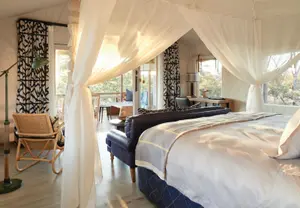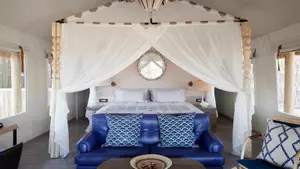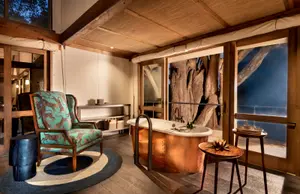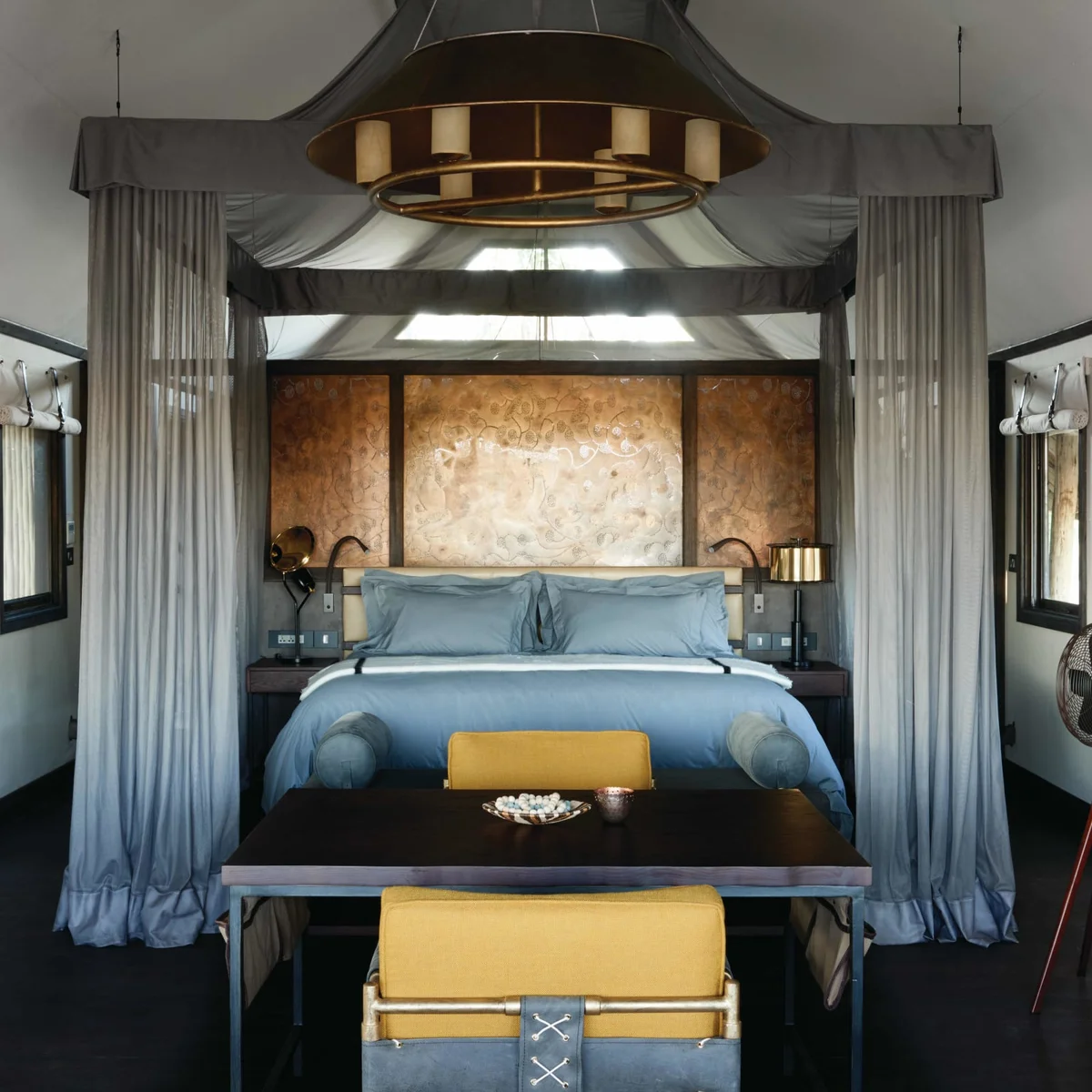
Eagle Island Lodge, A Belmond Safari, Botswana
When you book Eagle Island Lodge, A Belmond Safari, Botswana, through our Virtuoso partnership, your stay includes daily breakfast for up to two guests. You also receive early check-in and late check-out when available. No premium credit card or membership needed: request a quote and our advisor books it at the same rate as booking direct.
Exclusive Booking Perks
These perks are included with your stay at the same rate as booking direct with the hotel.
- Upgrade not applicable for this property
- Daily breakfast for up to two guests per bedroom, served in the restaurant (already included in property rates)
- Private dining experience for up to two guests once during stay, served on the balcony of your room or at a private location within the lodge (must have a minimum value of $100USD equivalent)
- Stays of 6+ nights will also receive a Wellness credit for 2 guests, once during their stay, applicable towards a 60-minute treatment
- Early Check-In / Late Check-Out, subject to availability
Location
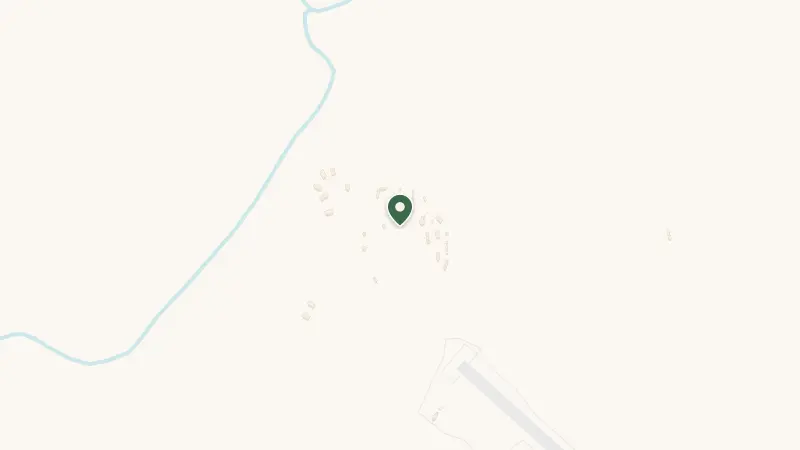
Belmond brings its signature sense of timeless adventure to one of Africa's most extraordinary wildernesses, where cultural heritage and culinary craft meet the raw drama of the Okavango Delta. This is luxury measured not in marble and gilding but in the quality of silence, the depth of star fields, and the proximity of wild things moving through water and grass.
The lodge sits within a private concession on a remote island in the delta's heart, accessible only by light aircraft from Maun International Airport, 62 kilometres southeast. Around you: a labyrinth of waterways, lagoons fringed with papyrus, and floodplains that shift with the seasons. The Okavango, one of the world's few interior deltas that never reaches the sea, spreads across northwestern Botswana in a vast fan of channels and islands, its waters originating a thousand kilometres away in Angola's highlands. Inscribed as a UNESCO World Heritage Site in 2014, the delta pulses with life: elephant herds crossing shallow channels, lechwe bounding through marsh, the sudden rustle of a sitatunga disappearing into reeds.
This is not a destination of monuments or museums. Botswana, independent since 1966 and one of the continent's most stable democracies, has built its identity on conservation and low-density tourism. The result is wilderness that feels uncompromised, where the rhythm of the day follows water levels and animal movements rather than human schedules.
Wildlife encounters define every hour here. Game drives through the NG/27B Xaxaba Concession reveal lion prides in the morning cool, leopards draped in sausage trees at dusk. Traditional mokoro excursions, guided in dugout canoes along narrow channels, bring you face to face with painted reed frogs, jewel-bright malachite kingfishers, the liquid eyes of hippos. Fishing for tigerfish and bream offers a different tempo, the water bronze in late afternoon light. Walks on the islands with armed guides put you at ground level with tracks, scat, the architecture of termite mounds. Book a sunrise mokoro trip, the water mirror-still and the air sharp with the scent of wild sage.
The private dining experience, served on your balcony or at a secluded spot within the concession, showcases regional ingredients: mopane worms if you're curious, Kalahari lamb, marula-infused desserts. Moremi Game Reserve lies 33 kilometres east, its channels and Chief's Island rewarding deeper exploration. The wider delta remains the draw: nearly five million acres of wetland where the flood arrives in winter, months after distant rains, turning dust to mirror.
Winter, from May through August, brings the dry season: cool mornings that start near 10°C, warm afternoons climbing to the mid-twenties, and skies scrubbed clean of cloud. The floodwaters peak in June and July even as the land around dries out, a surreal inversion that concentrates game along permanent channels. This is the classic safari season, visibility at its best, mosquitoes minimal.
Summer, November through March, is hot and wet. Temperatures press above 30°C, storms build in the afternoons, and the bush greens overnight. The rains transform the delta into a vast nursery: impala fawns, clouds of carmine bee-eaters, migratory birds by the thousands. The humidity is significant, but so is the drama of thunderheads towering over the plain.
April and September offer transitions: moderate temperatures, shifting water levels, and fewer travelers. The light in September turns golden and hazy, the air warming toward the storms to come.
Frequently Asked Questions

Quotes are personally reviewed by Natasha Hardy, founder of The Uncommon Traveller
5.0 rating · 8 Google reviewsThere is no fee or markup. The hotel pays our commission.
Request a Quote