Fairmont Rio de Janeiro Copacabana
When you book Fairmont Rio de Janeiro Copacabana in Brazil through our Accor Hera partnership, your stay includes daily breakfast for two and a $100 USD hotel credit. You also receive a room upgrade when available. No premium credit card or membership needed: request a quote and our advisor books it at the same rate as booking direct. Plus, for a limited time, a complimentary night is included with your stay.
Special Offer: 4th night free
4th night free
Exclusive Booking Perks
These perks are included with your stay at the same rate as booking direct with the hotel.
- Daily complimentary breakfast for 2, per room
- VIP Welcome
- $100 USD credit to be spent on property (conditions defined at check-in)
- Early check-in & late check-out (upon availability)
- Upgrade at time of check-in (upon availability)
Guest feedback
9.4/10 from 1,981 guest reviews
Read what guests commentedBy category
Guests liked
- Excellent service
- Great location
- Beautiful views
Points to consider
- Concerns over cleanliness
- Issues with concierge service
Location
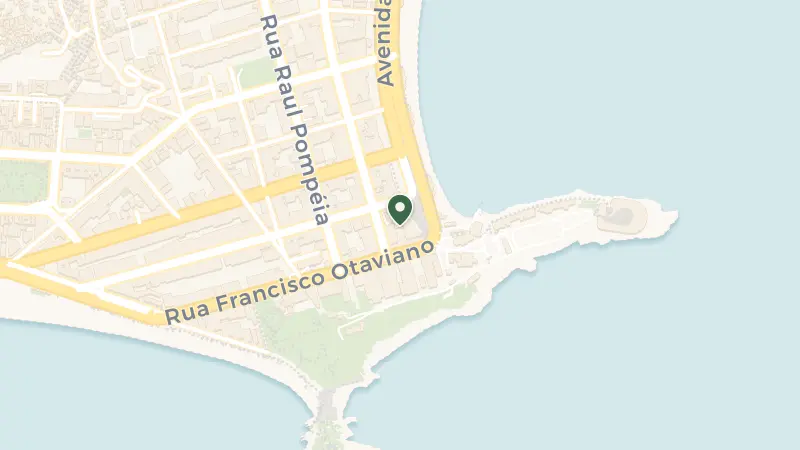
Fairmont brings its legacy of landmark hospitality to Copacabana, a neighbourhood where Rio's theatrical spirit unfolds along a crescent of white sand and mosaic pavement. The property holds ground at the centre of one of the world's most celebrated beaches, a four-kilometre stretch where cariocas gather for sunrise runs, sunset volleyball, and impromptu samba circles that spill from beachside kiosks into the night. This is the Rio of collective imagination: Atlantic surf breaking against granite headlands, fruit vendors calling out açaí and água de coco, the constant hum of life lived outdoors.
Copacabana's famed calçadão, designed by Roberto Burle Marx in undulating black-and-white Portuguese stone, traces the shoreline just beyond the hotel entrance. The neighbourhood pulses with an egalitarian energy, beach culture erasing the usual markers of privilege as surfers, families, and futsal players claim the sand democratically. Praia do Forte lies two hundred metres north, a quieter patch backed by rocky outcrops, while Praia do Arpoador half a kilometre south draws crowds for its panoramic sunset views over Ipanema.
Rio's oldest airport, Santos Dumont, sits nine kilometres north along Guanabara Bay, offering domestic connections and dramatic landings beside the waterfront. International arrivals use Galeão, twenty-one kilometres northeast, a forty-minute drive that skirts the bay before descending into the cidade maravilhosa.
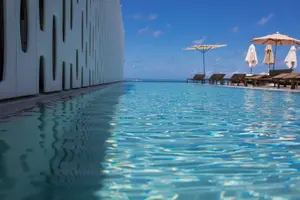
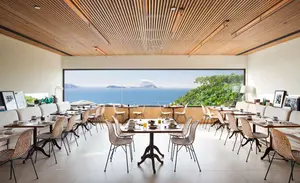
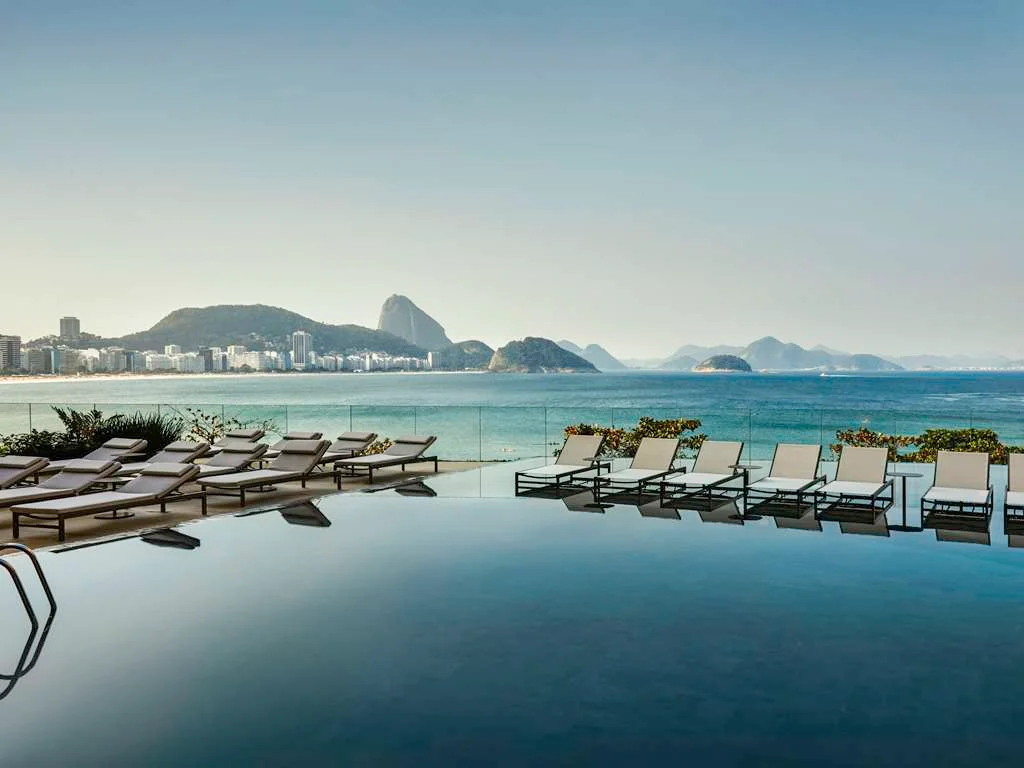
Marine Restô commands the sixth floor with unobstructed views across Copacabana's arc, the terrace and pool offering a lofty vantage over the scene below. The kitchen delivers modern Brazilian cuisine that shifts with the seasons, pulling from coastal and inland traditions without settling into convention. For Michelin-starred ambition, venture to Lasai three and a half kilometres north in Botafogo, where chef Rafa Costa e Silva orchestrates a ten-seat tasting menu built around daily market finds and garden harvests, the kitchen operating as open theatre. Oro, also in Botafogo at a similar distance, holds two stars for chef Felipe Bronze's creative compositions, the dining room charged with the energy of sommelier Cecilia Aldaz's pairings.
Book a table at the Feira livre that unfolds nine hundred metres inland each Tuesday, or wait for Sunday's Feira Hippie in Ipanema, where artisan stalls and street food vendors cluster beneath canopy shade. Praia do Arpoador's rocky point rewards an early wake-up with the city's most celebrated sunrise, locals applauding as the sun clears the Atlantic horizon. The Valongo Wharf Archaeological Site, ten kilometres north in the port district, preserves the stone quay where an estimated nine hundred thousand enslaved Africans first stepped onto Brazilian soil, a sobering counterpoint to the beachfront's levity.
Summer heat from December through March brings temperatures into the low thirties, the air thick with humidity and afternoon thunderstorms that drench the streets before evaporating into steam. The beaches swell with holiday crowds, New Year's Eve transforming Copacabana into a sea of white-clad revellers launching offerings into the Atlantic for Iemanjá, goddess of the sea.
Autumn eases into milder days from April onward, rainfall tapering as May and June settle into the city's winter. Temperatures hover in the mid-twenties, mornings crisp enough for long walks along the calçadão, evenings requiring a light layer after sunset. This is Rio's most comfortable season, the light softer, the beach less crowded, the city revealing a quieter rhythm.
Spring warms gradually from September, October's heat building toward summer's return. November rains arrive in sudden downpours, greening Tijuca's forested peaks and filling the waterfalls that cascade through the urban jungle just beyond the South Zone's towers.
Frequently Asked Questions

Quotes are personally reviewed by Natasha Hardy, founder of The Uncommon Traveller
5.0 rating · 8 Google reviewsThere is no fee or markup. The hotel pays our commission.
Request a Quote 7 Bib Gourmand