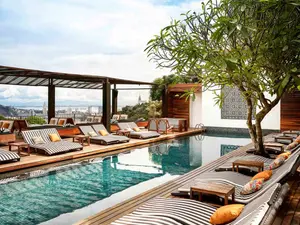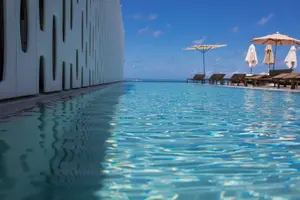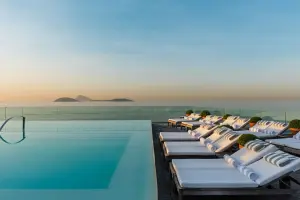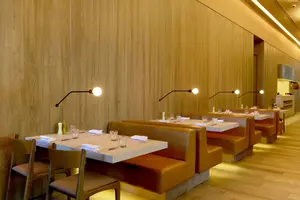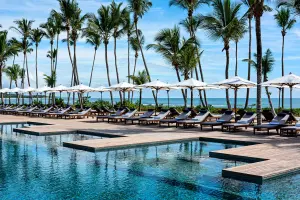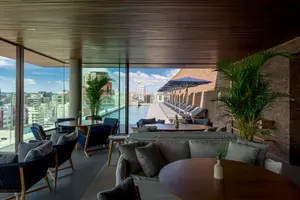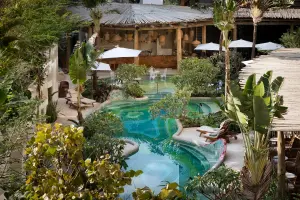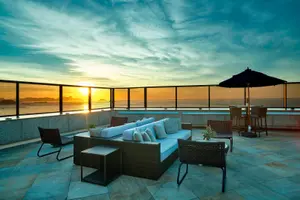
Grand Hyatt Rio De Janeiro
When you book Grand Hyatt Rio De Janeiro in Brazil through our Hyatt Privé partnership, your stay includes daily full breakfast for up to two guests and a property credit. You also receive a priority room upgrade when available. You continue earning World of Hyatt points and elite night credits. No premium credit card or membership needed: request a quote and our advisor books it at the same rate as booking direct.
Exclusive Booking Perks
These perks are included with your stay at the same rate as booking direct with the hotel.
- Welcome letter from hotel leadership on behalf of the travel advisor and their agency.
- Welcome amenity provided to guests upon arrival.
- Daily complimentary full breakfast at a hotel restaurant for up to two guests.
- Property credit (value varies by property).
- Priority for room upgrade (response within 24 hours of booking, subject to forecasted occupancy).
- Early check-in/late check-out/connecting rooms (response within 24 hours of request, subject to forecasted occupancy).
Guest feedback
9.1/10 from 3,195 guest reviews
Read what guests commentedBy category
Guests liked
- Comfortable rooms
- Attentive staff
Points to consider
- High prices for certain services
- Pool service could improve
Location
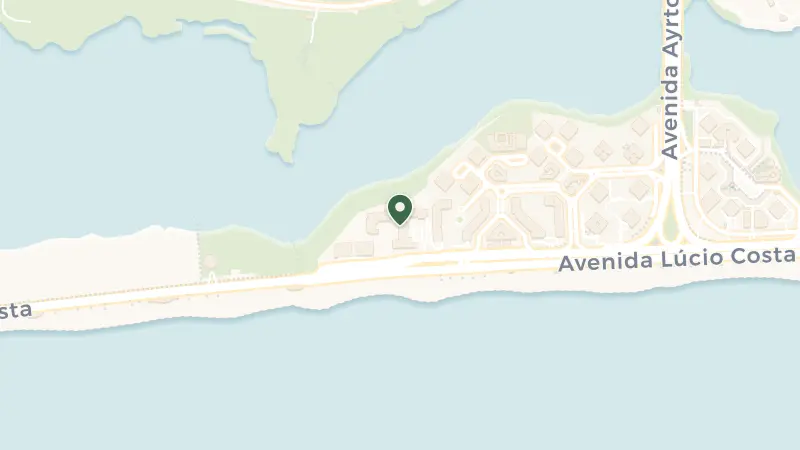
Grand Hyatt properties deliver large-scale luxury with bold contemporary design, layering multiple dining venues, extensive spa facilities, and the kind of amenities that suit both extended business stays and unhurried leisure exploration. Barra da Tijuca stretches along the Atlantic coast in Rio's western reaches, a modernist neighbourhood built only three decades ago where wide boulevards replace the tangled cobblestones of older quarters. Unlike the compressed verticality of Copacabana or the bohemian clutter of Santa Teresa, Barra unfolds horizontally: shopping centres anchor residential towers, lakes and rivers thread through nature reserves, and the beach runs for eighteen uninterrupted kilometres.
Rio itself carries the weight of colonial history. Founded in 1565, the city served as the seat of the Portuguese Royal Court from 1808, the only instance of a European monarchy governing from a colonial capital. It remained Brazil's capital through empire and republic until 1960, leaving behind a layered cultural identity visible in the Carioca Landscapes UNESCO site eleven kilometres east, where Tijuca National Park's forested peaks rise above urban sprawl.
Roberto Marinho Airport sits three kilometres away. Santos Dumont Airport, twenty-four kilometres distant, handles domestic flights. Galeão International Airport lies twenty-six kilometres northeast, connecting Rio to the wider world.
Barra da Tijuca Beach unfolds four kilometres from the property, a long sweep of sand backed by low-rise development and the Parque Natural Municipal da Barra da Tijuca Nelson Mandela, where trails wind through coastal vegetation. The nature reserve system here runs deep: Pedra de Itaúna five kilometres away, Pedra da Panela a similar distance, waterfalls cutting through the Tijuca forest to the north. Itanhangá Golf Club lies seven kilometres inland. For culinary depth, look east. Oro, Felipe Bronze's two-Michelin-starred temple to creative cuisine, sits fifteen kilometres toward Leblon, where the rapport between kitchen and sommelier Cecilia Aldaz shapes every course.
Book a table at Lasai, Rafa Costa e Silva's ten-seat counter nineteen kilometres away, where the kitchen becomes theatre and interaction between chef and guest drives the experience forward. San Omakase, a single-starred eight-seat counter in a Leblon shopping centre sixteen kilometres distant, offers honest homage to Japanese tradition beyond mere culinary technique. Closer in, Santos Mercado seven kilometres away supplies local produce, while the UNESCO-listed Valongo Wharf Archaeological Site, twenty-three kilometres toward the old harbour, marks where enslaved Africans first set foot in Rio, a sobering counterpoint to the city's polished beaches.
Summer (December through March) brings heavy afternoon rains and temperatures hovering around thirty degrees, the air thick with moisture and the beaches crowded with Cariocas escaping the heat. Sunlight slants hard and bright, turning the Atlantic a glassy turquoise before storms roll in from the ocean.
Autumn (April through June) cools steadily, rainfall dropping off as the city enters its driest months. The light softens, the humidity eases, and outdoor exploration becomes less punishing. This is when Rio feels most manageable, the temperatures ranging from the mid-twenties down to the high teens at night.
Winter (July through September) is mild by most standards, daytime highs in the mid-twenties with crisp mornings and evenings. The city empties slightly as locals retreat indoors, leaving beaches and trails quieter. Spring (October and November) marks the return of warmth and precipitation, the landscape greening up again before summer's deluge begins.
Frequently Asked Questions

Quotes are personally reviewed by Natasha Hardy, founder of The Uncommon Traveller
5.0 rating · 8 Google reviewsThere is no fee or markup. The hotel pays our commission.
Request a Quote 7 Bib Gourmand