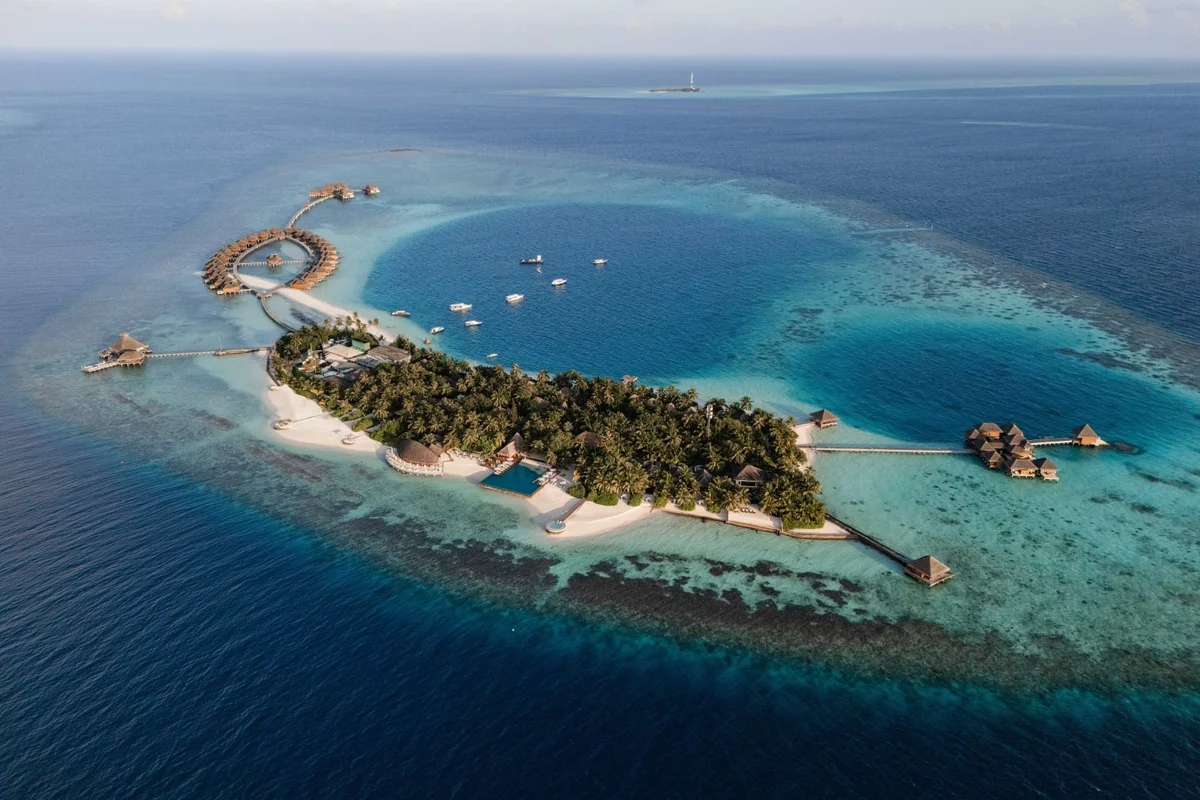
Huvafen Fushi Maldives
When you book Huvafen Fushi Maldives in North Malé Atoll, Maldives, through our withIN by SLH partnership, your stay includes daily continental breakfast for two. Your stay also includes a hotel credit of $50-$100 USD per stay. You also receive a one-category room upgrade and early check-in when available. No premium credit card or membership needed: request a quote and our advisor books it at the same rate as booking direct.
Exclusive Booking Perks
These perks are included with your stay at the same rate as booking direct with the hotel.
- A credit worth $50-$100 (USD) per room, per stay to be spent only on extras such as F&B or Spa, only on property and during the stay
- Daily Continental breakfast for two people
- Room upgrade to next room category, subject to availability at the time of check-in
- Early check-in, subject to availability at the time of check-in
- Late check-out, subject to availability
Guest feedback
9.6/10 from 95 guest reviews
Read what guests commentedBy category
Guests liked
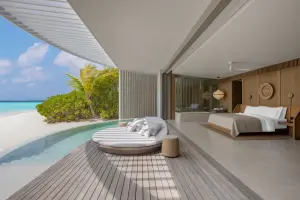
- Loved the bungalow
- Clean resort
- Friendly staff / good hospitality
Points to consider
- Some staff lack warmth or are unprofessional
- Facilities are aging
- Insufficient hot water
Location
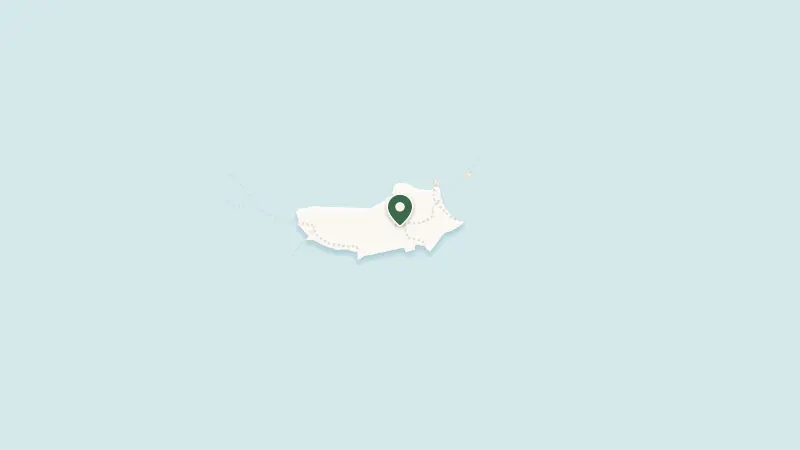
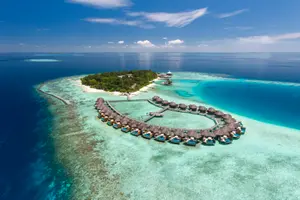
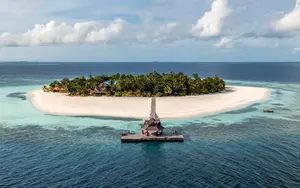
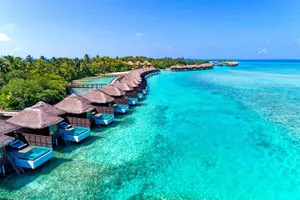
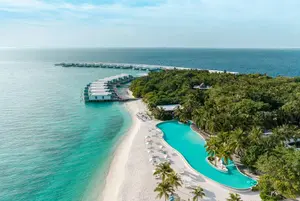
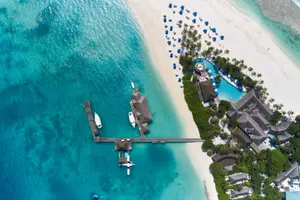
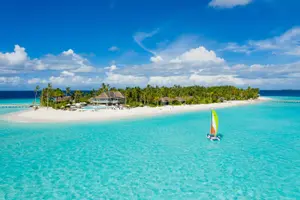
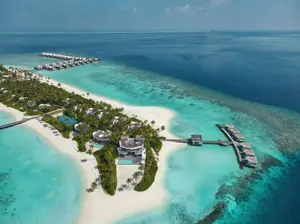
Huvafen Fushi occupies a private island in North Malé Atoll, where the Indian Ocean stretches in gradients of turquoise and sapphire so pure they seem backlit. The resort sits twenty-six kilometres from Velana International Airport, accessed by a thirty-minute speedboat transfer that cuts across open water, the spray warm and the horizon unbroken. This is the Maldives at its most elemental: powdered coral sand, palms leaning into steady equatorial breezes, and a reef that drops away from the shore in a cascade of colour.
The atolls themselves are necklaces of coral islands scattered across the Indian Ocean, each ring enclosing a lagoon. North Malé is among the most accessible, yet the sense of remove remains absolute. Beyond the shoreline, the ocean floor falls into channels and submerged plateaus where currents carry nutrients and pelagic life.
The island runs on a rhythm set by tides and light rather than clocks. Mornings arrive soft and golden, afternoons shimmer with heat, and evenings cool under skies dense with stars. The nearest neighbour is water, and the only sounds are waves against the reef and the occasional cry of a seabird.
Diving defines the experience here. The Rannamaari Wreck lies nine kilometres offshore, a cargo vessel settled on sand at thirty metres, now encrusted with soft corals and patrolled by schools of jacks and batfish. House reefs closer to the island offer shallow dives and snorkelling over gardens of staghorn and table corals, where parrotfish graze and octopuses thread through crevices. Currents in the atoll channels bring manta rays and reef sharks, especially at dawn.
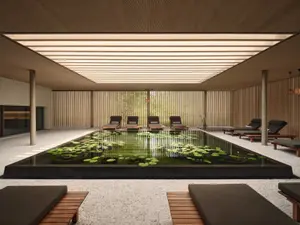
Start your mornings on the water: glass-bottomed kayaks glide over the shallows, or sail a traditional dhoni to a sandbank that appears at low tide and vanishes by afternoon. The island's spa operates below sea level, treatment rooms submerged with windows framing the reef, so therapists work to the backdrop of passing trevally and unicornfish. At dusk, the house reef comes alive with octopuses hunting and moray eels emerging from coral heads. Book a night dive to see bioluminescent plankton scatter like stars with each movement of your hand.
The dry northeast monsoon runs from January through March, when skies stay clear and humidity drops. The ocean flattens into a mirror, visibility underwater reaches thirty metres, and temperatures hover in the high twenties. This is the season for diving and crossing between islands without chop.
The southwest monsoon brings heavier rains from May through October, though showers arrive in bursts rather than settling in for days. The air thickens, and the sea roughens, but the light turns dramatic: cloud shadows race across the lagoon, and sunsets ignite in layers of crimson and violet. Plankton blooms draw manta rays to cleaning stations.
April and November sit between the monsoons, offering calm conditions and fewer guests. The heat peaks just before the rains, the kind of stillness that makes every movement deliberate, every dive into the lagoon a small relief.
Frequently Asked Questions

Quotes are personally reviewed by Natasha Hardy, founder of The Uncommon Traveller
5.0 rating · 8 Google reviewsThere is no fee or markup. The hotel pays our commission.
Request a Quote