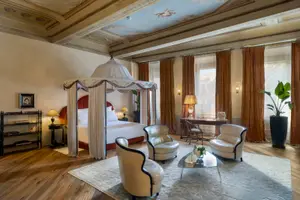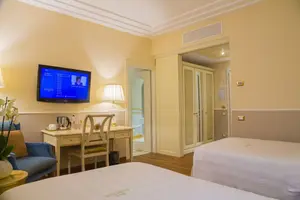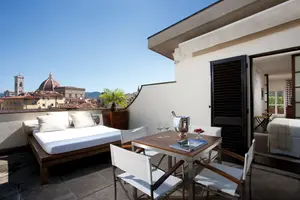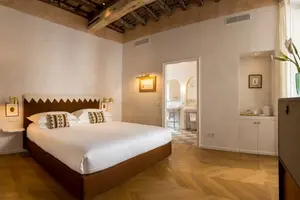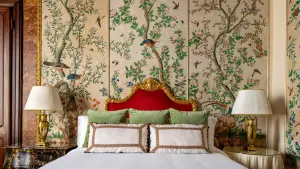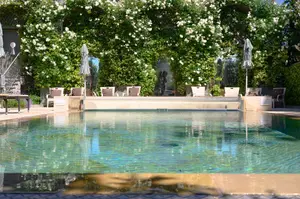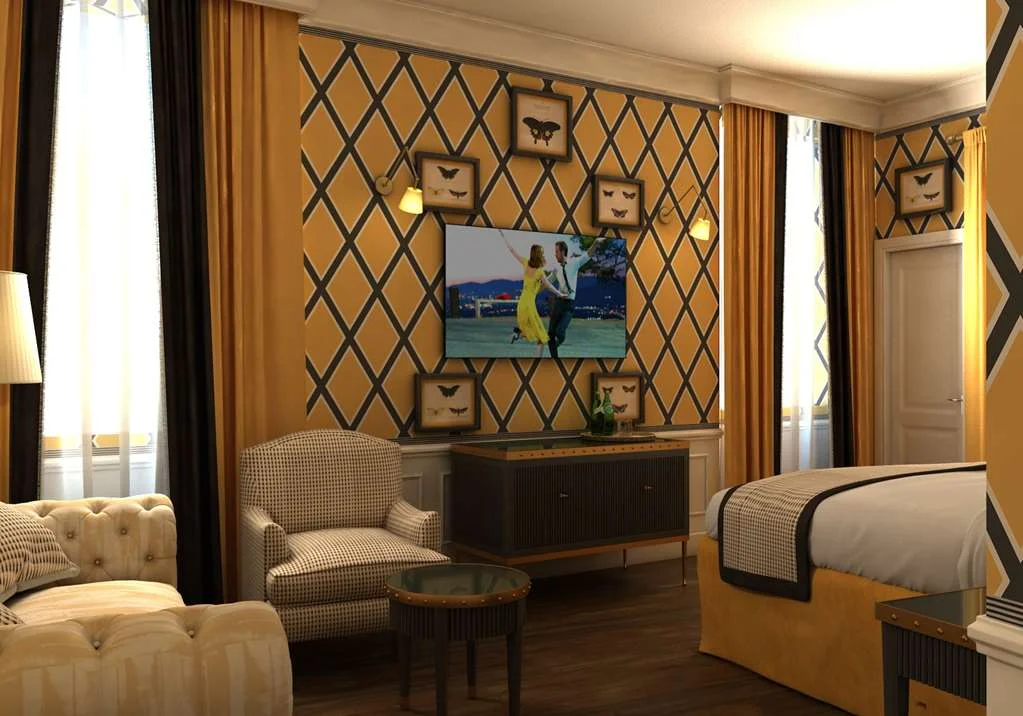
IL Tornabuoni The Unbound Collection by Hyatt
When you book IL Tornabuoni The Unbound Collection by Hyatt in Florence, Italy, through our Hyatt Privé partnership, your stay includes daily full breakfast for up to two guests and a property credit. You also receive a priority room upgrade when available. You continue earning World of Hyatt points and elite night credits. No premium credit card or membership needed: request a quote and our advisor books it at the same rate as booking direct.
Exclusive Booking Perks
These perks are included with your stay at the same rate as booking direct with the hotel.
- Welcome amenity provided to guests upon arrival.
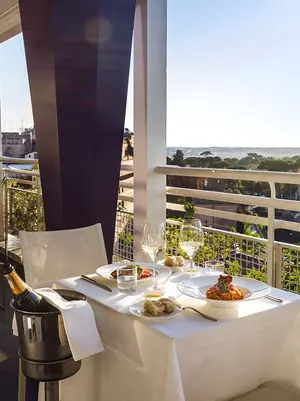
- Daily complimentary full breakfast at a hotel restaurant for up to two guests.
- Property credit (value varies by property).
- Priority for room upgrade (response within 24 hours of booking, subject to forecasted occupancy).
- Early check-in/late check-out/connecting rooms (response within 24 hours of request, subject to forecasted occupancy).
Guest feedback
9.3/10 from 537 guest reviews
Read what guests commentedBy category
Guests liked
- Outstanding service
- Impeccably clean rooms
- Great location
Points to consider
- Small room size
- Issues with breakfast quality
- High service charge concerns
Location
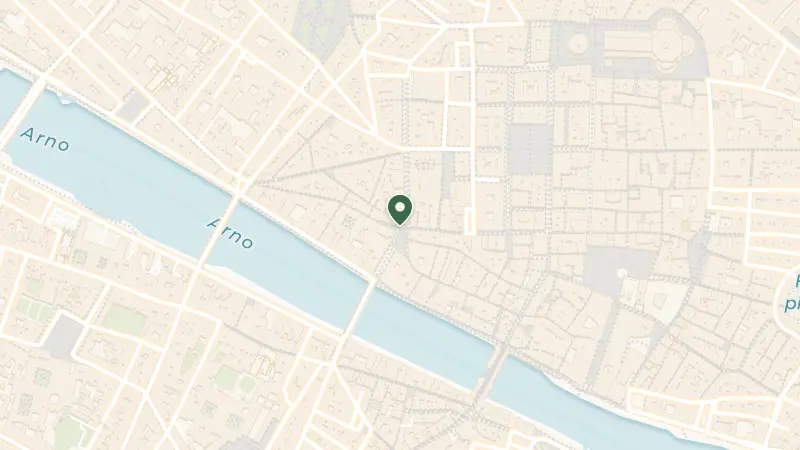
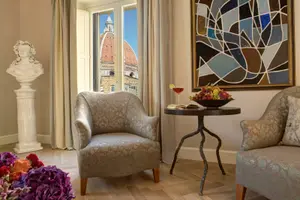
Hyatt's Unbound Collection brings together independent properties that share a commitment to distinctive character and place, each with its own story to tell. Florence announces itself through the rust-red dome of the Duomo and the sharp geometry of medieval towers rising above terracotta rooftops. The city smells of espresso, old stone, and leather from the artisan workshops that still line narrow streets. This is the Oltrarno, the quarter south of the Arno where Santo Spirito's unadorned facade presides over a piazza of market stalls and morning aperitivi, and where the golden bulk of Palazzo Pitti holds court over sloping gardens that climb toward Piazzale Michelangelo.
The Florentine dialect shaped modern Italian through Dante and Boccaccio, and the Renaissance began here under Medici patronage in the fifteenth century. The historic centre, a UNESCO World Heritage Site since 1982, spreads across both banks of the river, its bridges and towers largely unchanged since the city served as Italy's capital in the 1860s. The Oltrarno retains the feel of artisan Florence, quieter than the tourist crush around the Duomo yet still fully woven into the city's fabric.
Florence Airport at Peretola sits six kilometres northwest, connected by tram and taxi. Pisa's larger international gateway lies seventy kilometres west, an hour by road or rail.
Luca's by Paulo Airaudo holds court just 200 metres away, its green boiserie and Michelin star offering contemporary refinement in the heart of the monumental city. The cuisine balances technique with restraint, plates arriving as composed arguments rather than declamations. For the full gastronomic pilgrimage, Enoteca Pinchiorri awaits less than a kilometre east on Via Ghibellina: three stars, a seventeenth-century palazzo, and one of Italy's most storied wine cellars converge in what remains the city's temple of fine dining. Book weeks ahead, expect theatrical service, and surrender to a procession of Italian contemporary courses that justify the legend.
Morning footfall at Mercato del Porcellino, 200 metres north, reveals Florence's mercantile roots: vendors hawk leather goods beneath loggia arches where traders once counted florins. The larger Mercato di San Lorenzo, 700 metres away, sprawls with produce and tourist wares in equal measure; arrive early for genuine food stalls before the crowd descends. Wineries punctuate the near countryside: Oratio and Cantina Barbargianni both sit within 800 metres for urban tastings, while Fattoria di Bagnolo, nine kilometres out, rewards the drive with Chianti Classico poured where it ferments. Don't miss the climb to Belvedere Fort; the ramparts frame the Duomo and Arno in a single sweep that no photograph quite captures.
July and August bring heat that settles over the Arno valley, temperatures pushing past thirty degrees and tourists filling every piazza. Early mornings offer brief respite before the stone streets radiate warmth back into the afternoon air. September softens the light and thins the crowds, temperatures sliding into the mid-twenties as grape harvest begins in the surrounding hills.
October through March turns Florence cool and occasionally wet, the city's ochre facades deepening under grey skies. Winter mornings can drop near freezing, though snow remains rare at this low elevation. The museums and churches feel more spacious, the rhythm slower.
April through June is Florence at its most inviting. Temperatures climb gently into the low twenties, wisteria drapes the garden walls, and the long evenings stretch golden across the Boboli terraces. Spring rain refreshes rather than disrupts, and the city hums with energy before summer's full heat arrives.
Frequently Asked Questions

Quotes are personally reviewed by Natasha Hardy, founder of The Uncommon Traveller
5.0 rating · 8 Google reviewsThere is no fee or markup. The hotel pays our commission.
Request a Quote 10 Bib Gourmand