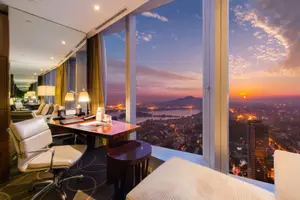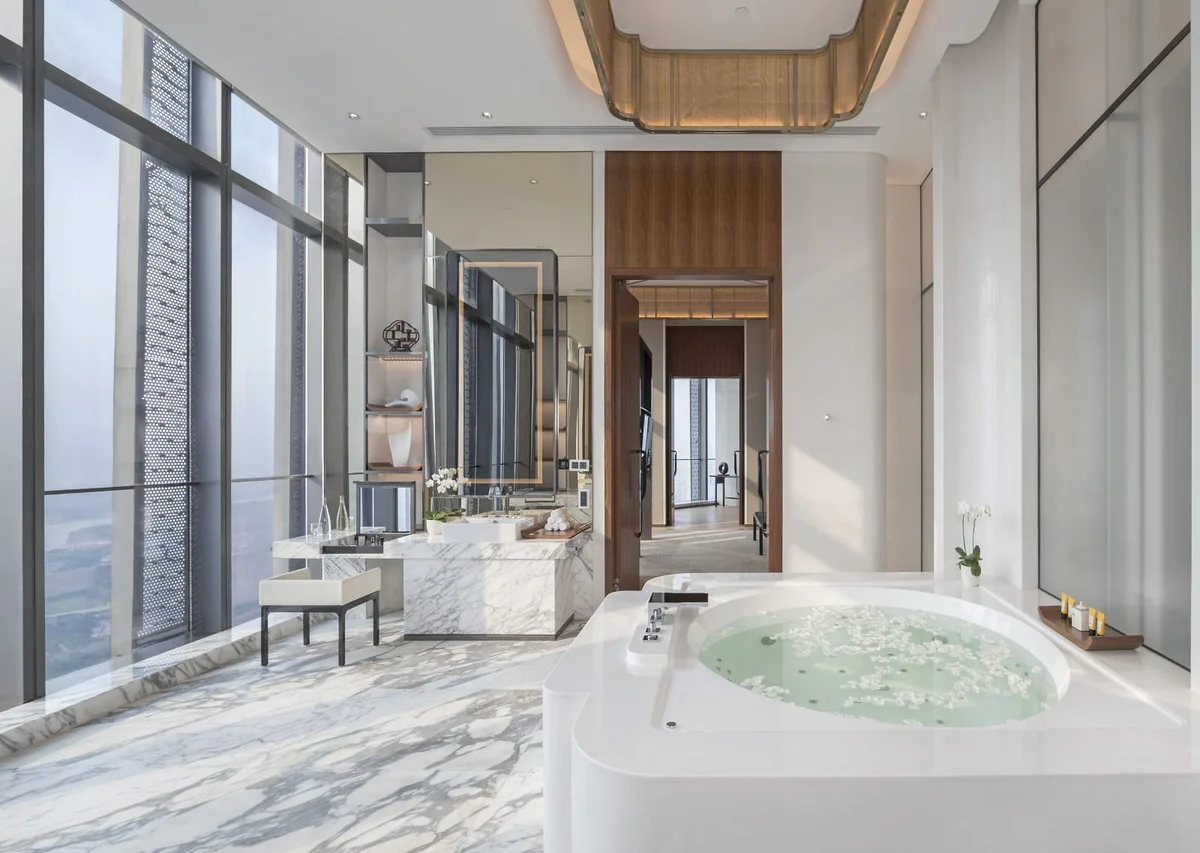
Jumeirah Nanjing Hotel
When you book Jumeirah Nanjing Hotel in China through our Jumeirah Passport to Luxury partnership, your stay includes daily buffet breakfast for two. Your stay also includes a $75 food and beverage or spa credit per stay. You also receive a room upgrade, early check-in and late check-out when available. No premium credit card or membership needed: request a quote and our advisor books it at the same rate as booking direct.
Exclusive Booking Perks
These perks are included with your stay at the same rate as booking direct with the hotel.
- Daily complimentary buffet breakfast for two
- Room upgrade on arrival, based on availability
- $75 food and beverage or spa credit, per room per stay
- Early check-in and 4 PM late check-out, based on availability
- A personalized welcome amenity
- Complimentary one way airport transfer to suite guests. (In Europe – minimum stay of two nights)
Guest feedback
9.3/10 from 76 guest reviews
By category
Guests liked
- Quiet, large and comfortable rooms with great views
- Highly praised, attentive and friendly staff
- Excellent, healthy breakfast with varied options
Points to consider
- Location is far from metro and limited nearby attractions
- Limited/no late-night bar option
- Occasional slow check-in process
Location
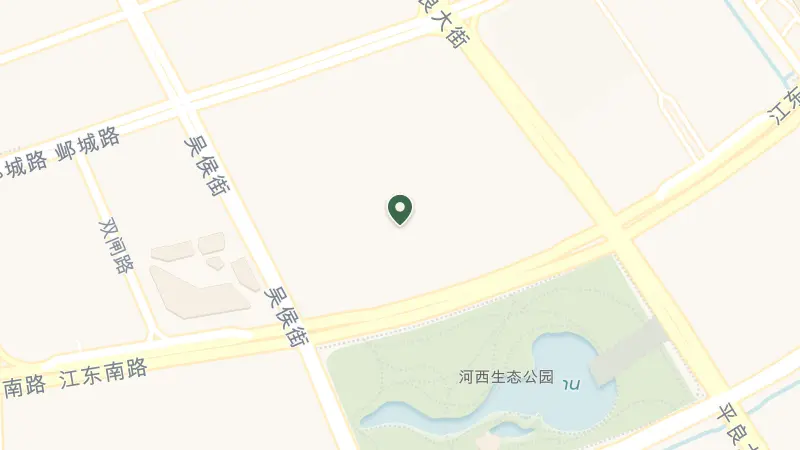
Jumeirah brings its Dubai-rooted approach to luxury to Nanjing, a city where six dynasties once ruled and where the Yangtze River curves through lowland plains. The property stands in Shuangzha, a district that balances commercial energy with riverside calm, offering a quieter base than the crowded stretches near Xinjiekou. This is a city of profound historical weight: stone guardians line the Spirit Way leading to Ming tombs, the colossal walls that once enclosed the capital still rise in segments across the urban fabric, and the Memorial Hall of the Nanjing Massacre stands as solemn testament to wartime atrocity.
The neighbourhood hums with everyday commerce. Street vendors sell sesame pancakes and salted duck, the local speciality that has been brined and air-dried here for centuries. Plane trees arch over boulevards, their dappled shade a legacy of Republican-era urban planning. The sound of bicycle bells mixes with the rumble of metro trains below Zhongshan Road.
Nanjing Lukou International Airport lies thirty-two kilometres south, connected by metro line S1 and express buses that navigate the sprawl of new districts surrounding the ancient core.
Within walking distance, JLC Market and Huanbei Market offer a ground-level view of local food culture: stalls piled with lotus root, live fish in plastic basins, vendors calling out prices for seasonal greens. For Michelin-recognized dining, Dai Yuet Heen sits eleven kilometres north, where Chef Liang applies three decades of Cantonese technique honed in Macau kitchens. Further afield, Jiangnan Wok · Yun showcases Chef Hou's contemporary Huaiyang cuisine, his knife skills evident in paper-thin cuts of mandarin fish and precise julienne of bamboo shoots, all sourced from the surrounding Jiangnan region.
Zhongshan Mountain National Park extends across forested slopes sixteen kilometres east, where stone steps climb to Sun Yat-sen's mausoleum and the ancient Linggu Temple complex. Book a driver for the half-day excursion; the park is vast enough to lose a morning among pagodas and pine groves. The Purple Mountain Observatory crowns the summit, its bronze dome visible across the city on clear days.
Winter arrives cold and damp, temperatures hovering just above freezing as mist rolls off the Yangtze. Buildings lack central heating; layers matter more than the thermometer suggests. Spring unfolds gradually from March, magnolias and cherry blossoms softening the concrete cityscape as temperatures climb into the high teens.
Summer is monsoon season, hot and sticky, with June bringing the heaviest downpours. The city empties in late July as residents flee the furnace heat that tops thirty-two degrees. September offers relief: warm days, cooler evenings, the air finally breathable again.
Autumn is the prime season. October sees clear skies, mild temperatures in the low twenties, and the ginkgo trees along Zhongshan Road turning brilliant yellow. November remains pleasant, though the chill begins to creep back as the city braces for another grey winter.
Frequently Asked Questions

Quotes are personally reviewed by Natasha Hardy, founder of The Uncommon Traveller
5.0 rating · 8 Google reviewsThere is no fee or markup. The hotel pays our commission.
Request a Quote 21 Bib Gourmand