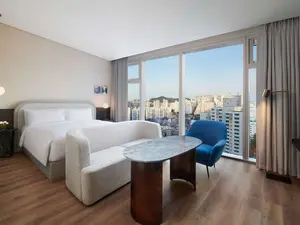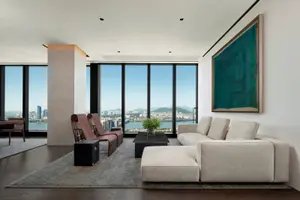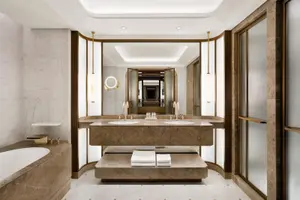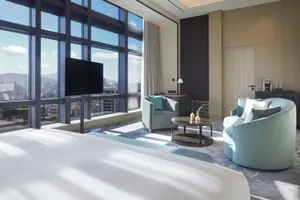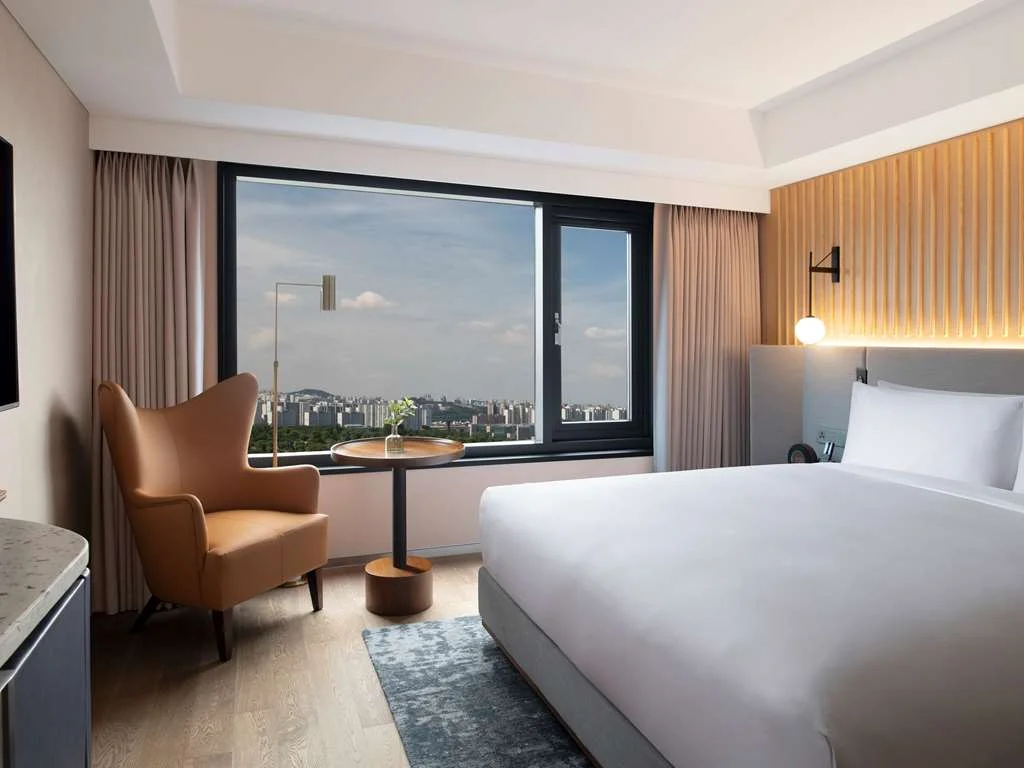
Mondrian Seoul Itaewon
When you book Mondrian Seoul Itaewon in South Korea through our Accor Preferred partnership, your stay includes daily breakfast for two and a $100 USD hotel credit. You also receive a room upgrade, early check-in and late check-out when available. No premium credit card or membership needed: request a quote and our advisor books it at the same rate as booking direct.
Exclusive Booking Perks
These perks are included with your stay at the same rate as booking direct with the hotel.
- Daily complimentary breakfast for 2, per room
- $100 USD credit to be spent on property (conditions defined at check-in)
- Early check-in & late check-out (upon availability)
- Upgrade at time of check-in (upon availability)
Location
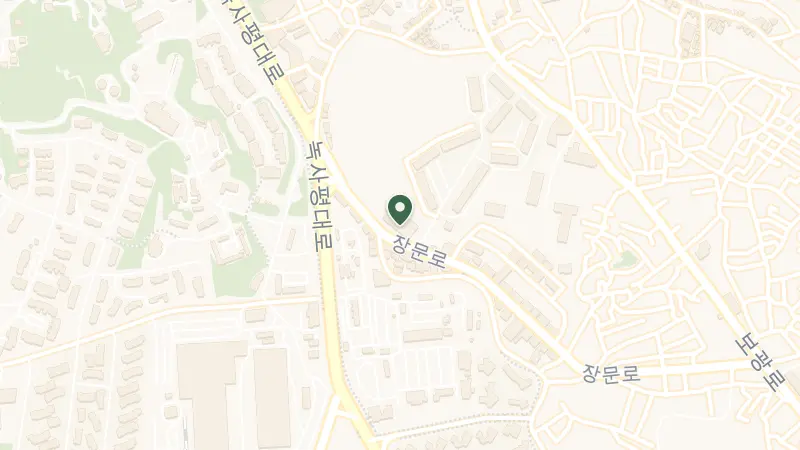
The Mondrian brand reimagines classic luxury through a contemporary lens, cultivating spaces where design and social energy converge. In Seoul, this translates to a property rooted in Seobinggo-dong, a neighbourhood whose name reaches back to the Joseon dynasty, when the Han River froze solid each winter and ice was cut and stored here in royal icehouses. King Taejo established the Seobinggo in the early 1390s; its counterpart, the Dongbinggo, stood across the water. Today, the river no longer freezes, but the neighbourhood retains a quieter residential character, set just back from the Hannam district's gallery strip and Itaewon's global restaurant scene.
The Banpo Bridge connects Seobinggo-dong to the southern bank, where the river widens and the city's skyline sharpens. To the north, Yongsan spreads toward Namsan, the forested peak that anchors central Seoul. The streets here hum with a mix of Korean and international voices, a legacy of Itaewon's long history as a cultural crossroads.
Gimpo International Airport sits eighteen kilometres northwest, a thirty-minute drive depending on traffic. Incheon International Airport, the main gateway, lies forty-eight kilometres west, connected by express rail and highway.
Within fifteen minutes on foot, you reach the markets that define Seoul's rhythms. Sinheung Market, two kilometres south, fills with vendors selling banchan and seasonal vegetables, their voices layered over the sizzle of hotteok on griddles. For Michelin-recognised dining, Mosu is one and a half kilometres away, delivering two-star precision in a tasting menu that balances imagination with restraint. Book a table at Mingles, four and a half kilometres south in Cheongdam-dong, where three Michelin stars reflect chef Mingoo Kang's fluency in Korean ingredients reimagined through contemporary technique. Soigné, two and a half kilometres distant, holds two stars for Jun Lee's seasonal menus that speak entirely in his own idiom.
Jongmyo Shrine, the oldest surviving Confucian royal shrine from the Joseon dynasty, stands five kilometres northeast. Changdeokgung Palace Complex, six kilometres north, rewards exploration of its secret garden and pavilions aligned with principles of geomantic harmony. Bukhansan National Park, fifteen and a half kilometres away, rises into granite ridges and Buddhist temples accessible by trail.
Winter bites sharp and dry, with January highs barely clearing freezing and mornings dipping to minus seven. The air is brittle, the light pale and low. Wrap up for walks along the frozen-edged Han.
Spring arrives abruptly in April, when cherry blossoms flush across palace grounds and temperatures climb into the mid-teens. May is mild and green, though rain begins to gather. Summer turns humid and heavy, with July and August soaking the city in afternoon downpours and temperatures nearing thirty degrees. The monsoon season demands an umbrella.
Autumn is Seoul's finest season. September and October bring crisp, golden days, foliage turning rust and amber on the mountainsides. Skies clear, the air sharpens, and the city feels renewed.
Frequently Asked Questions

Quotes are personally reviewed by Natasha Hardy, founder of The Uncommon Traveller
5.0 rating · 8 Google reviewsThere is no fee or markup. The hotel pays our commission.
Request a Quote 51 Bib Gourmand