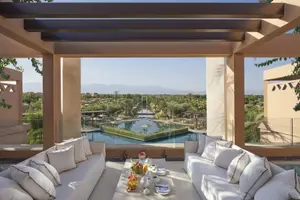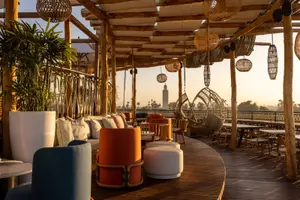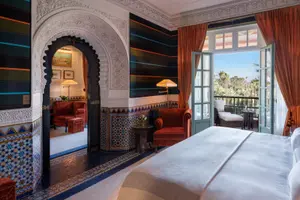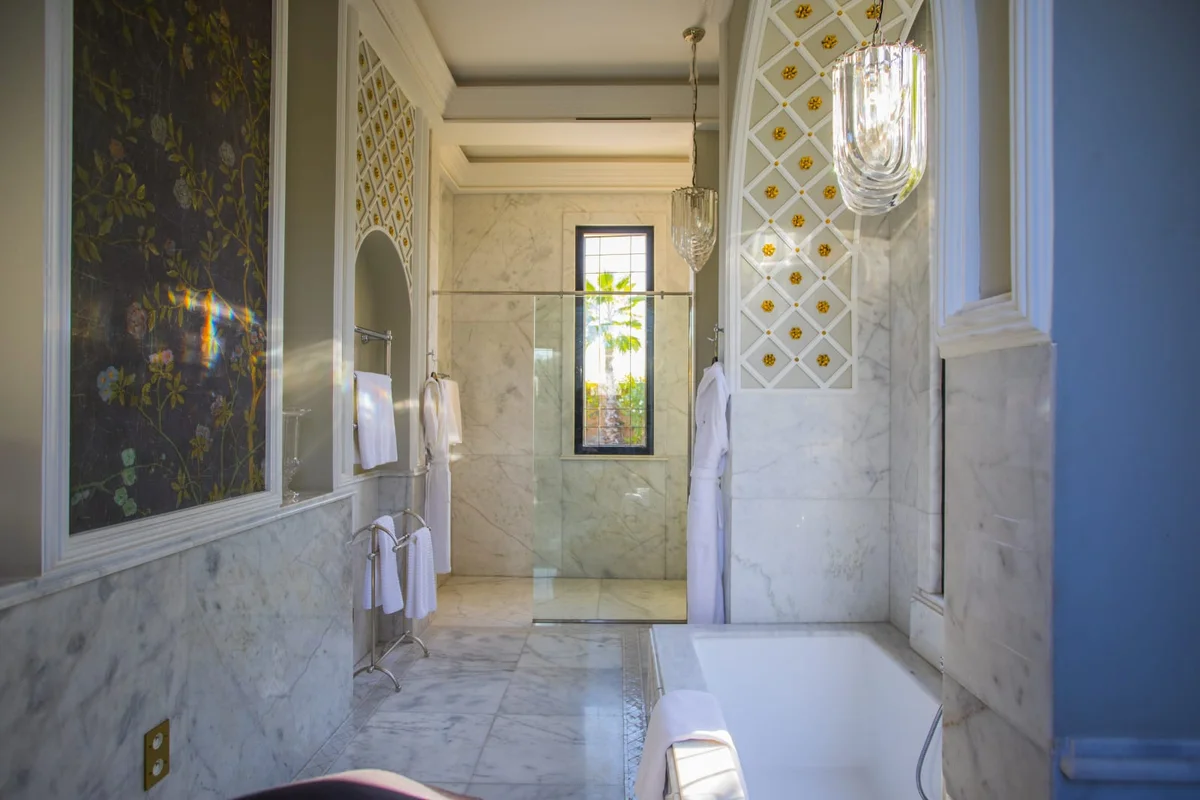
Palais Ronsard
When you book Palais Ronsard in Marrakech, Morocco, through our Relais & Châteaux partnership, complimentary perks are included with your stay. No premium credit card or membership needed: request a quote and our advisor books it at the same rate as booking direct.
Exclusive Booking Perks
These perks are included with your stay at the same rate as booking direct with the hotel.
- Complimentary Continental or Buffet Breakfast per night and per person
- VIP Welcome per room and per stay
- Reservations must be made at least 72 hours prior to arrival and are subject to availability
- All offers are subject to the booking and cancellation conditions of each individual property.
Location
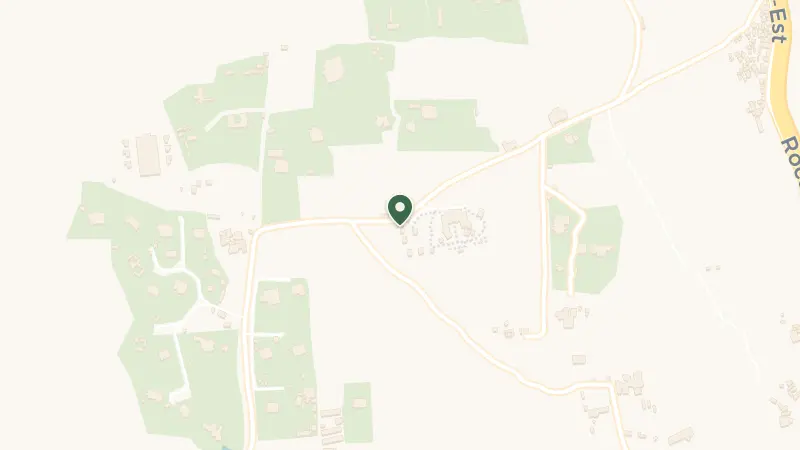
Palais Ronsard sits in the Annakhil district, a neighbourhood that unfolds beyond the rose-hued ramparts of Marrakech's medina where contemporary villas nestle among palm groves and wider boulevards replace the medina's labyrinthine alleys. The property lies within the broader orbit of La Palmeraie, the sprawling oasis of date palms that has fringed the city for centuries, offering a quieter counterpoint to the souks and spice markets that define Marrakech's ancient core.
This is the Red City, founded by the Almoravid dynasty in 1070 and shaped by successive sultans who left monuments in the ochre sandstone that glows amber in the late afternoon sun. The medina, seven kilometres south, remains a fortified warren of vendors and craftsmen, a UNESCO World Heritage Site where the call to prayer echoes across rooftops and the scent of cedarwood and cumin drifts through narrow derbs. The city drew Sufi pilgrims for its seven patron saints and became a crossroads of Maghreb culture, a centre of learning and trade beneath the snow-capped Atlas peaks.
Marrakesh Menara Airport lies thirteen kilometres away, a straightforward transfer through the modern ville nouvelle and past the gardens that frame the city's western edge.
The souks of Marrakech demand at least a full day of exploration. Seven kilometres south in the medina, Souk el Maasi and the leather souk unfurl in a maze of tanners' workshops where hides cure in earthen vats of saffron and pomegranate, the pungency softened only by sprigs of mint. Souika Boussekri and the fruit and vegetable market overflow with pyramids of dates, blood oranges, and olives cured in lemon and harissa. Between haggling sessions, step into a riad courtyard for glasses of sweet mint tea and plates of b'stilla, the flaky pastry layered with pigeon, almonds, and cinnamon sugar. Book a table at La Mamounia's restaurants for refined Moroccan cuisine in gardens that once belonged to a Saadian prince.
Four kilometres west, La Palmeraie offers golf beneath the palms, a retreat into quiet fairways and the scent of orange blossom. The Rmila reserve, six kilometres distant, preserves a pocket of acacia scrubland where the light turns golden in the late afternoon and the Atlas foothills rise like a crumpled silk curtain along the southern horizon.
Winter brings crystalline light and cool mornings, temperatures hovering between four and eighteen degrees, perfect for navigating the medina's sun-dappled courtyards without the press of summer heat. February sees the most rain, brief showers that leave the air scrubbed clean and the Atlas peaks dusted white.
Spring warms gradually, March through May climbing from twenty-one to twenty-six degrees, the city ablaze with jacaranda and bougainvillea spilling over terracotta walls. This is ideal walking weather, when the souks buzz but the air remains breathable.
Summer scorches. June through August pushes past thirty-six degrees, the city slowing to a siesta rhythm, awnings drawn against the glare. Marrakech becomes a nocturnal creature then, its gardens and rooftop terraces coming alive only after sunset. Autumn, especially October and November, offers a gentler return, temperatures easing into the mid-twenties and the light turning honeyed and low.
Frequently Asked Questions

Quotes are personally reviewed by Natasha Hardy, founder of The Uncommon Traveller
5.0 rating · 8 Google reviewsThere is no fee or markup. The hotel pays our commission.
Request a Quote