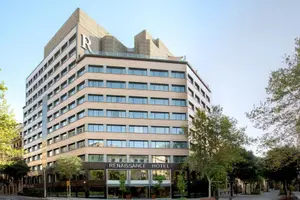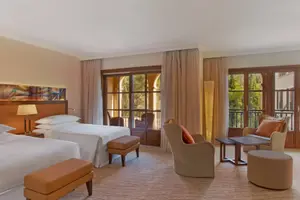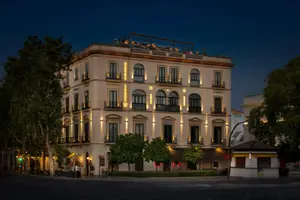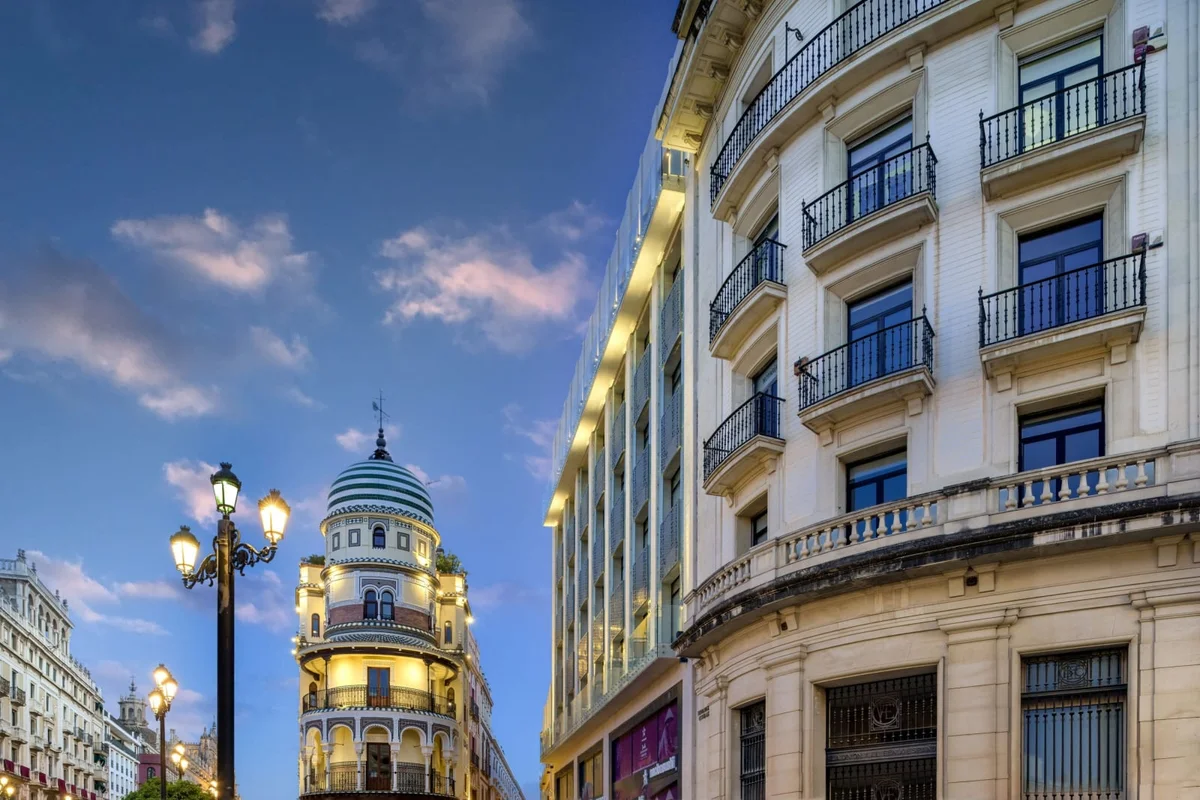
Querencia de Sevilla Autograph Collection
When you book Querencia de Sevilla Autograph Collection in Seville, Spain, through our Marriott Luminous partnership, your stay includes daily breakfast for two and a welcome amenity. You also receive a room upgrade, early check-in and late check-out when available. No premium credit card or membership needed: request a quote and our advisor books it at the same rate as booking direct.
Exclusive Booking Perks
These perks are included with your stay at the same rate as booking direct with the hotel.
- Welcome amenity
- Complimentary breakfast daily for two guests per room
- Early check-in and late check-out (when available)
- Complimentary upgrade (if available at check-in)
Location
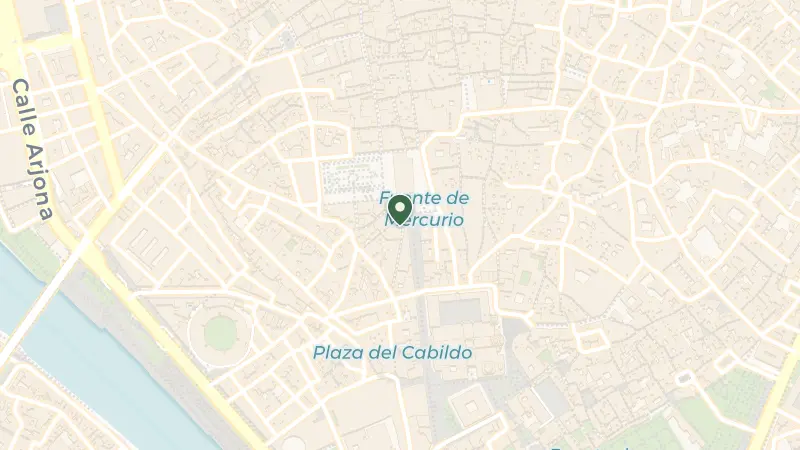
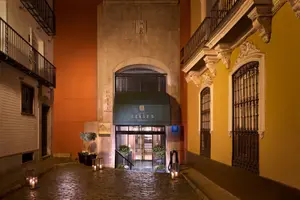
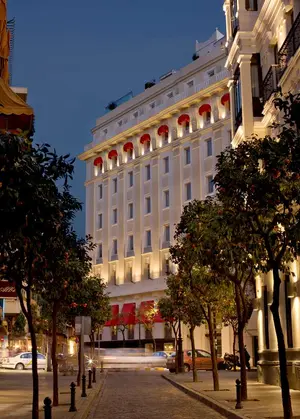
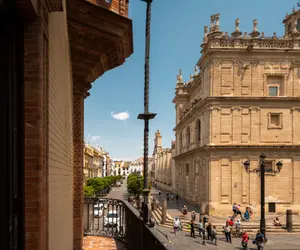
El Arenal sits along the eastern bank of the Guadalquivir, where the scent of orange blossoms mingles with the sharp salt tang drifting upstream from the Atlantic. This is Seville's Casco Antiguo, the old town carved from layers of Roman Hispalis, Moorish Ishbiliyah, and Renaissance Castilian grandeur. The neighbourhood hums with the particular rhythm of Andalusia: azulejo-tiled facades catching afternoon light, the clatter of horse-drawn carriages on cobblestone, the sudden cool of a hidden courtyard. The Capilla de San Andrés, patron chapel of the city's bread-makers, stands just beyond the hotel threshold.
Walking distance reveals the weight of centuries. The Cathedral, Alcázar palace complex, and Archivo de Indias, together forming a UNESCO World Heritage triumvirate, lie within a kilometre. The Reales Alcázares unfolds room by room in Mudéjar splendour, its tiled halls and sunken gardens a testament to the 1248 Reconquest and the Moorish architects who stayed to shape the Christian court. Casa de Pilatos, a 15th-century fusion of Italian Renaissance and Andalusian craft, commands the streets to the northeast.
Seville Airport connects to the city centre in ten kilometres. The property occupies the district where maritime trade once pooled before pushing upriver to the Port of Seville, Spain's only river harbour, eighty kilometres from open ocean.
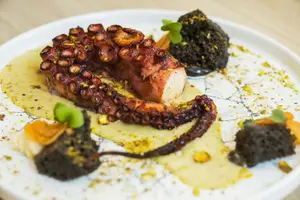
Cañabota, a one-star restaurant half a kilometre from the hotel, operates beside the bread-makers' chapel with a fishmonger's precision. The menu reads as apparent simplicity achieving excellence: line-caught seafood treated with minimal interference. One kilometre northeast, Abantal earns its star through creative technique rooted in Andalusian soul, the name itself derived from the old Spanish word for apron, a nod to craft and lineage. Book a table early; both draw locals who guard their reservations fiercely.
The Mercado del Arenal, five hundred metres away, spreads its stalls under vaulted arches where vendors sell jamón ibérico cut to translucent sheets and manzanilla olives brined in the Sevillan style. Across the Guadalquivir, the Mercado de Triana offers ceramics and produce in a district known for flamenco and tile-making. The Museo de Bellas Artes, established in 1835, holds Murillo and Zurbarán canvases in a former convent seven hundred metres north. For a longer excursion, the Roman ruins of Italica lie 7.5 kilometres beyond the city, their amphitheatre mosaics still vivid under open sky.
July and August turn Seville molten. The thermometer climbs past 36°C most afternoons, and the old town's stone walls radiate stored heat long after sunset. Locals retreat indoors during siesta hours; the streets empty, shutters drawn against the glare. Rain disappears almost entirely.
Spring arrives in March with wild poppies colouring the countryside and temperatures lingering in the high teens. April brings Semana Santa processions and the Feria de Abril, the air thick with incense and the stamp of flamenco heels. May extends the temperate spell before summer's onslaught.
Autumn softens the city from late September onward. October offers the warmth without the punishing edge, ideal for walking the Casco Antiguo's tangled lanes. Winter remains mild, daytime highs in the mid-teens, though rain returns and the Guadalquivir swells visibly against its stone embankments.
Frequently Asked Questions

Quotes are personally reviewed by Natasha Hardy, founder of The Uncommon Traveller
5.0 rating · 8 Google reviewsThere is no fee or markup. The hotel pays our commission.
Request a Quote 3 Bib Gourmand