Rio Perdido Hotel & Thermal River
When you book Rio Perdido Hotel & Thermal River in Provincia de Guanacaste, Costa Rica, through our withIN by SLH partnership, your stay includes daily continental breakfast for two. Your stay also includes a hotel credit of $50-$100 USD per stay. You also receive a one-category room upgrade and early check-in when available. No premium credit card or membership needed: request a quote and our advisor books it at the same rate as booking direct.
Exclusive Booking Perks
These perks are included with your stay at the same rate as booking direct with the hotel.
- A credit worth $50-$100 (USD) per room, per stay to be spent only on extras such as F&B or Spa, only on property and during the stay
- Daily Continental breakfast for two people
- Room upgrade to next room category, subject to availability at the time of check-in
- Early check-in, subject to availability at the time of check-in
- Late check-out, subject to availability
Location
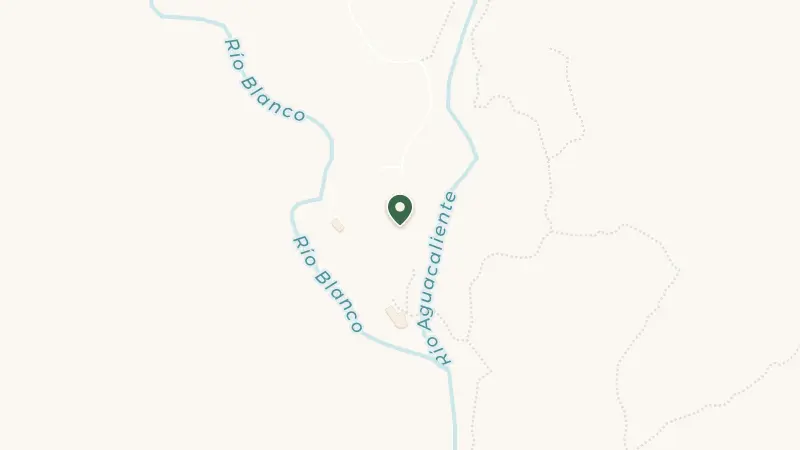
Rio Perdido anchors itself in Costa Rica's northern Guanacaste province, a landscape shaped by volcanic heat and dry tropical forests that sprawl across the slopes of Miravalles Volcano. The property sits in the Bagaces district, a region defined more by geothermal vents and rushing rivers than by towns. Here, the air smells of sulphur and wet earth, and the soundscape shifts from howler monkeys at dawn to the constant rush of thermal springs cutting through basalt canyons. This is not beachside Guanacaste; it is the interior, where the Pacific lowlands give way to volcanic foothills and conservation corridors stretch toward Nicaragua.
The surrounding countryside is part of a broader ecological tapestry. Rincón de la Vieja Volcano National Park lies 24 kilometres east, its fumaroles and bubbling mud pots a reminder of the tectonic forces that define this corner of Central America. To the north, Tenorio Volcano National Park frames the horizon, its cerulean Río Celeste a vivid punctuation in the forest canopy. The town of Bagaces itself, nearly ten kilometres away, is a dusty transit point rather than a destination, notable mainly for its Saturday market and a handful of sodas serving casado.
The nearest international gateway is Daniel Oduber Quirós Airport in Liberia, 37 kilometres southwest. The drive in winds through cattle ranches and scrubland, the road eventually narrowing into gravel as you approach the river valley.
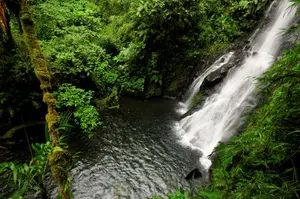
The thermal river that gives the property its name is the central experience: a spring-fed gorge where water emerges at 40 degrees Celsius, cascading over travertine ledges into pools cooled by the adjacent Río Blanco. Swim against the current in natural channels carved by mineral-rich runoff, or scramble along the canyon edge via a network of ladders and suspension bridges strung between fig trees. Above the gorge, a short loop trail winds through dry forest where coatis forage in the leaf litter and green iguanas bask on sun-warmed stones. The property's spa draws from the same geothermal source, offering volcanic mud wraps and open-air soaking tubs overlooking the canopy.
Beyond the grounds, Catarata Llanos de Cortés, 13 kilometres south, is a broad curtain of water spilling into a clear swimming hole ringed by ferns. Book a guided hike into Rincón de la Vieja for trails that pass steaming vents and turquoise crater lakes, or head north to Tenorio Volcano National Park to see why Río Celeste glows that impossible shade of blue (a chemical reaction between volcanic minerals and river sediment). The Reserva Biológica Lomas de Barbudal, 20 kilometres west, protects one of the last stands of dry tropical forest in Mesoamerica, its trails alive with the chatter of white-faced capuchins and the rasp of cicadas.
January through April brings rainless skies and brittle, sun-bleached landscapes. Daytime heat peaks in the low thirties, the forest floor crackling underfoot, the thermal river a welcome reprieve. This is high season for a reason: clear trails, consistent wildlife sightings, and the dry forest's stark beauty fully revealed.
May signals the transition to green season. Afternoon thunderstorms return, first sporadically, then with daily regularity by June. The forest erupts: vines unfurl, rivers swell, and the air thickens with humidity. September and October see the heaviest rains, when waterfalls run at full force and trails turn to mud.
By late November, the storms taper. December brings back the dry, the heat building again toward the furnace days of March, when the land waits for the rains to return.
Frequently Asked Questions

Quotes are personally reviewed by Natasha Hardy, founder of The Uncommon Traveller
5.0 rating · 8 Google reviewsThere is no fee or markup. The hotel pays our commission.
Request a Quote