The St. Regis Cairo
When you book The St. Regis Cairo in Egypt through our Marriott STARS partnership, your stay includes daily breakfast for two and a $100 USD hotel credit once per stay. You also receive a room upgrade, early check-in and late check-out when available. You continue earning Marriott Bonvoy points and elite night credits. No premium credit card or membership needed: request a quote and our advisor books it at the same rate as booking direct.
Exclusive Booking Perks
These perks are included with your stay at the same rate as booking direct with the hotel.
- Personalized and customized amenity
- Complimentary breakfast daily for two guests per room
- All STARS hotels offer a hotel credit valued at $100 USD (once per stay)
- Early check-in and late check-out (when available)
- Complimentary upgrade (if available at check-in)
Location
St. Regis arrived in Cairo with the butler service and formal refinement established by John Jacob Astor IV in 1904 New York, adapted here to a city where ritual hospitality has been practiced for millennia. The brand's signature Bloody Mary and dedication to personalized service translate naturally to a destination that has always understood the art of receiving guests.
Cairo sprawls along the Nile, a metropolis of over twenty million people layered atop six thousand years of continuous habitation. The pyramids of Giza and the ruins of Memphis and Heliopolis mark the edges of what is now the largest urban centre in Africa and the Arab world. Four kilometres north lies Historic Cairo, a UNESCO World Heritage site where tenth-century mosques, madrasas, and hammams rise between the modern city's concrete. The name "city of a thousand minarets" is more than poetry; the skyline is punctuated by these stone towers, calling prayers across a cityscape that has been a centre of Islamic architecture and scholarship since 969.
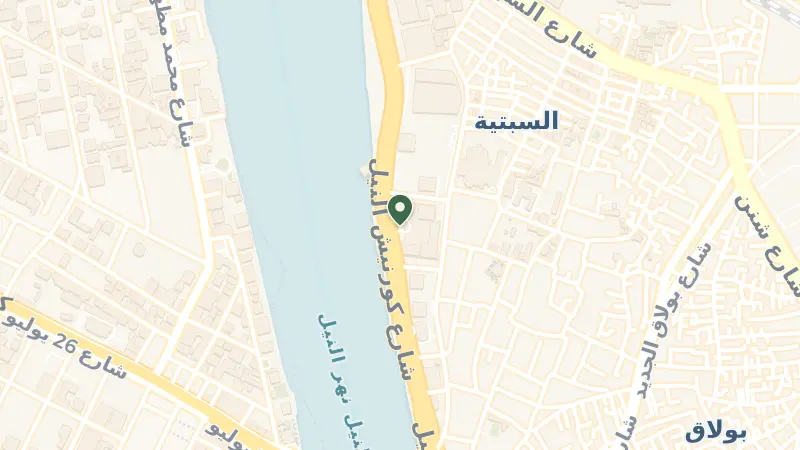
Cairo International Airport sits seventeen kilometres northeast. The Nile flows past the property's neighbourhood of Souk El A'sr, its waters the reason this city exists at all.
The Nile Taxi terminal, just over a kilometre away, offers a river perspective on a city that has always oriented itself toward this waterway. Gezira Club Golf Course occupies Gezira Island nearby, its fairways a rare expanse of green in the urban density. For markets, head to Bab Al-Louq Vegetable Market, two and a half kilometres south, where produce stalls spill into narrow lanes; or venture to Souq Al-Leimoun, three and a half kilometres distant, for the particular chaos of Cairo commerce. The Animals Market, five kilometres out, trades in livestock and local life far from tourist circuits.
Historic Cairo, four kilometres north, demands a full day: the mosques and madrasas date to the Fatimid period, their carved stone and tilework intact. Thirteen kilometres southwest, the Giza pyramid complex and the necropolis stretching to Dahshur form another UNESCO site, these funerary monuments among the Seven Wonders of the ancient world. Book a dawn visit to the pyramids before the heat and crowds arrive. At Wadi Degla Protectorate, twenty kilometres southeast, desert canyon walls rise above a protected area where Cairo's sprawl finally relents.
Winter, from November through February, brings the most comfortable temperatures, highs around twenty degrees and cool evenings that make walking the old city pleasant. The light is softer, the air less hazy. Occasional rain appears in January and December, brief showers that clear quickly.
Spring and autumn are brief transitions. March warms rapidly; by May, temperatures climb past thirty-four degrees. September and October reverse the pattern, the heat loosening its grip as evenings turn bearable again.
Summer is unrelenting. June through August sees highs above thirty-seven degrees, the sun fierce, the streets emptying during midday. Rain disappears entirely. Visit monuments at dawn or after sunset, when the stone stops radiating heat.
Frequently Asked Questions

Quotes are personally reviewed by Natasha Hardy, founder of The Uncommon Traveller
5.0 rating · 8 Google reviewsThere is no fee or markup. The hotel pays our commission.
Request a Quote