Torel Saboaria
When you book Torel Saboaria in Porto, Portugal, through our Fora Rates partnership, your stay includes daily breakfast and a welcome amenity. You also receive a room upgrade, early check-in and late check-out when available. No premium credit card or membership needed: request a quote and our advisor books it at the same rate as booking direct.
Exclusive Booking Perks
These perks are included with your stay at the same rate as booking direct with the hotel.
- Complimentary upgrade, subject to availability
- Complimentary early check-in and late check-out, subject to availability
- Complimentary daily breakfast
- Bottle of wine and Portuguese cheese board welcome amenity
- Welcome drink at the bar
Location
Porto rises in terraced layers above the Douro River, its ribeira lined with azulejo-fronted townhouses in ochre and burnt sienna, their reflections rippling in the water below. The air here carries salt from the Atlantic estuary and the sweet tang of fermenting wine from the lodges across the river in Vila Nova de Gaia. This is a city that earned its World Heritage designation not through a single monument but through the cumulative weight of two millennia: Roman outpost, medieval trading hub, baroque showcase, and birthplace of the fortified wine that carries its name to the world.
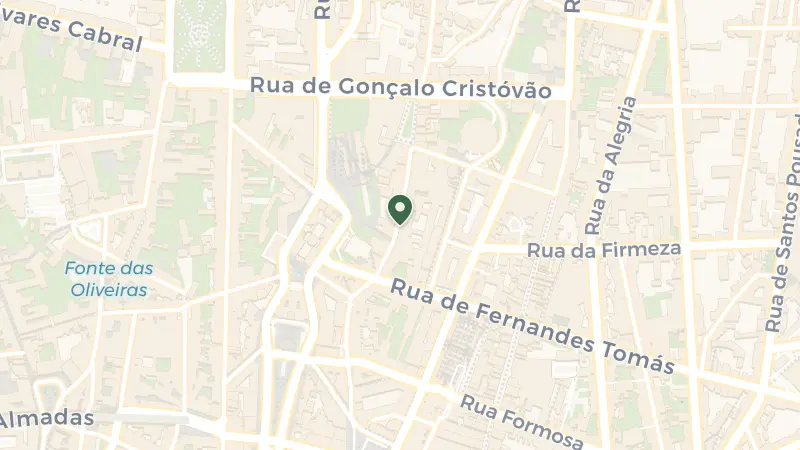
The property sits in the heart of the historic centre, where narrow cobbled lanes wind past gothic churches and Belle Époque cafés. The Luiz I Bridge, a double-decker iron marvel from the 1880s, arcs across the Douro one kilometre south, connecting the city to the port wine lodges. North along Rua de Santa Catarina, the city's main shopping artery, trams clatter past art nouveau shopfronts and the tiled façade of Capela das Almas.
Francisco de Sá Carneiro Airport sits twelve kilometres north, connected to the centre by metro in under half an hour. The journey tracks the Douro inland, past the riverine parks and quintas that have defined this region's character since Roman galleys first sailed upstream with amphorae of Lusitanian wine.
The Douro's banking holds some of Portugal's most celebrated tables. Antiqvvm, 1.7 kilometres through the Jardins do Palácio de Cristal, pairs two Michelin stars with views that sweep across the river valley, while The Yeatman Gastronomic Restaurant (two stars) occupies the opposite bank in Vila Nova de Gaia, its dining room overlooking the very cellars that age the region's legendary fortified wines. For a meal that brings the Atlantic to the table with visceral force, book Casa de Chá da Boa Nova, perched on rocks at Boa Nova Beach 10.6 kilometres west, where chef Rui Paula transforms percebes and robalo into two-starred poetry.
Closer in, the city reveals itself through markets and quintas. The Feira de Artesanato da Batalha, 600 metres north, spreads weekend stalls of hand-embroidered linens and cork goods, while the port wine lodges across the river (Real Companhia Velha, Dow's, Niepoort, all within 2.3 kilometres) offer cave tours that trace the region's 2,000-year winemaking tradition. Start with a tasting of tawny aged in pipas, the terraced vineyards of the Alto Douro World Heritage region visible upriver, then walk the Luiz I Bridge upper deck at sunset when the city turns gold.
Summer arrives in June with long Atlantic light and temperatures climbing into the mid-twenties, the city emptying toward the beaches at Matosinhos and Leça by late afternoon. July and August bring the driest months, the Douro slowing to a glassy ribbon, café tables spreading across every praça.
Autumn softens the heat without losing the warmth, September and October still reaching the low twenties between rain showers that green the hills upriver. The grape harvest transforms the Douro Valley into a blur of activity, quintas opening their doors for vindima celebrations.
Winter settles cool and damp from November through March, temperatures hovering in the low teens, the river misting over in the mornings. Rain sweeps in from the Atlantic, but between storms the city gleams under pewter skies, its tiled façades reflecting wet cobblestones, wood smoke curling from chestnut vendors' braziers.
Frequently Asked Questions

Quotes are personally reviewed by Natasha Hardy, founder of The Uncommon Traveller
5.0 rating · 8 Google reviewsThere is no fee or markup. The hotel pays our commission.
Request a Quote 4 Bib Gourmand