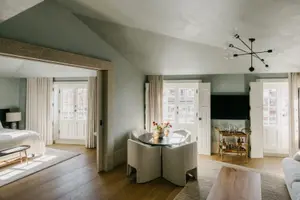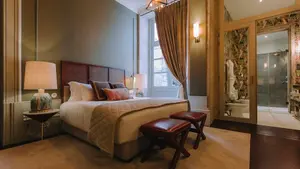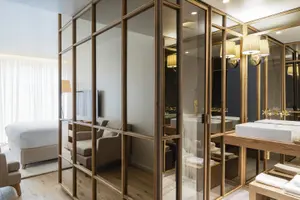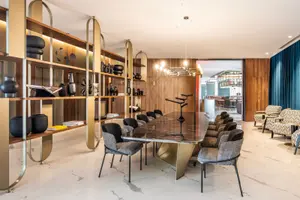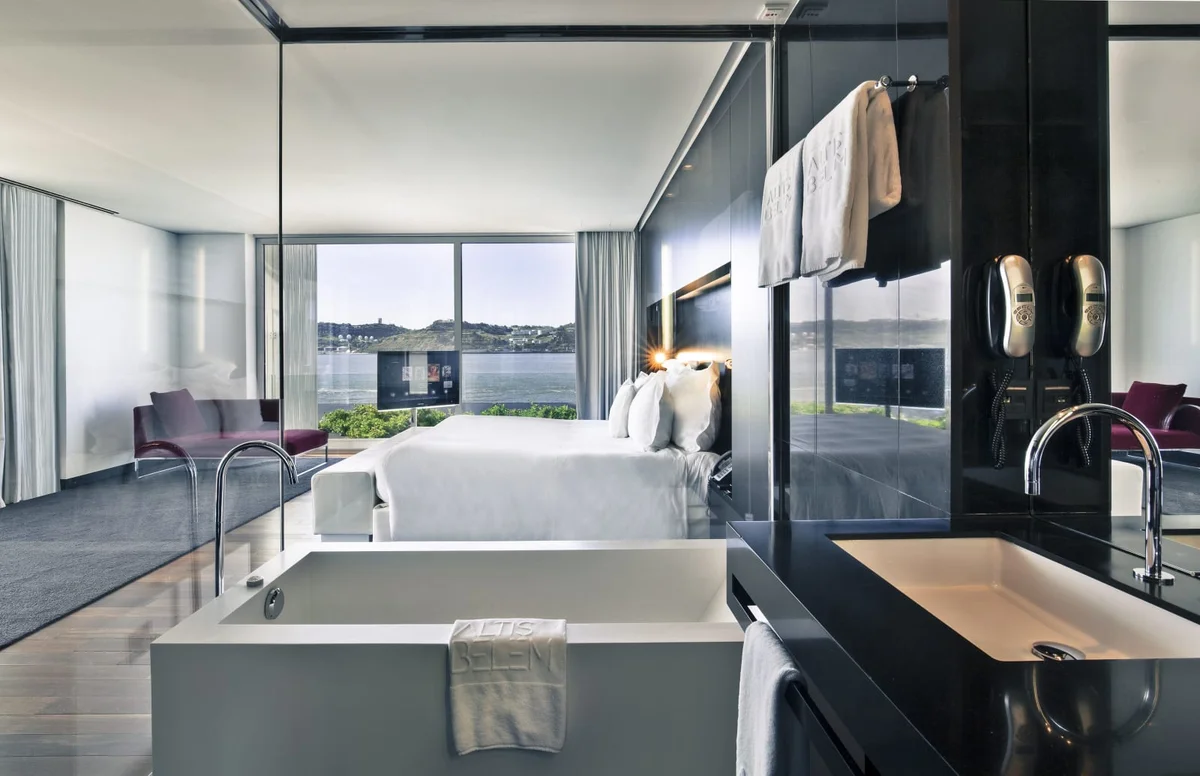
Altis Belem Hotel & Spa, a Member of Design Hotels
When you book Altis Belem Hotel & Spa, a Member of Design Hotels in Lisbon, Portugal, through our Tablet Plus partnership, your stay includes a welcome treat. You also receive a one-category room upgrade when available. No premium credit card or membership needed: request a quote and our advisor books it at the same rate as booking direct.
Exclusive Booking Perks
These perks are included with your stay at the same rate as booking direct with the hotel.
- Upgrade to next room category, based upon availability at check-in
- Complimentary bottle of wine in room on arrival
- Welcome treat in room on arrival
- 20 EUR food & beverage credit per stay at Restaurante Feitoria
Guest feedback
9.4/10 from 120 guest reviews
By category
Guests liked
- Great service
- Fantastic location
Location
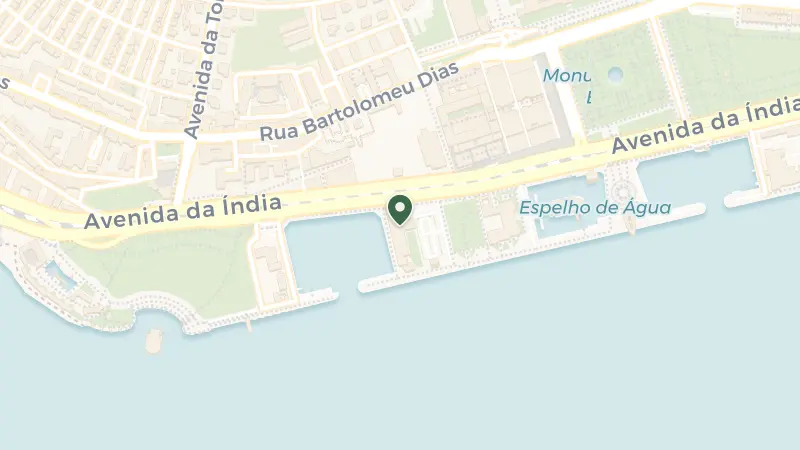
The property occupies the Belém district, where Europe's age of exploration began. This is the westernmost quarter of Lisbon, where the Tagus meets the Atlantic and monuments to Portugal's maritime past rise along the riverfront. The Monastery of the Hieronymites, begun in 1502 and now a UNESCO World Heritage Site, stands minutes away, its Manueline stonework a hymn to the golden age of discovery. The Torre de Belém, equally protected by UNESCO, guards the harbour entrance as it has since the 16th century. Walking these riverside promenades, you pass pastéis de Belém counters and watch ferries cross to the southern shore.
Lisbon itself predates most European capitals, settled by Phoenicians and formalized by Julius Caesar as Felicitas Julia. The Moors held it for centuries before Afonso Henriques reclaimed it in 1147; by 1255 it replaced Coimbra as Portugal's seat of power. The city sprawls across seven hills above the Tagus, its western edge culminating at Cabo da Roca, continental Europe's true terminus. Trams clatter through Bairro Alto, azulejo tiles pattern façades, and light off the Atlantic gives everything a salt-sharpened clarity.
Lisbon Humberto Delgado Airport lies twelve kilometres east, reachable by metro or taxi in under half an hour.
Belém's culinary anchor is its namesake pastry, the pastel de nata, but serious dining requires a short journey. Henrique Sá Pessoa, five kilometres northeast in the Páteo Bagatela complex, holds two Michelin stars for a refined creative menu that reinterprets Portuguese tradition. Belcanto, six kilometres away in the Chiado district near the earthquake-scarred ruins of a 1755 convent, also commands two stars with a bold Portuguese-creative kitchen. Book a table at either if you want to understand where Lisbon's gastronomic ambitions have landed. Closer to the property, local tascas serve grilled sardines and arroz de marisco along the riverfront, and the Mercado Municipal das Torcatas, four kilometres inland, offers weekend produce stalls and neighbourhood gossip in equal measure.
The Monastery of the Hieronymites rewards a slow morning, its cloisters cool and hushed even in summer. The Torre de Belém opens early; climb to the terrace for unobstructed views downriver. Prainha do Porto Brandão, two kilometres south across the water, is a quiet sand beach favoured by locals. For surf, head to Caparica Evolution Surf School, six kilometres southwest, where Atlantic swells meet long stretches of sand.
Summer arrives with conviction. July and August push past twenty-five degrees, the sky a flat, unbroken blue and rain nearly absent. The Tagus reflects hard light, and afternoons slow to a crawl until evening breezes arrive from the Atlantic. Terraces fill late, past ten o'clock.
Autumn and spring share mild, restless weather. October and April hover around eighteen to twenty degrees, with occasional showers that clear quickly. The city shakes off tourist crowds in November, when temperatures dip to the mid-teens and rain returns in earnest, though never for long.
Winter is soft by northern European standards. December through February bring highs around fourteen degrees, cool enough for a jacket but rarely bitter. Rain peaks in November and February, but days between storms offer crisp Atlantic light and empty cobblestone streets ideal for walking.
Frequently Asked Questions

Quotes are personally reviewed by Natasha Hardy, founder of The Uncommon Traveller
5.0 rating · 8 Google reviewsThere is no fee or markup. The hotel pays our commission.
Request a Quote 7 Bib Gourmand