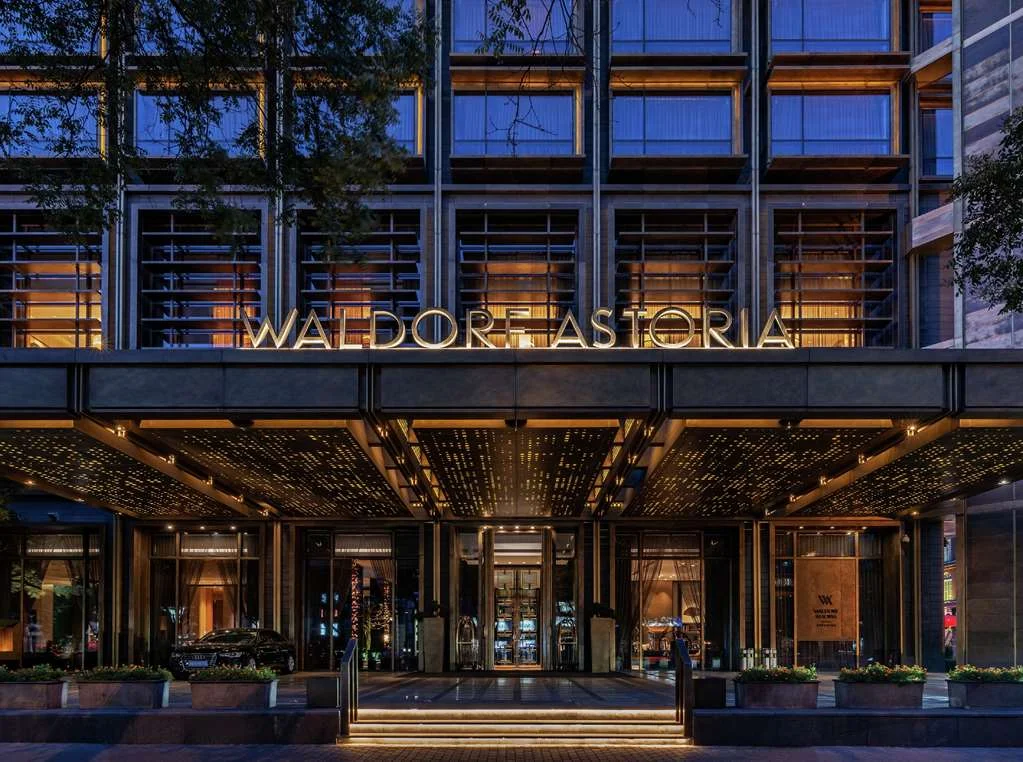
Waldorf Astoria Beijing
When you book Waldorf Astoria Beijing in China through our Hilton for Luxury partnership, your stay includes breakfast for two and a hotel credit of USD 100 per stay. You also receive a one-category room upgrade when available. You continue earning Hilton Honors points and elite night credits. No premium credit card or membership needed: request a quote and our advisor books it at the same rate as booking direct.
Exclusive Booking Perks
These perks are included with your stay at the same rate as booking direct with the hotel.
- VIP guest status
- Complimentary breakfast for 2 guests
- USD100 hotel credit per stay (or local equivalent)
- Double Hilton Honors Points
- Upgrade to next room category (subject to availability)
Location
The Waldorf Astoria name carries the weight of New York heritage, a lineage of grand-scale hospitality traced to 1893. True Waldorf Service here means concierge teams versed in the rhythms of the capital, signature dining that honours both brand legacy and local craft, and interiors that nod to architectural pedigree without surrendering to it.
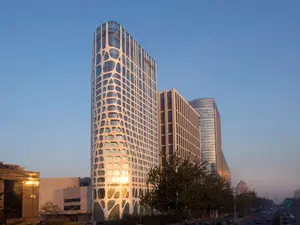
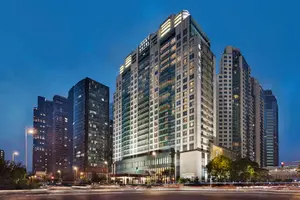
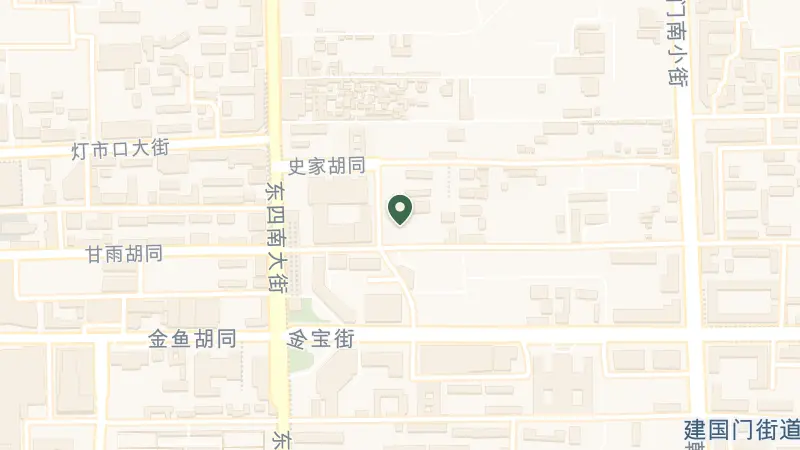
The property sits within the Chaoyangmen Subdistrict, named for the Gate that Faces the East, a vanished portal in Beijing's former city walls. This eastern stretch of Dongcheng District hums with the capital's accelerating pulse: wide boulevards lined with plane trees, glass towers shouldering against older residential blocks, the faint scent of jianbing from street corners at daybreak. Two kilometres west lies the Beijing Central Axis, a UNESCO ensemble of former imperial palaces, sacrificial altars, and ceremonial gardens that trace the ideal order of dynastic power from north to south through the historical heart of the city.
Beijing Capital International Airport lies 24 kilometres northeast, linked by expressway and metro. Daxing International Airport, 46 kilometres south, opened in 2019 with a starfish-shaped terminal designed by Zaha Hadid. Both offer direct routes into the city's sprawling metro network, though taxis remain the swifter choice for luggage-laden arrivals.
On-site dining begins with Zijin Mansion, a Michelin-starred Cantonese kitchen where hand-embroidered orange fabric adorned with bird motifs wraps the walls. The Hakkanese chef reinterprets traditional Cantonese fare with refined restraint and occasional Hakkanese inflections. Brasserie 1893, a Selected Restaurant, anchors the property's French contemporary programme with an open display kitchen, regularly changing à la carte menus built for sharing, and a Deluxe Degustation tasting menu that condenses the chef's vision into a single sitting. Four kilometres east, Chao Shang Chao holds three Michelin stars for its upmarket Chaozhou repertoire, where Chef Cheung reimagines regional classics with finesse honed in Hong Kong and Shanghai. Book a table at the Temple of Heaven, an imperial sacrificial complex inscribed in 1998, eight kilometres south. Its 15th-century altars and cult buildings rise from gardens ringed by historic pine woods, a dignified meditation on cosmology rendered in stone and timber.
Winter descends hard and dry. January and February bring crystalline skies and temperatures plunging below freezing, the air so arid it crackles. Spring arrives in gusts: March and April see sudden warmth, dust storms sweeping in from the Gobi, and the city's willows leafing out along canal banks.
Summer peaks in July with monsoon rains and sticky heat, the capital slowing under dense humidity. September is the season to visit: clear light, mild temperatures, and the russet glow of persimmons ripening in hutong courtyards.
November ushers in the long freeze, skies pale and wind biting. By December, the city locks into a quiet, monochrome stillness broken only by the occasional dusting of snow.
Frequently Asked Questions

Quotes are personally reviewed by Natasha Hardy, founder of The Uncommon Traveller
5.0 rating · 8 Google reviewsThere is no fee or markup. The hotel pays our commission.
Request a Quote 26 Bib Gourmand