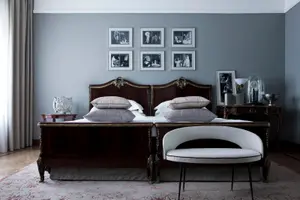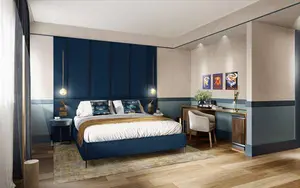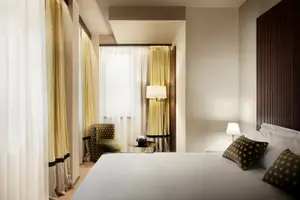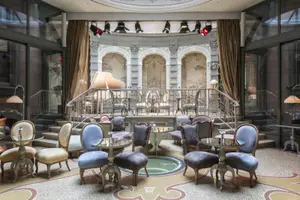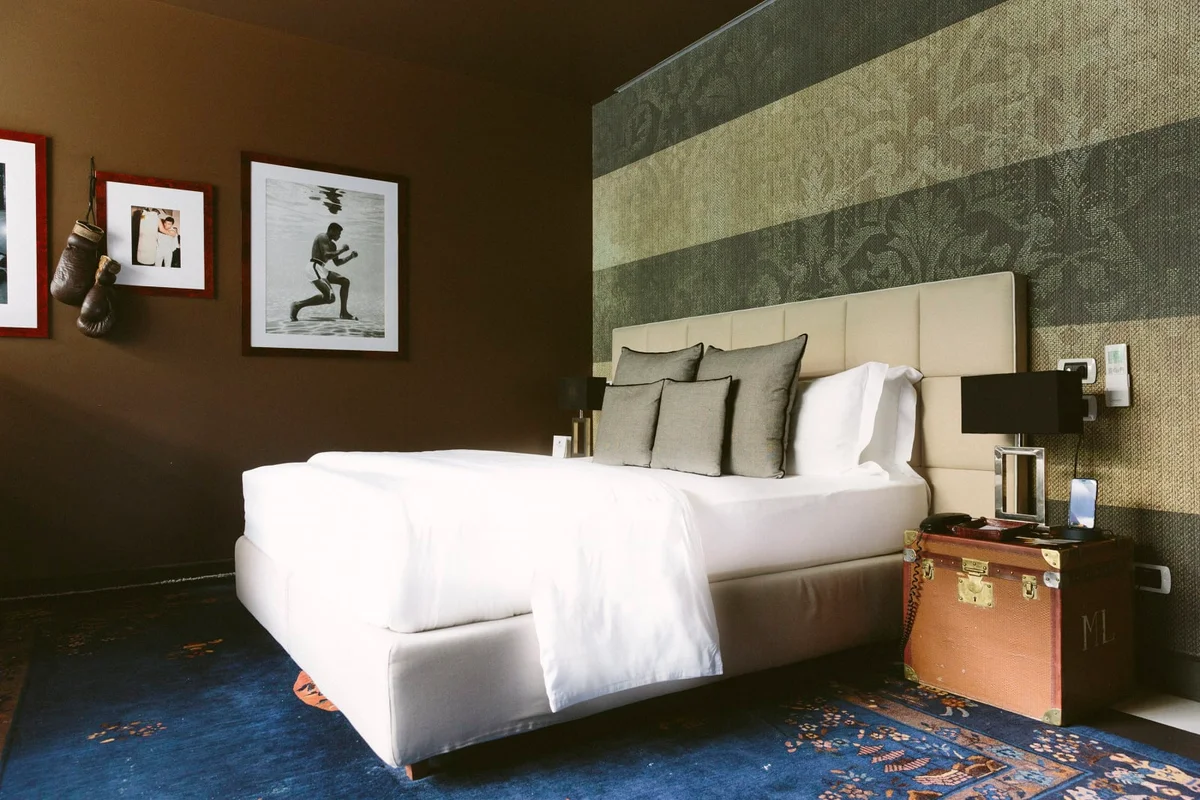
Aethos Milan
When you book Aethos Milan in Italy through our Fora Reserve partnership, your stay includes daily breakfast for up to two guests and a 50€ hotel credit per stay. You also receive a room upgrade, early check-in and late check-out when available. No premium credit card or membership needed: request a quote and our advisor books it at the same rate as booking direct.
Exclusive Booking Perks
These perks are included with your stay at the same rate as booking direct with the hotel.
- Upgrade on arrival, subject to availability
- Daily breakfast for up to two guests per bedroom, served in the restaurant and via in-room dining (already included in property rates)
- 50€ per room per stay, equivalent Hotel credit to be utilized during stay (not combinable, not valid on room rate, no cash value if not redeemed in full)
- Early Check-In / Late Check-Out, subject to availability
Location
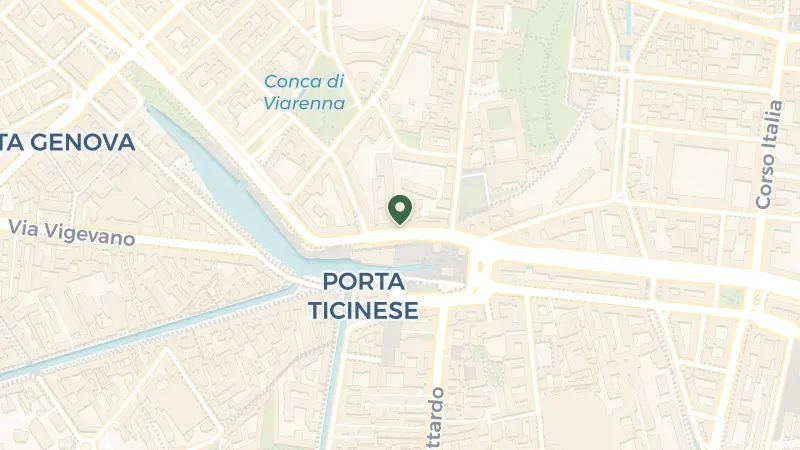
Milan pulses with a restless energy that sets it apart from Italy's museum cities. This is a metropolis that earned its stripes through industry and finance rather than ancient ruins, a place where contemporary art installations share street corners with medieval basilicas and the relentless churn of fashion week transforms entire neighbourhoods twice a year. The city's Roman origins as Mediolanum live on in street patterns and fragments of amphitheatre walls, but it was the Renaissance-era Duchy of Milan that left the most visible mark: grand courtyards hidden behind palazzo gates, Bramante's geometric precision at Santa Maria delle Grazie, the restless ambition that brought Leonardo's Last Supper here in the 1490s.
The Borgo San Gottardo neighbourhood spreads across the southern reaches of the city, a residential quarter where iron-railed balconies overhang cobbled side streets and morning espresso comes with the clatter of trams on nearby tracks. This is not the glossy Quadrilatero della Moda, but a lived-in Milan where the Naviglio della Martesana's historic waterway once powered mills and workshops.
Linate Airport lies eight kilometres east, a twenty-minute drive that traces the city's industrial arc through suburban sprawl before depositing you in the warren of streets where neighbourhood trattorias still serve risotto alla milanese at zinc-topped bars.
The Michelin constellation here rewards serious appetites. Three-starred Enrico Bartolini al Mudec sits 1.4 kilometres north, where the chef and resident Davide Boglioli construct plates with an almost architectural intensity of flavour. Book a table at Verso Capitaneo on Piazza Duomo, fifteen minutes away, where three communal tables face the open kitchen and the two-star tasting menu unfolds like theatre. Seta by Antonio Guida at the Mandarin Oriental, two kilometres distant, serves international cosmopolitan cooking that reflects Milan's role as a global crossroads rather than a purely regional capital.
Santa Maria delle Grazie demands a pilgrimage: Bramante's Renaissance convent refectory, two kilometres northwest, holds Leonardo's Last Supper, though tickets require advance planning measured in weeks, not days. The Mercato Papiniano fills stalls with seasonal produce and north African spices seven hundred metres away each Tuesday and Saturday, a collision of Lombardy's agricultural hinterland and the city's immigrant neighbourhoods. For wine, Convivio's enoteca lies 1.4 kilometres north, its cellar deep in Piedmontese Barolo and Franciacorta sparklings that taste of the region's limestone slopes.
Winter arrives with fog rolling in from the Po Valley, the kind of damp cold that seeps through wool coats and sends Milanese ducking into cafés for afternoon chocolate. January and February hover just above freezing, the city wrapped in pewter light that softens the hard edges of glass towers.
Spring builds slowly through March and April, when temperatures climb into the mid-teens and sudden downpours clear the air. May brings warmth and the city's highest rainfall, the streets slick and fragrant after afternoon storms.
July and August turn Milan into a furnace, thermometers pushing past twenty-eight degrees while locals flee for the lakes. September offers the best balance: warm days in the mid-twenties, the return of fashion week energy, and golden light that makes even concrete look forgiving.
Frequently Asked Questions

Quotes are personally reviewed by Natasha Hardy, founder of The Uncommon Traveller
5.0 rating · 8 Google reviewsThere is no fee or markup. The hotel pays our commission.
Request a Quote 7 Bib Gourmand