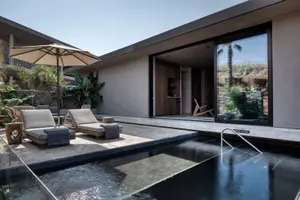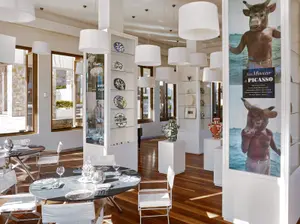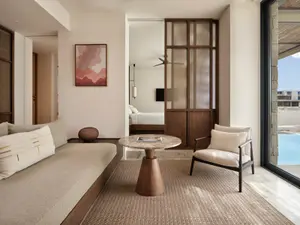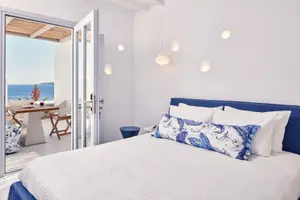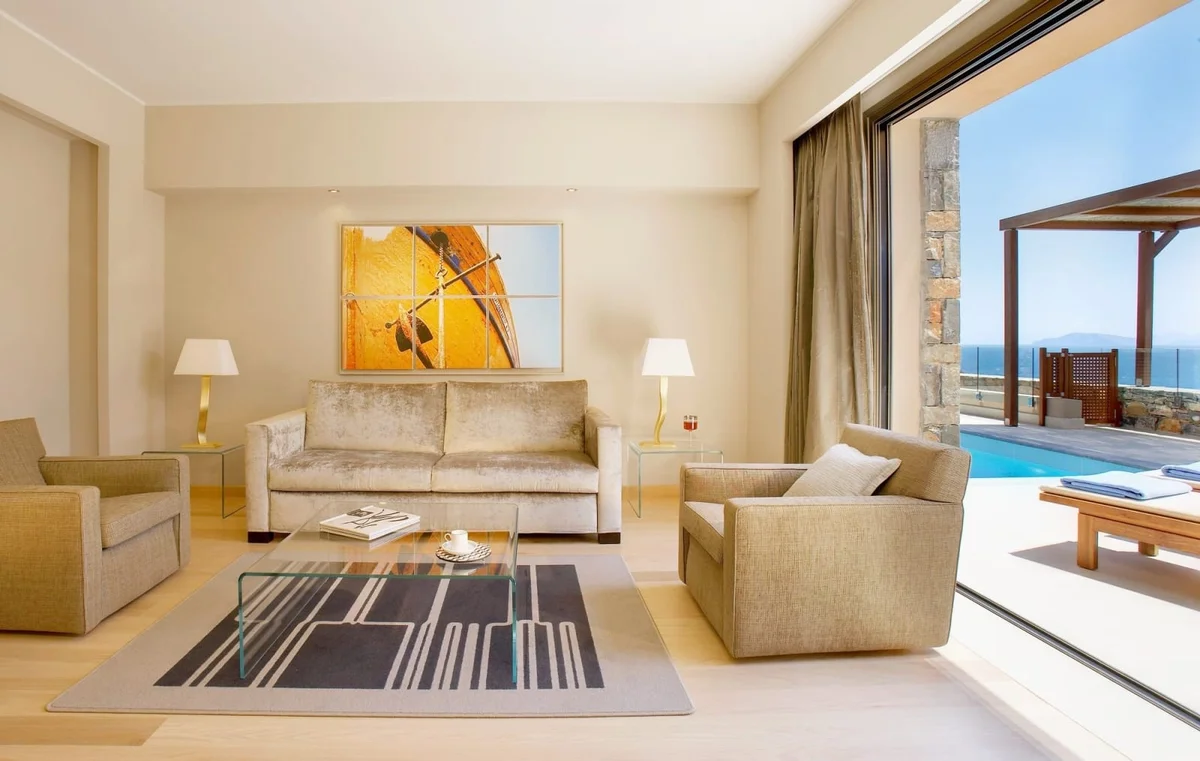
Daios Cove
When you book Daios Cove in Crete, Greece, through our Virtuoso partnership, your stay includes daily breakfast for up to two guests and a $100 USD resort or hotel credit. You also receive a room upgrade, early check-in and late check-out when available. No premium credit card or membership needed: request a quote and our advisor books it at the same rate as booking direct.
Exclusive Booking Perks
These perks are included with your stay at the same rate as booking direct with the hotel.
- Upgrade on arrival, subject to availability
- Daily breakfast for up to two guests per bedroom, served in the restaurant and ...
- $100 USD equivalent Resort or Hotel credit (not comb...)
- Stays of 7+ nights will receive an additional $150 Resort or Hotel credit (for ...)
- Early check-in / Late check-out, subject to availability
Location
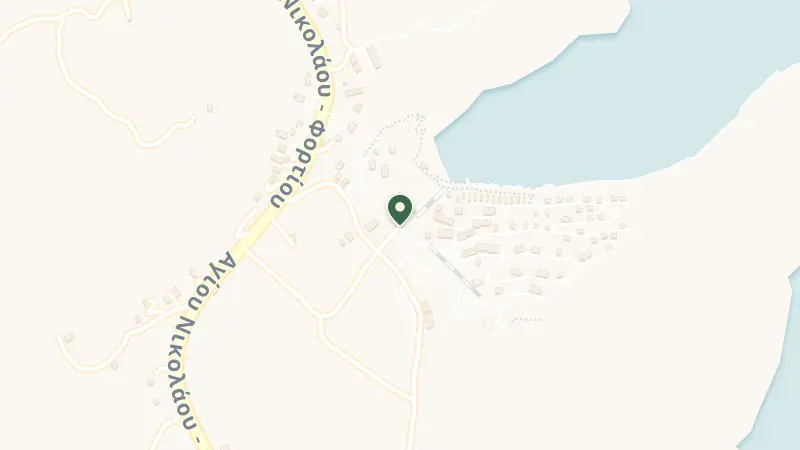
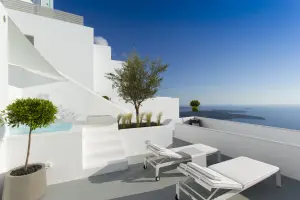
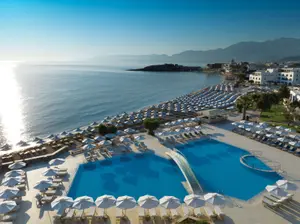
Daios Cove occupies a sheltered cove on Crete's northeastern shore, where the Aegean meets limestone cliffs and terraced hillsides silvered with olive groves. The property sits within walking distance of Karavostasi beach, a quiet pebbled crescent that catches the morning light, and a short drive from Agios Nikolaos, the regional harbour town that wraps around Voulismeni Lake, a deep saltwater inlet linked to the sea by a narrow channel. This is eastern Crete at its most quietly prosperous: fishing villages where nets dry in the sun, roadside tavernas serving dakos and local goat, and a coastline that alternates between sand and stone.
Crete carries the weight of Europe's oldest civilization. The Minoans built their palatial centres here nearly four millennia ago, and those archaeological sites, now recognized as UNESCO World Heritage, lie within an hour's drive. The island stretches 260 kilometres east to west but narrows sharply north to south, a geography that keeps the mountains close and the sea omnipresent. Heraklion, the capital, anchors the northern coast fifty-four kilometres west; the Libyan Sea marks the southern horizon.
The nearest airports are Heraklion (fifty-four kilometres) and Sitia (thirty-five kilometres), both connected by coastal roads that wind through villages older than the Venetian forts that still guard their harbours.
The cove itself invites stillness: morning swims in the Aegean's startling clarity, afternoons on the private beach, evenings when the cicadas quiet and the waterline turns violet. Voulisma beach, locally called Golden Beach for good reason, spreads three kilometres south, its sand fine and pale against the blue. The marina at Agios Nikolaos, less than five kilometres away, hums with small boats and waterfront cafes where octopus hangs drying in the sun. Book a table at one of the harbour tavernas for grilled barbounia (red mullet) and a carafe of retsina.
Further afield, the Minoan Palatial Centres await. These six archaeological sites, including Knossos and Malia, preserve the remnants of Bronze Age Crete: frescoed walls, labyrinthine corridors, storage jars the height of a man. Closer still, the Mylonas waterfall plunges forty metres into a stone basin sixteen kilometres inland, reachable by footpath through the Thripti mountains. The nature reserves that ring the coast, including the protected area at Oxia near Elounda, shelter Cretan goat and rare orchids. For wine, drive south to the Strataridakis or Stilianou estates, where vines grow in volcanic soil and tastings unfold in centuries-old cellars.
Summer arrives fierce and cloudless. July and August see temperatures climb above thirty degrees, the heat dry and relentless, the sea a necessary reprieve. The island quiets in the afternoon; tavernas reopen after dark. September softens the edges: the water still warm, the light gentler, the crowds thinning.
Winter brings rain and a green flush to the hillsides. January and December see the most precipitation, though days remain mild by northern European standards, temperatures hovering in the mid-teens. The mountains may catch snow; the coast rarely does.
Spring is Crete's secret season. April and May unfold in wildflowers and almond blossoms, the air scented with thyme and warming steadily. The sea loses its winter chill, the villages prepare for summer, and the archaeological sites stand empty under skies that shift from pewter to cerulean by noon.
Frequently Asked Questions

Quotes are personally reviewed by Natasha Hardy, founder of The Uncommon Traveller
5.0 rating · 8 Google reviewsThere is no fee or markup. The hotel pays our commission.
Request a Quote