Dylan Hotel
When you book Dylan Hotel in Dublin, Ireland, through our Virtuoso partnership, your stay includes daily full breakfast for up to two guests and a $100 USD resort or hotel credit. You also receive a room upgrade, early check-in and late check-out when available. No premium credit card or membership needed: request a quote and our advisor books it at the same rate as booking direct.
Exclusive Booking Perks
These perks are included with your stay at the same rate as booking direct with the hotel.
- Upgrade on arrival, subject to availability
- Daily Full breakfast for up to two guests per bedroom, served in the restaurant and via in-room dining
- $100 USD equivalent Resort or Hotel credit
- Special Local Welcome Amenity in room on arrival
- Early check-in / Late check-out, subject to availability
Location
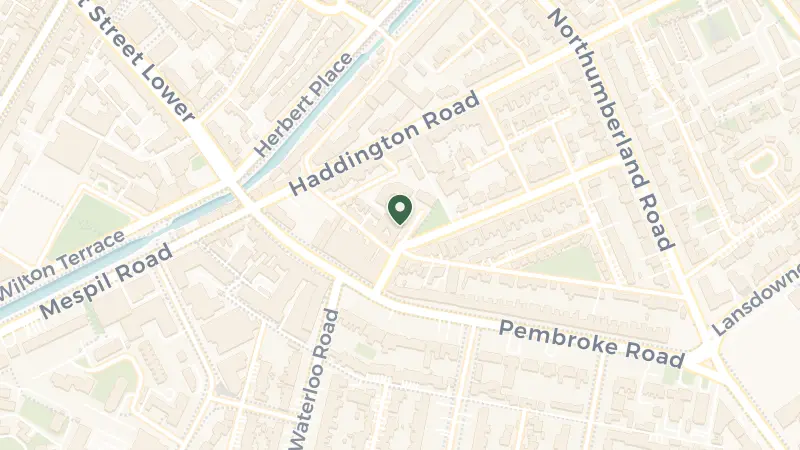
The Dylan occupies a redbrick Victorian building on Eastmoreland Place, a quiet residential enclave south of St Stephen's Green where Georgian townhouses give way to leafy avenues and the hum of the city softens into something more residential. This is not the Dublin of Temple Bar's cobblestones and tourist throngs, but a neighbourhood where literary history lingers in corner pubs and locals still shop at Ranelagh Village Market, a kilometre south. The green copper dome of Newman University Church rises a few streets north, and the River Liffey traces its path through the city centre beyond, its brackish tidal scent carried on westerly winds.
Dublin itself wears its Viking and Norman past lightly, though the street grid still follows medieval bones. The city expanded dramatically in the 18th century, when Georgian planners laid out squares and crescents that remain among Europe's finest, and it thrives now as Ireland's cultural and commercial heart. Trinity College's Long Room and the manuscript-lined halls of Marsh's Library anchor the literary tradition, while Grafton Street's shopfronts and the iron-and-glass span of Ha'penny Bridge mark the city's Victorian industrial ambitions.
Dublin Airport lies 11 kilometres north, connected by frequent bus services and taxis that navigate the city's dense traffic with practiced ease. The M50 orbital motorway loops the metropolitan area, but the hotel's location keeps you anchored in the walkable south Georgian core, where distances are measured in strolls rather than drives.
Patrick Guilbaud, tucked within a Georgian townhouse less than a kilometre away, holds two Michelin stars for Guillaume Lebrun's modern French cooking beneath a gilt barrel ceiling. The tasting menu leans on Irish producers but speaks in a refined continental accent; reserve well ahead. Closer still, the hotel's surroundings favour independent wine bars and neighbourhood bistros where menus shift with the seasons and oysters from Galway Bay arrive daily. For a second two-starred experience, Chapter One by Mickael Viljanen occupies a cellar dining room 2.7 kilometres north, its art-lined walls and impeccable service framing Viljanen's assured modern technique. Book a table at Liath, 5.6 kilometres out in Blackrock, where Damien Grey and his small team offer just a handful of tables and a genuinely personal welcome; the creative tasting menu feels almost like dining in a private home.
Within walking distance, the National Gallery of Ireland displays works by Caravaggio and Vermeer alongside Ireland's finest painters, while Trinity College's 18th-century library houses the Book of Kells, an illuminated manuscript completed around 800 CE. George's Street Arcade, a Victorian covered market 1.8 kilometres northwest, mixes vintage clothing stalls with artisan food vendors, and the Grand Canal curves through Ranelagh, its towpaths offering a quiet route south toward the Dublin Mountains.
Winter light arrives late and leaves early, with temperatures hovering near 8°C and frequent soft rain that glosses Georgian brick and pooled cobblestones. The city's literary pubs and museum galleries feel at their most inviting when storm fronts blow in from the Atlantic. Spring brightens slowly, cherry blossoms unfurling in Stephen's Green and canal-side paths by April, though rain remains a near-constant companion through May.
Summer stretches the evenings long, temperatures climbing to the mid-teens and occasionally brushing 20°C. Dubliners fill outdoor terraces along the quays, and the Liffey reflects pale northern light well past nine. Autumn brings the richest colours, the city's parks turning amber and rust by October, though November's frequent showers and shorter days mark the turn toward winter's introspection.
Late spring through early autumn offers the most reliable weather for walking tours and coastal excursions, but the city's indoor cultural life thrives year-round, making any season rewarding for those drawn to literature, art, and the unhurried pace of Dublin's Georgian quarters.
Frequently Asked Questions

Quotes are personally reviewed by Natasha Hardy, founder of The Uncommon Traveller
5.0 rating · 8 Google reviewsThere is no fee or markup. The hotel pays our commission.
Request a Quote 7 Bib Gourmand