The Westbury Hotel
When you book The Westbury Hotel in Dublin, Ireland, through our Virtuoso partnership, your stay includes daily full breakfast for up to two guests and a $100 USD food and beverage credit. You also receive a room upgrade, early check-in and late check-out when available. No premium credit card or membership needed: request a quote and our advisor books it at the same rate as booking direct.
Exclusive Booking Perks
These perks are included with your stay at the same rate as booking direct with the hotel.
- Upgrade on arrival, subject to availability
- Daily Full breakfast for up to two guests per bedroom, served in the restaurant
- $100 USD equivalent Food & Beverage credit
- Bookings in our Suites will also receive a complimentary bottle of house Champagne
- Early Check-In / Late Check-Out, subject to availability
Location
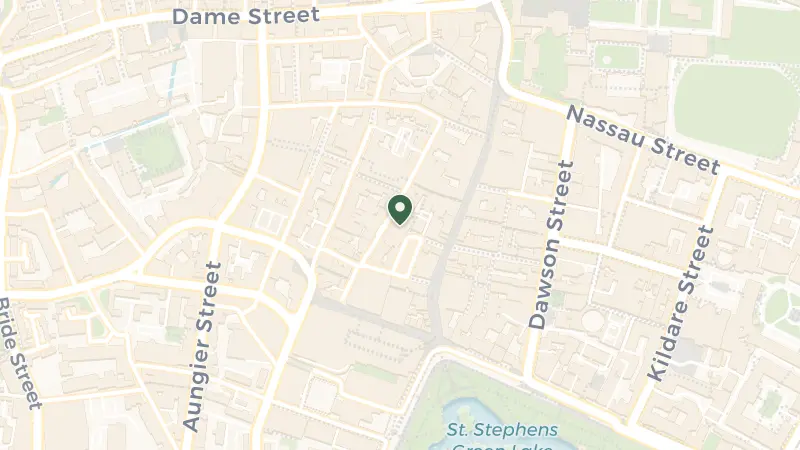
The Westbury Hotel sits on Dublin's Grafton Street, the city's most animated shopping thoroughfare, where buskers play beneath Victorian facades and the hum of conversation spills from café terraces onto cobblestones worn smooth by centuries of foot traffic. This is the heart of Georgian Dublin, where redbrick townhouses frame wide streets laid out in the 18th century when the city briefly rivalled London in grandeur. The River Liffey curves just north, its quays lined with iron bridges and the occasional glimpse of Dublin Bay beyond.
Grafton Street opens onto St Stephen's Green, a 22-acre park enclosed by wrought-iron railings where swans glide across ornamental ponds and office workers lunch on benches beneath plane trees. Trinity College's limestone quadrangles and the Long Room's vaulted timber ceiling lie minutes to the northeast. The neighbourhood pulses with literary history: Bewley's Oriental Café still serves tea in its art deco rooms, George's Street Arcade shelters vintage sellers and cheese mongers beneath its Victorian glass canopy, and the streets echo with echoes of Joyce, Wilde, and Beckett.
Dublin Airport sits ten kilometres north, connected by frequent bus services and taxi links that thread through the city's northside neighbourhoods before crossing the Liffey into the Georgian core.
The dining anchor is Patrick Guilbaud, 658 metres south in a Georgian townhouse, where two Michelin stars and a gilt barrel ceiling frame modern French cooking that has defined Dublin fine dining for decades. Chapter One by Mickael Viljanen, 1.4 kilometres north, offers two-star cooking in an elegant basement space lined with contemporary art, the small team delivering personal, top-tier service. For creative cooking in a more intimate setting, Liath lies 7.1 kilometres out in Blackrock: two Michelin stars, a handful of tables, and Damien Grey presenting dishes himself.
Walk two blocks west to George's Street Arcade, a Victorian covered market where traders sell vintage clothes, cheese, and old vinyl under iron rafters. The Guinness Storehouse, the city's most-visited museum, stands a kilometre west, its top-floor Gravity Bar offering 360-degree views over the rooftops. Book a table at Patrick Guilbaud well ahead; reservations fill weeks out. Sandymount Strand, a vast sand beach 3.4 kilometres southeast, draws walkers at low tide when the bay seems to stretch halfway to Wales. Trinity College's Long Room, just minutes south, shelves 200,000 of the library's oldest books in a barrel-vaulted chamber that feels like stepping into a different century.
Summer, from June through August, brings the longest light, with temperatures reaching 19°C and evenings that linger past ten o'clock. Rain arrives intermittently but briefly; café seating fills St Stephen's Green's perimeter, and the city adopts an unhurried rhythm as office workers extend lunch hours into the afternoon.
Spring and autumn hover between eight and 17°C, the transitional months when Dublin feels most itself. May sees hawthorn bloom along the canal paths, while September's slanting light gilds Georgian brick and the first chill creeps into evening air. Both seasons reward layered clothing and reward visitors with fewer crowds at cultural landmarks.
Winter, from November through February, turns brisk rather than bitter, temperatures rarely dipping below freezing. The city contracts inward: pubs glow with turf fires, theatre season peaks, and rain falls steadily though rarely torrentially. December through February offer the quietest streets and the most authentic sense of local life unfolding without tourist interruption.
Frequently Asked Questions

Quotes are personally reviewed by Natasha Hardy, founder of The Uncommon Traveller
5.0 rating · 8 Google reviewsThere is no fee or markup. The hotel pays our commission.
Request a Quote 7 Bib Gourmand