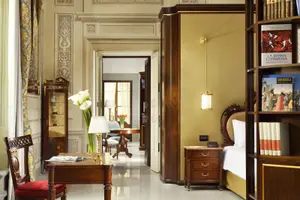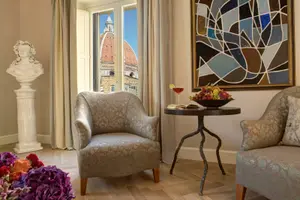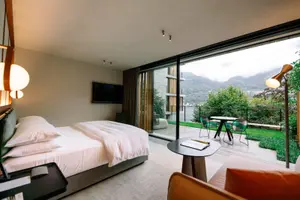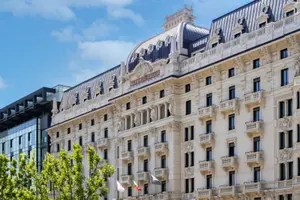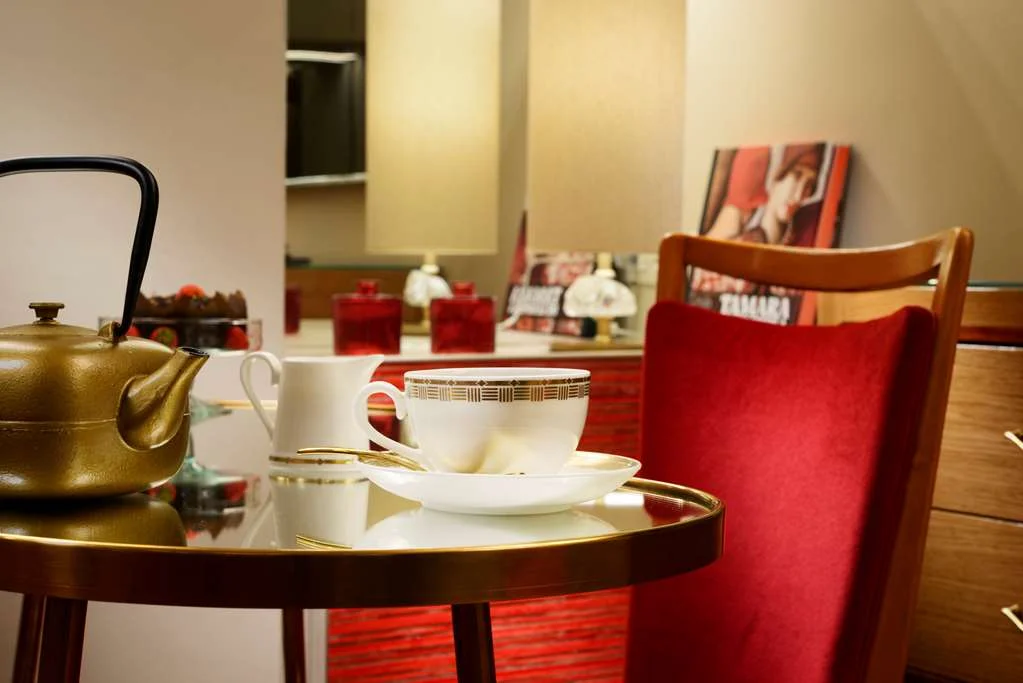
Grand Hotel Minerva
When you book Grand Hotel Minerva in Florence, Italy, through our Virtuoso partnership, your stay includes daily breakfast for up to two guests and a $100 USD food and beverage credit. You also receive a room upgrade, early check-in and late check-out when available. No premium credit card or membership needed: request a quote and our advisor books it at the same rate as booking direct.
Exclusive Booking Perks
These perks are included with your stay at the same rate as booking direct with the hotel.
- Upgrade on arrival, subject to availability
- Daily breakfast for up to two guests per bedroom, served in the restaurant and via in-room dining (already included in property rates)
- $100 USD equivalent Food & Beverage credit to be utilized during stay (not combinable, not valid on room rate, no cash value if not redeemed in full)
- Bookings in our Suites or Unique Rooms will receive an additional $100 credit (for a total of $200 during stay)
- Early check-in / Late check-out, subject to availability
Guest feedback
9.1/10 from 563 guest reviews
By category
Guests liked
- Great location
- Helpful staff
Points to consider
- Poor cleanliness
- Limited breakfast options
Location
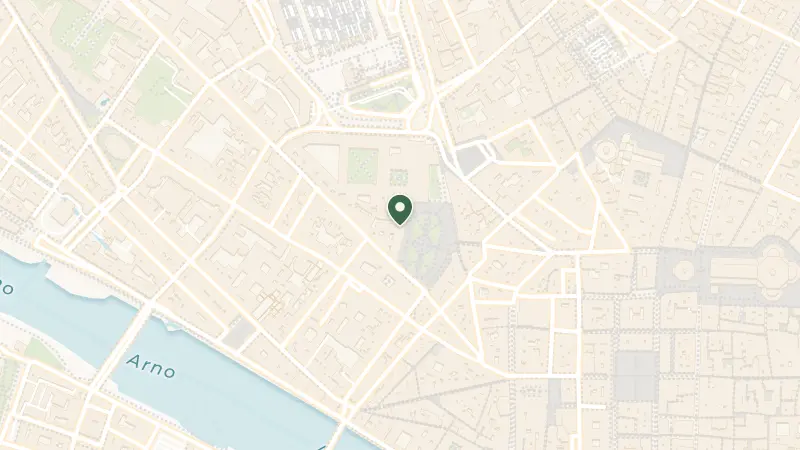
Grand Hotel Minerva opens onto Piazza Santa Maria Novella, where the white and green marble façade of the 13th-century basilica commands one of Florence's grandest squares. The property stands in the heart of the historic centre, steps from the Arno and the leather markets that spill through the medieval streets. This is Florence at its most visceral: the scent of fresh leather from the nearby Mercato del Porcellino, the clatter of delivery carts on cobblestones at dawn, the honeyed light that washes over terracotta rooftops in late afternoon.
The city itself needs little introduction. Florence rose to power as a medieval trading hub before the Medici transformed it into the cradle of the Renaissance, bankrolling Brunelleschi's dome and Botticelli's canvases. The Florentine dialect became the foundation of modern Italian, shaped by Dante and Machiavelli, and the city briefly served as Italy's capital between 1865 and 1871. UNESCO recognized the Historic Centre in 1982, though you feel the weight of that history most acutely in the narrow lanes of San Frediano across the river, where the Porta San Frediano once marked the western gate to the Oltrarno.
Florence Airport sits five kilometres northwest; most arrivals take a taxi or the Volainbus shuttle into the centre, a 20-minute journey that traces the northern banks of the Arno. Pisa's larger international airport is 70 kilometres west, linked by direct rail service.
The city's Michelin constellation begins 538 metres from the property at Luca's by Paulo Airaudo, where contemporary technique meets Tuscan ingredients in an intimate L-shaped dining room distinguished by green boiserie. Book a table at Enoteca Pinchiorri, 1.1 kilometres east in a 17th-century palazzo on Via Ghibellina, for three-starred Italian contemporary cuisine and one of Europe's deepest wine cellars. The leather market spreads its stalls 300 metres away, while the Mercato di San Lorenzo, 400 metres northeast, offers ribollita bubbling in cauldrons, lampredotto served from steaming tripe carts, and the morning chaos of Florentines buying seasonal produce.
The Uffizi's Botticelli rooms and Michelangelo's David at the Accademia anchor the artistic pilgrimage, but Florence rewards slower looking: Masaccio's revolutionary Brancacci Chapel frescoes in Santa Maria del Carmine, the green-and-white geometry of the Baptistery's marble cladding, the climb up Giotto's Campanile for rooftop views across terracotta to the Apennine foothills. The Medici Villas and Gardens, a UNESCO site 10 kilometres into the Tuscan countryside, reveal the family's 15th-century influence on landscape design. Oratio and Cantina Barbargianni, both 1 kilometre from the centre, pour Chianti and Super Tuscan wines by the glass.
July and August bring fierce heat, with temperatures climbing past 30°C and the city's ochre walls radiating warmth long after sunset. Locals flee to the coast; visitors who remain find empty museums but little relief from the stillness. June and September strike a better balance, with highs in the mid-twenties and golden light that flatters every fresco.
Spring arrives wet, March especially, but the rain clears quickly and leaves the Boboli Gardens vivid with wisteria and iris. October turns unpredictable, swinging between warm afternoons and sudden downpours that send crowds scattering under porticos. The clouds part just as abruptly, drenching the Duomo in theatrical light.
Winter drops to single digits, but Florence never truly freezes. January mornings feel sharp and clear, the city scrubbed clean of summer's throngs, wood smoke rising from chimneys in the Oltrarno at dusk.
Frequently Asked Questions

Quotes are personally reviewed by Natasha Hardy, founder of The Uncommon Traveller
5.0 rating · 8 Google reviewsThere is no fee or markup. The hotel pays our commission.
Request a Quote 10 Bib Gourmand