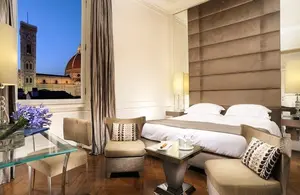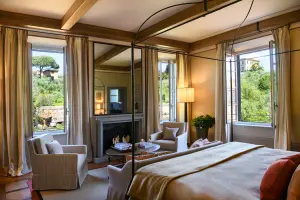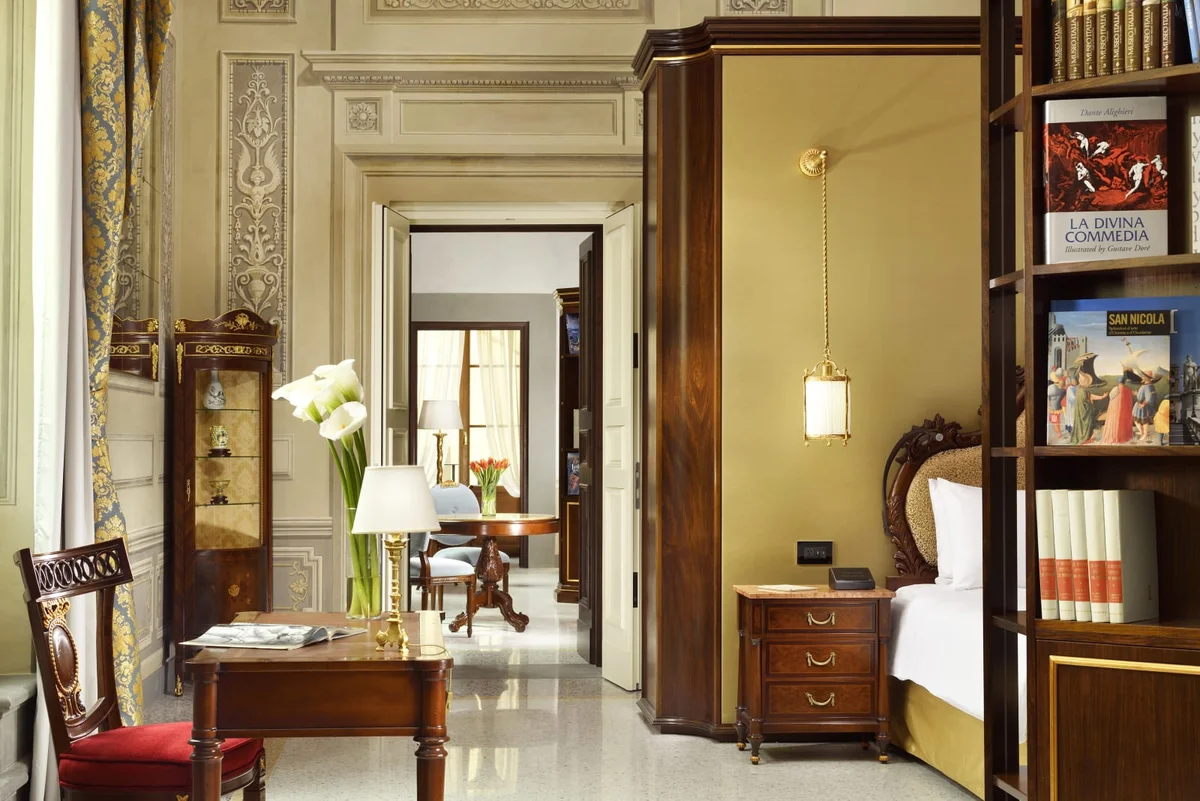
Palazzo Portinari Salviati
When you book Palazzo Portinari Salviati in Florence, Italy, through our Virtuoso partnership, your stay includes daily full breakfast for up to two guests and a $100 USD food and beverage credit. You also receive a room upgrade, early check-in and late check-out when available. No premium credit card or membership needed: request a quote and our advisor books it at the same rate as booking direct.
Exclusive Booking Perks
These perks are included with your stay at the same rate as booking direct with the hotel.
- Upgrade on arrival, subject to availability
- Daily Full breakfast for up to two guests per bedroom, served in the restaurant
- $100 USD equivalent Food & Beverage credit to be utilized during stay (not combinable, not valid on room rate, no cash value if not redeemed in full)
- $50 USD equivalent Spa credit, once during stay, applicable towards massages and treatments (not applicable towards retail, no cash value if not redeemed in full)
- Early check-in / Late check-out, subject to availability
Guest feedback
9.8/10 from 89 guest reviews
By category
Guests liked
- Exceptional service
- Stunning location
Points to consider
- Unstable WiFi connection
- Gym size could be larger
Location
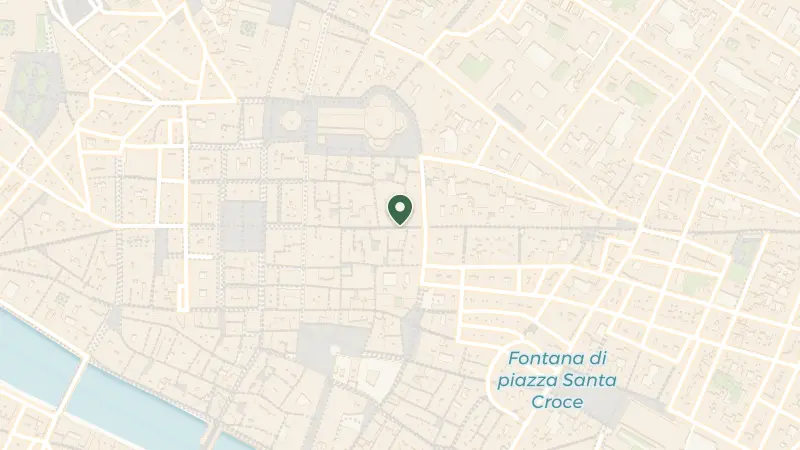
Palazzo Portinari Salviati occupies a building with its own chapter in Florentine history, standing in the Corte degli Imperatori behind the cathedral. The Salviati family once called these walls home, and the palazzo's placement in the heart of the Historic Centre positions you within walking distance of the city that invented the Renaissance.
Step outside and the Duomo's terracotta dome rises just steps away, Brunelleschi's engineering marvel dominating the skyline since 1436. The neighbourhood hums with purposeful energy: locals buying vegetables at Mercato del Porcellino three blocks north, students crossing Piazza della Signoria toward the Uffizi, the scent of leather from artisan workshops drifting through narrow via. This is the Florence of Dante and the Medici, where every piazza carries the weight of centuries and the Florentine dialect that became modern Italian still colours conversation in corner osterie.
Florence Peretola Airport lies six kilometres northwest, a quick taxi ride that deposits you into streets where ochre palazzi line the Arno and church bells mark the hours as they have for half a millennium.
Atto di Vito Mollica holds one Michelin star and occupies a dining room beneath Allori's frescoes, where contemporary Italian cuisine unfolds in a sixteenth-century setting. Three blocks south on Via Ghibellina, Enoteca Pinchiorri commands three stars in a seventeenth-century palazzo, an institution of Italian gastronomy where the wine cellar rivals the menu. Book weeks ahead for either. The Mercato del Porcellino sprawls three hundred metres west, a covered loggia where stalls sell truffles, porcini, Tuscan salami, and ribollita ladled from copper pots. Mercato di Sant'Ambrogio, less than a kilometre east, serves the neighbourhood with morning produce and an excellent panini counter.
The Historic Centre of Florence, a UNESCO site inscribed in 1982, stretches in every direction from the palazzo. The Uffizi Gallery holds Botticelli's Birth of Venus and works by Caravaggio and Leonardo. Across the Arno, the Pitti Palace and Boboli Gardens occupy a hillside of geometric terraces and grottoes. Forty kilometres northwest, Arnolfo in Colle di Val d'Elsa holds two Michelin stars in a modern glass-and-iron building designed for views over the Tuscan countryside. Start your mornings at the hotel's fountain courtyard before the tour groups arrive.
July and August bring heat that empties the city by mid-afternoon, temperatures pushing past thirty degrees while tourists retreat to shaded cloisters and gelato counters. The Arno slows to a trickle, and shutters stay closed until evening when the stones finally exhale.
Spring and autumn offer the city at its most generous: April through June and September through October deliver mild days perfect for walking the Boboli Gardens or climbing to San Miniato al Monte. October rains arrive hard but brief, washing the piazzas clean and deepening the colour of terracotta rooftops.
Winter sees fog settle over the river valley and temperatures drop just above freezing, the city quieter but no less compelling. Fewer crowds mean shorter lines at the Accademia, and wood smoke from neighbourhood trattorias scents the evening air.
Frequently Asked Questions

Quotes are personally reviewed by Natasha Hardy, founder of The Uncommon Traveller
5.0 rating · 8 Google reviewsThere is no fee or markup. The hotel pays our commission.
Request a Quote 10 Bib Gourmand