InterContinental Rome Ambasciatori Palace by IHG
When you book InterContinental Rome Ambasciatori Palace by IHG in Italy through our IHG Destined partnership, your stay includes daily breakfast for two and a $100 USD hotel credit per stay. You also receive a room upgrade when available. You continue earning IHG One Rewards points and elite night credits. No premium credit card or membership needed: request a quote and our advisor books it at the same rate as booking direct.
Special Offer
For every Junior Suite or One Bedroom Suite booked, we are pleased to include one complimentary one-way transfer to or from the hotel, covering Rome airports (Fiumicino or Ciampino) and Termini train station. Minimum Length of Stay: 2 nights Room Categories: Junior Suite or One Bedroom Suite
Exclusive Booking Perks
These perks are included with your stay at the same rate as booking direct with the hotel.
- $100 USD (or local currency equivalent) hotel credit per stay
- Daily complimentary breakfast for 2 guests (full or continental, depending on the hotel)
- Complimentary room upgrade (subject to availability)
- Local welcome amenity
- Early check-in / late check-out (subject to availability)
Guest feedback
9.6/10 from 378 guest reviews
Read what guests commentedBy category
Guests liked
- Outstanding service
- Delicious breakfast
- Great location
Points to consider
- Elevators slow
- Additional service charges
Location
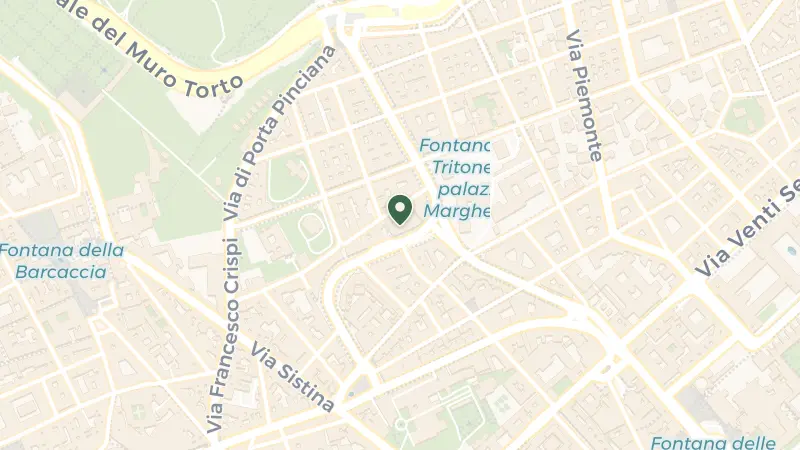
InterContinental's approach to hospitality centres on opening doors to local culture, and nowhere does that promise resonate more fully than in Rome, where history unfolds at every corner. The Ludovisi quarter, part of Municipio I's central core, occupies the northeastern edge of the historic centre, a neighbourhood defined by its proximity to Via Vittorio Veneto and the leafy dignity of early twentieth-century planning. This is not the Rome of ancient forums pressed shoulder to shoulder with tour groups, but a calmer precinct where embassies claim Belle Époque palazzi and the rhythm slows just enough to notice the quality of light filtering through umbrella pines.
Two kilometres south lies the UNESCO-inscribed Historic Centre of Rome, where twenty-eight centuries of continuous habitation have layered the city into a palimpsest of empire, papacy, and republic. The Tiber Valley cradles it all, Vatican City rising three kilometres west as the world's only sovereign state entirely enclosed within another capital's boundaries. Romulus and Remus may have founded this settlement in 753 BC according to legend, but archaeological evidence confirms human presence here for over three millennia, making Rome one of Europe's oldest continuously occupied cities.
Rome-Fiumicino Leonardo da Vinci International Airport sits twenty-three kilometres southwest, connected by the Leonardo Express rail link that delivers arrivals to Termini station in thirty minutes. From there, the Ludovisi district waits a short taxi ride north.
The property's location makes it a natural base for Rome's Michelin constellation. Within a short walk, ACQUOLINA | Nuova Cucina Mediterranea (two stars) interprets Mediterranean tradition with contemporary rigour just off Piazza del Popolo, while La Pergola (three stars), four kilometres north, offers refined Mediterranean cooking in a dining room where travertine hues and Roman red evoke the soul of the city. Book a table at Enoteca La Torre (two stars), two kilometres away within Villa Laetitia's stuccoed salons, for an evening of contemporary cuisine among columns and garden views. Closer still, Antica Enoteca (800 metres) offers a taste of Roman wine culture in a neighbourhood institution.
The Historic Centre of Rome, a UNESCO World Heritage Site, begins two kilometres south: the Roman Forum, the Arch of Septimius Severus raised in 203 AD, Trajan's Column from 113 AD rising like a marble chronicle. The Ara Pacis museum displays Augustus's altar of peace from 8 BC. Don't miss the Circus Maximus, where chariots thundered from the sixth century BC onward. Campo Marzio market (one kilometre) pulses with vendors hawking produce, cheese, and cured meats in the Roman tradition of neighbourhood commerce.
Summer in Rome is a study in contradictions: July and August push temperatures past thirty degrees, sending locals to the coast while piazzas shimmer under midday sun. The light turns hard and white, shadows deepen to charcoal, and by evening the stones exhale heat absorbed since dawn. Spring and autumn offer the city at its most forgiving, when April's seventeen-degree afternoons coax wisteria over courtyard walls and October's mild twenties make long walks through the historic centre feel effortless rather than punishing.
Winter rarely delivers frost, but January's eleven-degree highs and frequent rain lend the city a melancholic beauty, travertine darkening to pewter and fewer visitors clustering around monuments. December through February sees the most precipitation, though it rarely disrupts sightseeing for more than an afternoon at a time.
Late spring, particularly May and early June, claims the best weather: warm enough for gelato in the late afternoon, cool enough for morning explorations before crowds thicken, and with daylight stretching past eight in the evening to make the most of every hour.
Frequently Asked Questions

Quotes are personally reviewed by Natasha Hardy, founder of The Uncommon Traveller
5.0 rating · 8 Google reviewsThere is no fee or markup. The hotel pays our commission.
Request a Quote 10 Bib Gourmand