JW Marriott Panama
When you book JW Marriott Panama in Panama City, Panama, through our Marriott Luminous partnership, your stay includes daily breakfast for two and a welcome amenity. You also receive a room upgrade, early check-in and late check-out when available. No premium credit card or membership needed: request a quote and our advisor books it at the same rate as booking direct.
Exclusive Booking Perks
These perks are included with your stay at the same rate as booking direct with the hotel.
- Welcome amenity
- Complimentary breakfast daily for two guests per room
- Early check-in and late check-out (when available)
- Complimentary upgrade (if available at check-in)
Location
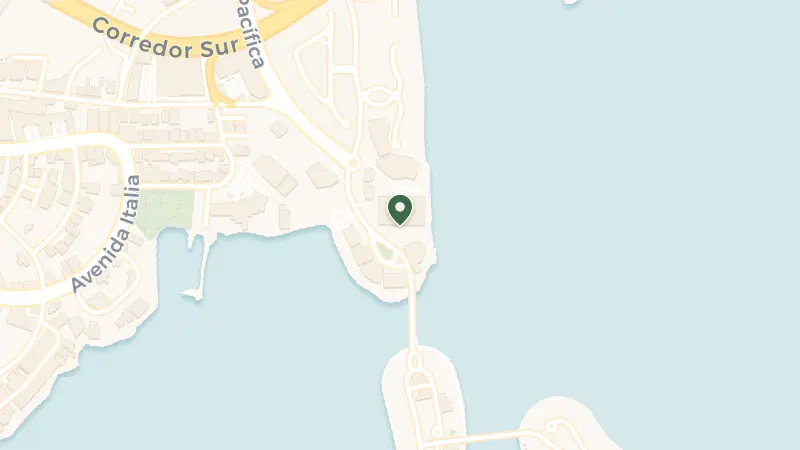
Punta Pacífica rises from the Pacific coast as Panama City's newest financial district, a tight cluster of mirrored towers where consulting firms and private clinics share floors with international banks. The neighbourhood hums with a different energy than Casco Viejo's colonial plazas: sleek, air-conditioned, transactional. Ocean Reef Islands Marina sits 800 metres west, its berths crowded with sport-fishing boats and weekend yachts. Playa de la Rampa, a narrow sand strip half a kilometre from the property, draws joggers at dawn before the tropical heat sets in.
The capital itself sprawls across the Pacific entrance to the Panama Canal, a city rebuilt on a peninsula after Henry Morgan burned the original settlement in 1671. That first site, founded by Spanish conquistadors in 1519, now stands in ruins as a World Heritage Site, its crumbling stone walls overrun with iguanas and bougainvillea. The modern city carries the legacy of the transatlantic trade route, when gold and silver from Peru passed through on mule trains bound for Portobelo. Palacio de las Garzas, the presidential palace dating to 1673, anchors the historic core.
Marcos A. Gelabert International Airport sits five kilometres northeast; Tocumen International Airport, the main hub for long-haul flights, is 17 kilometres east. Taxis are abundant, though traffic thickens during morning and evening commutes along the coastal Cinta Costera.
Three kilometres east, Mercado de Artesanía fills with mola textiles and tagua nut carvings, the air thick with fried empanadas and sugarcane juice. The colonial Transisthmian Route, inscribed as a World Heritage Site in 2025, traces the 16th-century path that linked the Caribbean to the Pacific; sections of the cobbled camino real survive in the rainforest canopy near Parque Nacional Camino de Cruces, 11 kilometres north. Panama Viejo Mangroves Marine Coastal Reserve, 3.5 kilometres away, shelters nesting herons and juvenile tarpon in shallow tidal channels. Book a panga tour at dawn when the mangroves steam and the city noise fades to bird calls and lapping water.
Portobelo's Caribbean fortifications, 66 kilometres north, remain the finest military architecture Spain built in the Americas. The stone bastions at San Lorenzo rise from jungle cliffs where sloths drape across ceiba branches. Closer in, the Panama Museum of Contemporary Art holds rotating exhibitions of Central American abstraction and photography. Drive to Isla Flamenco, 7.5 kilometres offshore, for ceviche de corvina at open-air cafés where frigatebirds wheel overhead and cargo ships queue for the canal.
The dry season, December through April, brings steady sunshine and temperatures near 30 degrees. Streets fill with festival banners and weekend crowds; hotel pools stay busy through lunch. February and March see the least rain, barely 30 millimetres per month, and the Pacific stays calm for boat trips to outlying islands.
May marks the shift: afternoon thunderstorms roll in from the interior, drenching the city in warm downpours that turn streets into rivers for an hour before draining away. Rainfall peaks in July at nearly 300 millimetres, though mornings often stay clear. The air feels heavier, greener; the mangroves swell with migrating shorebirds.
November into December tapers off, the rain easing but humidity lingering. Book the dry months for beach days and canal transits. The wet season demands flexibility but rewards with emptier trails and dramatic cloudscapes over the Cinta Costera.
Frequently Asked Questions

Quotes are personally reviewed by Natasha Hardy, founder of The Uncommon Traveller
5.0 rating · 8 Google reviewsThere is no fee or markup. The hotel pays our commission.
Request a Quote