Le Méridien Visconti Rome
When you book Le Méridien Visconti Rome in Italy through our Marriott Luminous partnership, your stay includes daily breakfast for two and a welcome amenity. You also receive a room upgrade, early check-in and late check-out when available. No premium credit card or membership needed: request a quote and our advisor books it at the same rate as booking direct.
Exclusive Booking Perks
These perks are included with your stay at the same rate as booking direct with the hotel.
- Welcome amenity
- Complimentary breakfast daily for two guests per room
- Early check-in and late check-out (when available)
- Complimentary upgrade (if available at check-in)
Guest feedback
8.5/10 from 329 guest reviews
Read what guests commentedBy category
Guests liked
- Cleanliness
- Service
- Location
Points to consider
- Room Size
- Amenity Issues
Location
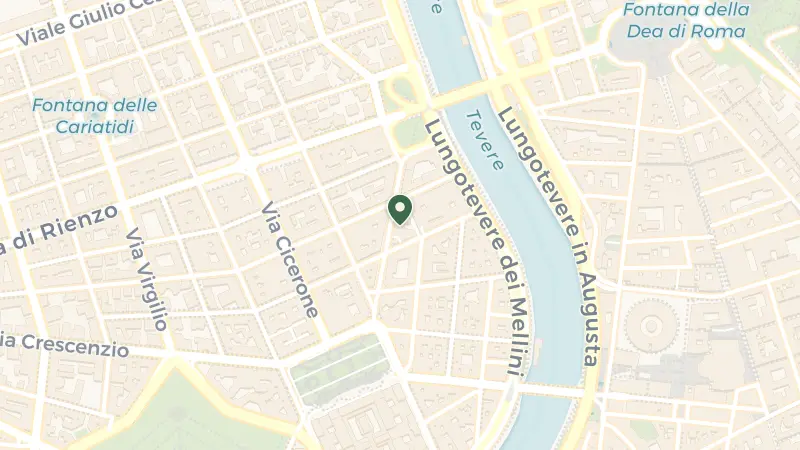
The Prati neighbourhood unfolds across the grid of streets laid out after Italian unification, a district where residential calm meets proximity to the Vatican's spiritual gravity. Wide tree-lined boulevards follow the geometric logic of late 19th-century Roman expansion, punctuated by neighbourhood trattorias and independent boutiques that serve local Romans rather than tourist crowds. The morning here begins with the scent of espresso drifting from corner bars, the sound of market vendors setting up their stalls, and the unhurried rhythm of a quartiere that knows its own character.
Vatican City lies one kilometre south, its dome visible above the roofline, while the Tiber curves along the eastern edge of the district. The Historic Centre of Rome, inscribed as a UNESCO World Heritage Site, spreads three kilometres southeast, encompassing 28 centuries of continuous habitation since Rome's legendary founding in 753 BC. This is the administrative heart of both the city and the Lazio region, a capital that absorbed the architecture of republic, empire, and papal power into a single urban fabric.
Rome–Fiumicino Leonardo da Vinci International Airport lies 21 kilometres southwest, connected to the city by rail and road links that thread through the Tiber Valley's western reaches.
ACQUOLINA | Nuova Cucina Mediterranea, 377 metres from the property, holds two Michelin stars for its creative cooking in an understated dining room. The kitchen reimagines Mediterranean traditions with precision and restraint. Further afield, Enoteca La Torre, just under a kilometre away within Villa Laetitia, serves contemporary cuisine in a dining room of stucco work and columns overlooking a private garden. For the pinnacle of Roman dining, La Pergola, 2.4 kilometres distant at the Cavalieri, commands three stars and sweeping city views. Book a table at ACQUOLINA if you want to understand how Rome's culinary ambitions have evolved beyond cacio e pepe and carciofi alla giudia, though those remain essential elsewhere.
The Trevi Fountain, carved in 1732, draws crowds that thin after dark when the spotlit water takes on a theatrical glow. The Ara Pacis, built in 8 BC and now housed in a Richard Meier museum, celebrates Augustus's return from military campaigns with friezes of processional dignity. Campo de' Fiori, 1.4 kilometres south, operates Rome's most photogenic morning market, its cobblestones strewn with artichoke leaves and discarded fennel fronds by noon. The Vatican Museums and Sistine Chapel lie one kilometre west, though the queues begin forming before breakfast.
Summer arrives with force in July, when temperatures climb past 30°C and the city empties toward the coast. The light turns white and hard, shadows contract to slivers at midday, and the rhythm of Roman life shifts to accommodate the heat. August brings occasional thunderstorms that break over the Tiber Valley and leave the streets steaming.
Spring and autumn offer the most generous conditions for exploration. April through June and September through October bring mild days, longer shadows, and the kind of slanted Mediterranean light that warms stone without overwhelming. The city's outdoor life expands into piazzas and terrace tables.
Winter sees temperatures drop to the low teens, with December through February bringing the wettest months. The city takes on a different character under low clouds, the crowds thin, and Rome's residential neighbourhoods reveal their daily life without summer's interference.
Frequently Asked Questions

Quotes are personally reviewed by Natasha Hardy, founder of The Uncommon Traveller
5.0 rating · 8 Google reviewsThere is no fee or markup. The hotel pays our commission.
Request a Quote 10 Bib Gourmand