Magma Resort Santorini, in the Unbound Collection by Hyatt
When you book Magma Resort Santorini, in the Unbound Collection by Hyatt in Greece, through our Hyatt Privé partnership, your stay includes daily full breakfast for up to two guests and a property credit. You also receive a priority room upgrade when available. No premium credit card or membership needed: request a quote and our advisor books it at the same rate as booking direct.
Special Offer
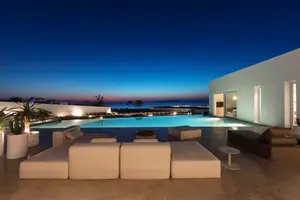
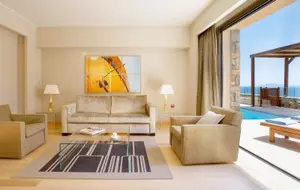
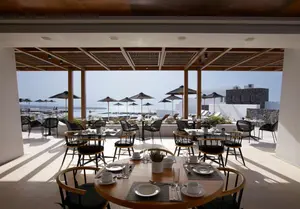
Signature Welcome Drink upon arrival + Daily champagne buffet breakfast for two (2) guests per room, at the hotel's main restaurant + One mineral bottled water in room upon arrival and one refilled daily at turndown + Use of indoor heated pool, sauna, steam room and gym + Daily shuttle bus to Fira and Yalos Beach Club, based on the hotel schedule + Wi-Fi access throughout the resort + Nespresso coffee and tea in rooms + Sun chairs and pool towels at the infinity pool, overlooking the vineyards and Aegean + Outdoor parking
Exclusive Booking Perks
These perks are included with your stay at the same rate as booking direct with the hotel.
- Welcome amenity provided to guests upon arrival.
- Daily complimentary full breakfast at a hotel restaurant for up to two guests.
- Property credit (value varies by property).
- Priority for room upgrade (response within 24 hours of booking, subject to forecasted occupancy).
- Early check-in/late check-out/connecting rooms (response within 24 hours of request, subject to forecasted occupancy).
Location
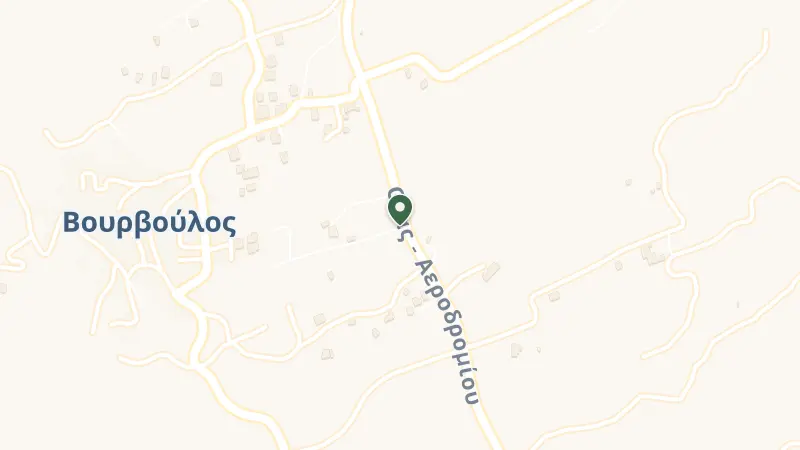
Hyatt's Unbound Collection gathers independent properties with strong local character, each shaped by its setting rather than a templated design. Magma Resort Santorini fits that brief, holding its own on an island that has become synonymous with whitewashed cliff-hangers and caldera sunsets. The property sits in Vourvoulos, a quieter village on Santorini's east-facing slope, three and a half kilometres northeast of Fira's crowds and cruise-ship throngs.
Vourvoulos itself is a working village, not a postcard backdrop. Stone houses cascade down toward the Aegean's eastern shore, where narrow pebble beaches (Xiropigado, Vourvoulos Beach) meet water that catches the morning light rather than the evening glow. This side of the island trades drama for calm: no vertiginous caldera rim, no endless selfie queues, just the rhythm of a settlement that predates the Instagram era.
Santorini's volcanic past remains vivid. The caldera, carved by one of history's largest eruptions some 3,600 years ago, defines the island's western silhouette and its reputation. The archipelago still grumbles: Nea Kameni, the cinder cone in the caldera's centre, is the most active volcanic site in the South Aegean. Santorini International Airport lies five kilometres from the property, a quick transfer that spares travellers the ferry crossing from the mainland.
The east coast's volcanic-sand beaches stretch north and south: Monolithos Beach, four and a half kilometres away, offers easier swimming than the island's rockier coves. Divers can explore underwater lava formations with outfits like Mediterranean Dive Club or Aegean Divers, both within a short drive. Santorini's real pull, though, is its wine. The island's volcanic soil and low rainfall force vines into basket-shaped kouloura formations, producing grapes unlike any other Greek island. Visit Domaine Sigalas Winery, Canava Roussos, or Gavalas Winery to taste Assyrtiko, the mineral-edged white that thrives in ash and wind. Most lie within six or seven kilometres, easily reachable by car or scooter. Book a sunset tasting at Hatzidakis if you want the ceremony; for a quieter session, Gavalas offers focused flights in an old canava cellar.
Fira, the island's capital, sits less than four kilometres west. Its caldera-rim perch draws the crowds, but walk the stepped alleys early or late and you'll find bakeries turning out kaltsounia and tavernas grilling octopus over vine embers. A regional market two kilometres from the property stocks local produce if you prefer assembling your own picnic. The Faros Akrotiriou-Oias nature reserve protects a stretch of scrubland and lighthouse terrain along the northern tip, worth the drive for birdwatchers and those who prefer solitude to spectacle.
Summer on Santorini is bone-dry and relentless. July and August see temperatures climbing past 25°C, with no rain and constant sunshine. The light turns white-hot by midday, bleaching stone and sea into a high-contrast tableau. Evenings cool slightly, and the meltemi wind provides relief, but this is peak season: ferries arrive hourly, and the caldera rim fills with sunset chasers.
Spring and autumn offer gentler conditions. May and June bring temperatures in the high teens to low twenties, wildflowers briefly colouring the volcanic rock, and enough daylight to swim without the August crush. September holds warmth without the crowds, though October's rains begin to gather. The sea stays swimmable through both shoulder seasons.
Winter is Santorini at its quietest. November through March brings rain, clouds, and temperatures dipping into the low teens. Many restaurants and wineries close, ferries run less frequently, and the island returns to its year-round population. If you want the landscape without the performance, this is when to visit.
Frequently Asked Questions

Quotes are personally reviewed by Natasha Hardy, founder of The Uncommon Traveller
5.0 rating · 8 Google reviewsThere is no fee or markup. The hotel pays our commission.
Request a Quote