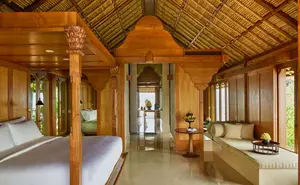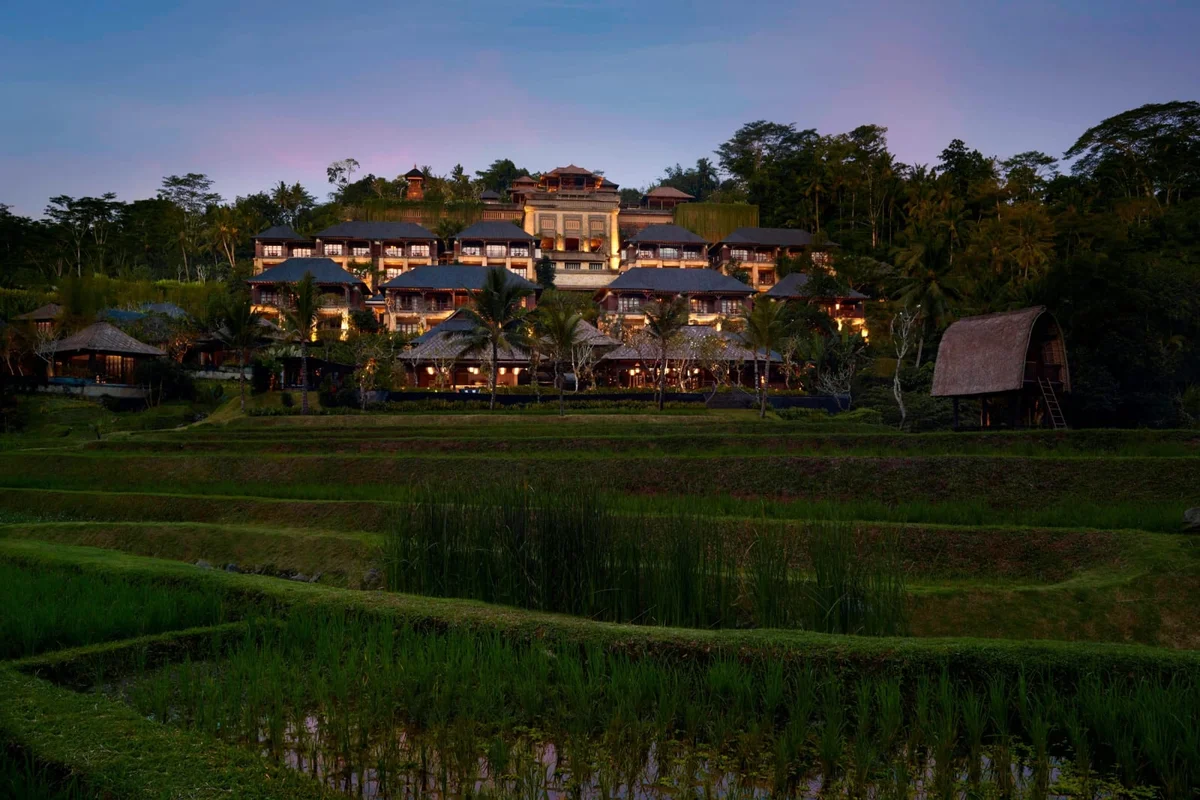
Mandapa, a Ritz-Carlton Reserve
When you book Mandapa, a Ritz-Carlton Reserve in Bali, Indonesia, through our Marriott STARS partnership, your stay includes daily breakfast for two and a $100 USD hotel credit once per stay. You also receive a room upgrade when available. You continue earning Marriott Bonvoy points and elite night credits. No premium credit card or membership needed: request a quote and our advisor books it at the same rate as booking direct.
Special Offer: 3rd night free
Offer 1: 3rd night free plus daily half board (3-course lunch or dinner at Sawah Terrace, Ambar or Pool Bar, excl. drinks). Minimum 3 consecutive nights. All room categories. Offer 2: Stay 2+ nights for an extra USD 400 resort credit, USD 500 total with the Virtuoso USD 100 credit, per room per stay when booking a Reserve Suite, Mandapa Suite, One-, Two-and Three-Bedroom Villas • Both offers are eligible for Virtuoso amenities. • Blackout Dec 24, 2026 to Jan 9, 2027 • Free night value deducted at checkout, based on the lowest rate in the stay
Exclusive Booking Perks
These perks are included with your stay at the same rate as booking direct with the hotel.
- Personalized and customized amenity
- Complimentary breakfast daily for two guests per room
- All STARS hotels offer a hotel credit valued at $100 USD (once per stay)
- Early check-in and late check-out (when available)
- Complimentary upgrade (if available at check-in)
Guest feedback
9.7/10 from 177 guest reviews
Read what guests commentedBy category
Guests liked
- Exceptional Service
- Luxurious Accommodation
- Beautiful Location
Points to consider
- Need for staff training improvement
Location
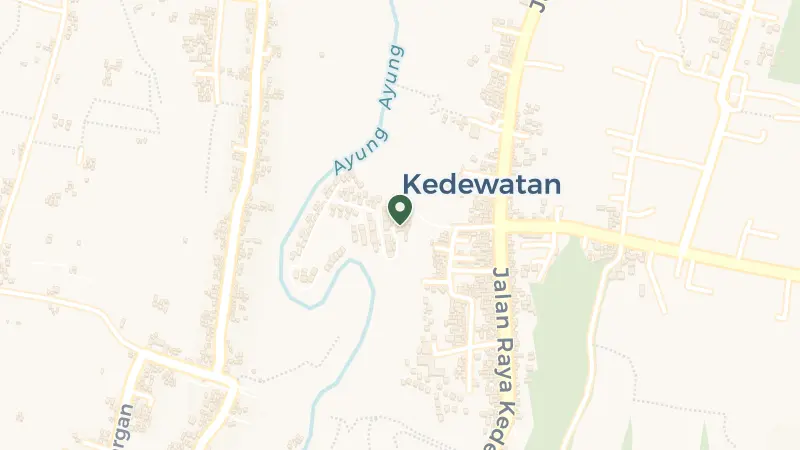
Ritz-Carlton's Reserve collection represents the brand's most intimate expression, trading ballroom-scale operations for guest-to-staff ratios that enable true personalization. Each Reserve property exists as a standalone entity, pursuing cultural immersion over corporate uniformity.
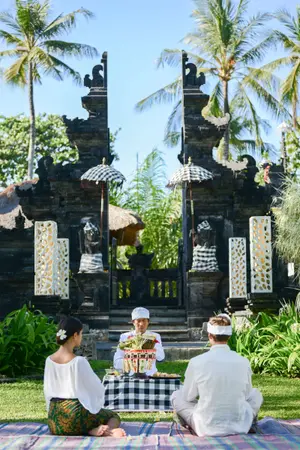
The property sits in Kedewatan, a village on Ubud's northern fringe where the Ayung River carves through jungle ravines. Here, Bali's artistic soul remains undimmed by coastal development. Stone carvers still work open-air workshops. Gamelan practice drifts from family compounds at dusk. The neighbourhood's terraced rice paddies cascade toward the river, part of the subak irrigation system that has governed Balinese agriculture for a millennium. This cooperative water management network, enshrined as a UNESCO World Heritage Site, reflects the Tri Hita Karana philosophy: harmony between humans, nature, and the divine.
Ubud's cultural centre lies just over three kilometres south, where the Ubud Street Market spills textiles and carved offerings across narrow lanes. Sacred Monkey Forest Sanctuary inhabits four kilometres of temple-dotted woodland. Ngurah Rai International Airport sits thirty kilometres southwest, a drive that threads through rice terraces and stone-gate villages.
Sayan waterfall tumbles into jungle pools less than a kilometre from the property, accessible via footpaths that pass banana groves and family shrines. The river valley invites rafting expeditions through gorges where egrets hunt the shallows. For market atmosphere, Ubud Street Market rewards early-morning visits when vendors arrange pyramids of mangosteen and dragonfruit beneath tarps. Book a table for evening dance performances at Ubud Palace, where legong dancers interpret Hindu epics in gold-leafed costumes, their finger articulations precise as Sanskrit.
The Sacred Monkey Forest Sanctuary shelters three temple complexes within its old-growth canopy, where long-tailed macaques navigate strangler figs older than Bali's colonial period. Pengempu Waterfall, five kilometres distant, sees fewer visitors than Sayan but delivers the same moss-slicked rocks and plunge pools. Don't miss the subak rice terraces at dawn, when mist settles between irrigation channels and farmers wade the paddies with hand sickles, a choreography unchanged across centuries.
Bali's dry season spans May through September, when humidity retreats and temperatures hover near twenty-nine degrees. July and August bring the driest air, ideal for temple hikes and open-air performances. Mornings break clear, afternoons warm without oppression.
October through April constitutes the wet season, though rain here arrives in afternoon downpours rather than day-long grey. December and January see the heaviest falls, when the Ayung runs high and rice paddies flood emerald. February's rains taper but humidity clings.
The shoulder months of April and October balance manageable precipitation with fewer visitors. The landscape surges greenest after March rains, terraces brilliant against volcanic soil, frangipani blooming along compound walls.
Frequently Asked Questions

Quotes are personally reviewed by Natasha Hardy, founder of The Uncommon Traveller
5.0 rating · 8 Google reviewsThere is no fee or markup. The hotel pays our commission.
Request a Quote