Palace Hotel Tokyo
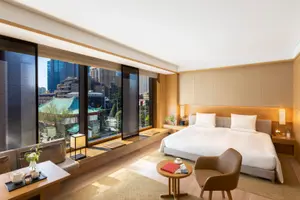
When you book Palace Hotel Tokyo in Japan through our Virtuoso partnership, your stay includes daily buffet breakfast for up to two guests and a $100 USD food and beverage credit. You also receive a room upgrade, early check-in and late check-out when available. No premium credit card or membership needed: request a quote and our advisor books it at the same rate as booking direct.
Exclusive Booking Perks
These perks are included with your stay at the same rate as booking direct with the hotel.
- Upgrade on arrival, subject to availability
- Daily Buffet breakfast for up to two guests per bedroom, served in the restaurant
- $100 USD equivalent Food & Beverage credit to be utilized during stay (not combinable, not valid on room rate, no cash value if not redeemed in full)
- Bookings in our Executive Suite or higher categories will receive an additional $100 Food & Beverage credit (for a total of $200 during stay)
- Stays of 3+ nights will receive an additional $100 Food & Beverage credit (for a total of $200 during stay, or $300 for Executive Suite or higher categories)
- Stays of 5+ nights will receive an additional $200 Food & Beverage credit (for a total of $300 during stay, or $400 for Executive Suite or higher categories)
- Early Check-In / Late Check-Out, subject to availability
Guest feedback
9.6/10 from 434 guest reviews
Read what guests commentedBy category
Guests liked
- Excellent location
- Outstanding service
Points to consider
- Slow service in Lounge
- Signage could be improved
Location
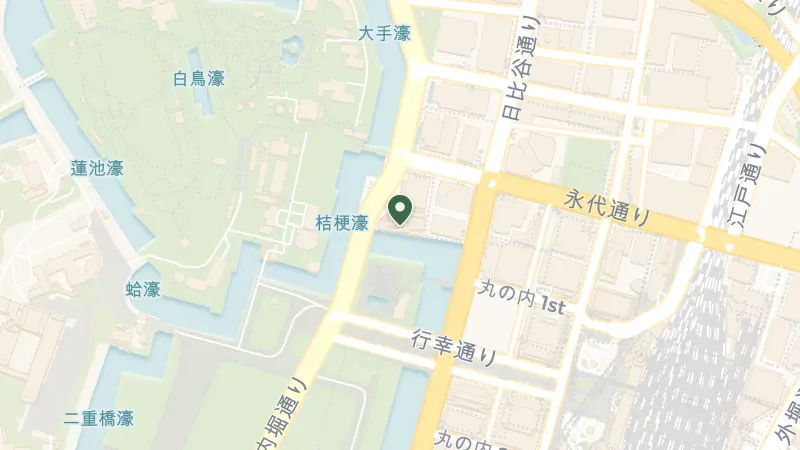
The property overlooks Kokyo Gaien National Garden, placing it directly across from the moats and pine-fringed ramparts of the Imperial Palace. This is Chiyoda at its most serene: wide avenues lined with ginkgo trees, stone bridges arching over still water, the kind of hushed green space that feels improbable in a metropolis of fourteen million. The palace itself remains the symbolic heart of the nation, though only its outer gardens are open to the public. The juxtaposition defines Tokyo: ancient imperial grounds bordered by glass towers, ceremonial quiet interrupted by the hum of the Marunouchi business district a few blocks south.
Walking distance brings you to the National Diet Building, the seat of Japan's government, and the boutiques and department stores of Ginza, where craft and luxury converge in shopfronts unchanged for generations. Marunouchi Station, a red-brick landmark restored to its 1914 elegance, anchors the neighbourhood's east side. The area carries a particular formality, the rhythm of government and finance, but softens at dusk when salarymen slip into izakaya alleys and the palace gardens glow under streetlamps.
Tokyo Haneda International Airport lies fifteen kilometres south, connected by monorail and express train. Narita, the other international gateway, sits fifty-seven kilometres northeast, a longer journey but manageable via the Narita Express.
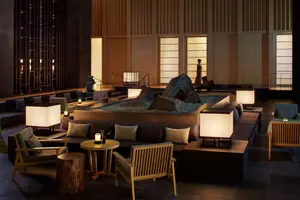
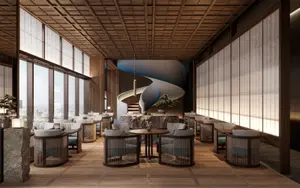
On-site dining spans three distinct kitchens. ESTERRE by Alain Ducasse, bearing a single Michelin star, interprets Japanese terroir through French technique under the hand of Kei Kojima, a chef trained in Ducasse's exacting tradition. The cooking is precise, seasonal, built around ingredients sourced from coastal and mountain prefectures. Chugoku Hanten Kohakukyu (Amber Palace) offers Cantonese and regional Chinese fare in a dining room that balances traditional motifs with contemporary restraint. Plaiga TOKYO reimagines French cuisine through Japan's four seasons, incorporating produce typically rejected for cosmetic imperfections and serving it on glassware reclaimed from discarded vessels. Book a table at ESTERRE well ahead; availability tightens quickly.
Beyond the property, Tsukiji Outer Market sprawls two kilometres south, a labyrinth of stalls selling tamagoyaki, katsuobushi, and fresh-shucked oysters at standing counters. Ameya-Yokochō, three kilometres north near Ueno, retains its post-war market atmosphere, vendors calling out prices for dried seafood and candied fruit. The Imperial Palace East Gardens, open most days, offer a rare glimpse inside the palace walls: stone foundations of the old Edo Castle, meticulously pruned pines, iris beds that bloom in June. Four kilometres east, the Sumida River traces the old merchant quarter, where wooden shophouses and sumo stables survive between new construction.
Winter brings crystalline skies and sharp cold, temperatures hovering near freezing at night, the city scrubbed clean by dry air. This is the season of shortest lines and clearest views of Mount Fuji from observation decks, though heating indoors can feel stifling by contrast.
Spring ushers in plum blossoms in February, cherry blossoms by late March, the entire city turning out for hanami picnics beneath pale pink canopies. Temperatures climb gently into the teens, the light soft and diffused. Rain picks up in June, the start of tsuyu, the rainy season that cloaks the city in humid grey for weeks.
Summer is relentless: heat and humidity that press down on pavement, afternoon thunderstorms that arrive without warning, cicadas shrieking from every tree. Autumn reverses the equation, September still sticky but October crisp and gold, ginkgo leaves turning the palace gardens into corridors of light. November is the ideal month, cool enough for walking, the maples at their deepest red.
Frequently Asked Questions

Quotes are personally reviewed by Natasha Hardy, founder of The Uncommon Traveller
5.0 rating · 8 Google reviewsThere is no fee or markup. The hotel pays our commission.
Request a Quote 111 Bib Gourmand