Palazzo Vecchietti
When you book Palazzo Vecchietti in Florence, Italy, through our withIN by SLH partnership, your stay includes daily continental breakfast for two and a hotel credit of $50-$100 USD per stay. You also receive a one-category room upgrade and early check-in when available. No premium credit card or membership needed: request a quote and our advisor books it at the same rate as booking direct.
Exclusive Booking Perks
These perks are included with your stay at the same rate as booking direct with the hotel.
- A credit worth $50-$100 (USD) per room, per stay to be spent only on extras such as F&B or Spa, only on property and during the stay
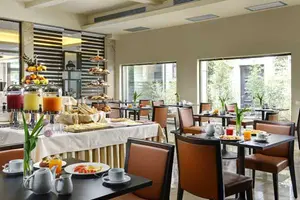
- Daily Continental breakfast for two people
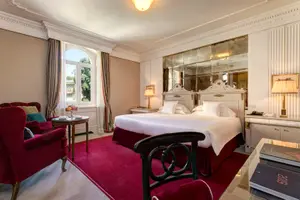
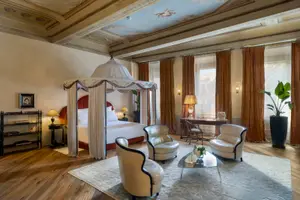
- Room upgrade to next room category, subject to availability at the time of check-in
- Early check-in, subject to availability at the time of check-in
- Late check-out, subject to availability
Guest feedback
Based on 52 guest reviews
Read what guests commentedBy category
Guests liked
- Great location
- Friendly staff
Location
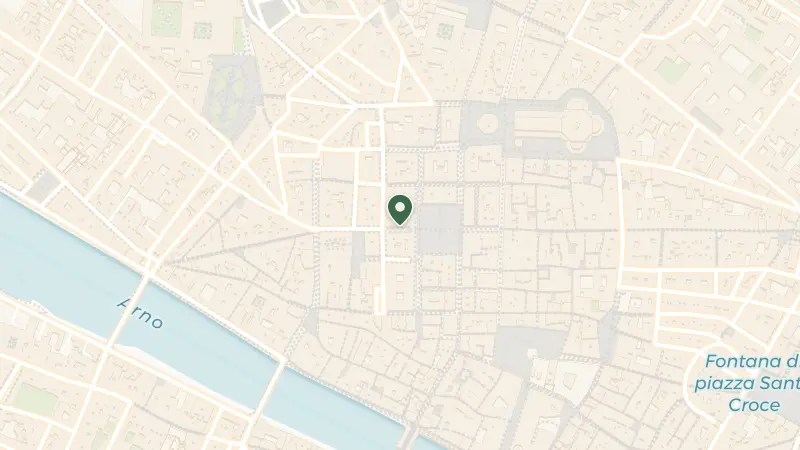
Palazzo Vecchietti occupies a restored Renaissance palazzo in the heart of Florence, steps from the Via de' Tornabuoni and its parade of storefronts that have defined luxury since the Medici era. The property sits within the UNESCO-inscribed Historic Centre, where narrow streets open onto sudden piazzas and ochre-walled palazzi rise above cobblestones worn smooth by six centuries of foot traffic. Florence itself unfolds from this vantage point: the Duomo's terracotta dome dominates the skyline to the northeast, while the Arno River curves through the city a few minutes' walk south, crossed by the stone arches of the Ponte Vecchio.
The surrounding Quartiere 1 neighbourhood retains the medieval street grid that made Florence a mercantile powerhouse, its alleys still lined with artisan workshops where leather goods emerge from family-run botteghe. Church bells mark the hours from Santa Maria Novella and Santo Spirito, punctuating the hum of Vespa engines and the rattle of delivery carts over stone. This is the Florence of Dante's Inferno and Machiavelli's political treatises, the city whose Tuscan dialect became the template for modern Italian.
Florence Airport sits six kilometres northwest with taxi transfers taking twenty minutes outside peak hours. Pisa's larger international gateway lies seventy kilometres west, connected by rail and road through the Tuscan hills.
Gastronomy here operates at the highest level. Luca's by Paulo Airaudo, a one-Michelin-starred contemporary dining room concealed on the first floor of nearby Hotel La Gemma, sits just 120 metres away, its green boiserie and carefully considered details framing modern Italian technique. Book a table at Enoteca Pinchiorri, three-starred and legendary, housed in a seventeenth-century palazzo on Via Ghibellina 745 metres east. The wine cellar alone justifies the pilgrimage. For market atmosphere, the Mercato del Porcellino offers truffles, aged balsamico, and vendors who've held the same stall for generations.
Cultural landmarks crowd every sightline. The Uffizi's Botticelli and Caravaggio hang fifteen minutes south on foot. Climb Giotto's campanile for rooftop views across the Arno Valley, or lose an afternoon in the Bargello's sculpture collection, where Donatello's bronze David presides in cool stone halls. The Medici Villas and Gardens, scattered ten kilometres into the Tuscan countryside, reveal the family's patronage beyond the city walls. Day trips to Siena (51 kilometres) or San Gimignano (38 kilometres) bring medieval hill towns within reach, their Gothic silhouettes rising above vineyards where Chianti ages in oak.
Summer transforms Florence into an oven: July and August see temperatures climbing past thirty degrees Celsius, the stone streets radiating heat long after sunset while tourist crowds thicken around the Duomo. The light turns golden and fierce, bleaching façades to pale cream. September offers relief, the air softening as the city empties after Ferragosto, temperatures settling into the mid-twenties.
Spring arrives tentatively, March and April bringing sudden cloudbursts that clear to reveal wisteria cascading over garden walls. May delivers the city at its most comfortable, warm enough for gelato in shaded piazzas but cool enough for museum marathons. October mirrors this balance, the harvest season painting the surrounding Chianti hills in amber.
Winter sees Florence retreat indoors: December through February mornings start cold and damp, mist clinging to the Arno until midday sun burns through. Crowds thin, leaving the Uffizi and Accademia mercifully quiet. This is the season for trattoria fires and ribollita, the Tuscan bread soup that makes January bearable.
Frequently Asked Questions

Quotes are personally reviewed by Natasha Hardy, founder of The Uncommon Traveller
5.0 rating · 8 Google reviewsThere is no fee or markup. The hotel pays our commission.
Request a Quote 10 Bib Gourmand