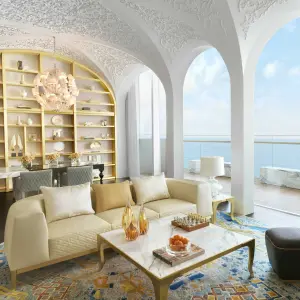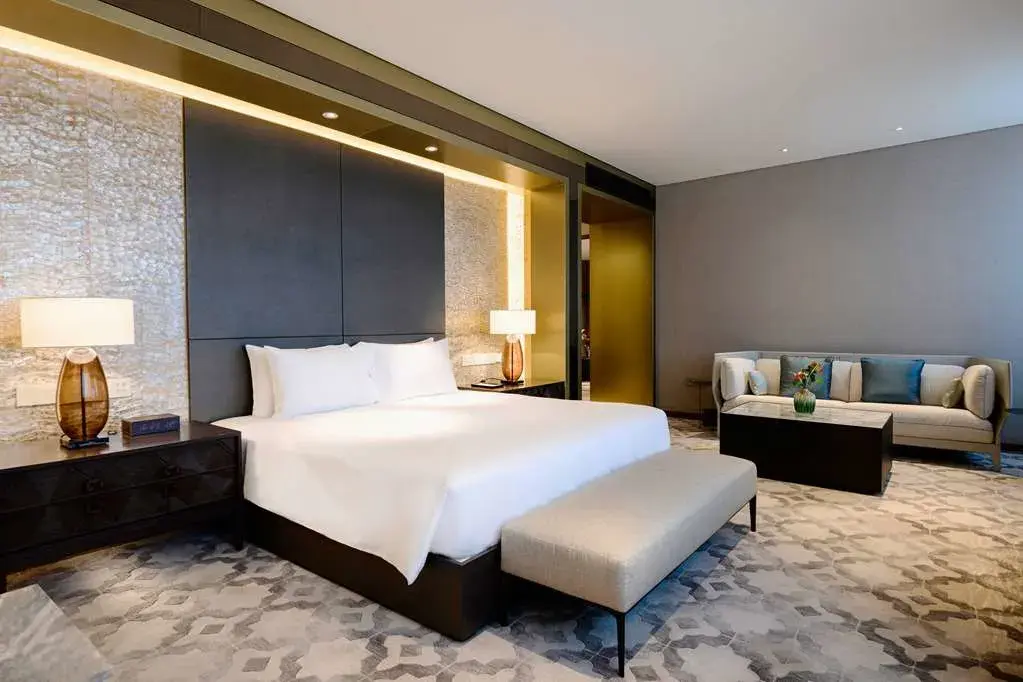
Park Hyatt Doha
When you book Park Hyatt Doha in Qatar through our Hyatt Privé partnership, your stay includes daily full breakfast for up to two guests and a property credit. You also receive a priority room upgrade, early check-in and late check-out when available. You continue earning World of Hyatt points and elite night credits. No premium credit card or membership needed: request a quote and our advisor books it at the same rate as booking direct.
Exclusive Booking Perks
These perks are included with your stay at the same rate as booking direct with the hotel.
- Welcome amenity provided to guests upon arrival.
- Daily complimentary full breakfast at a hotel restaurant for up to two guests.
- Property credit (value varies by property).
- Priority for room upgrade (response within 24 hours of booking, subject to forecasted occupancy).
- Early check-in/late check-out/connecting rooms (response within 24 hours of request, subject to forecasted occupancy).
Guest feedback
9.6/10 from 2,018 guest reviews
Read what guests commentedBy category
Guests liked
- Friendly staff
- Great location
- Spacious rooms
Points to consider
- Cleanliness issues
- Delay in room readiness
Location
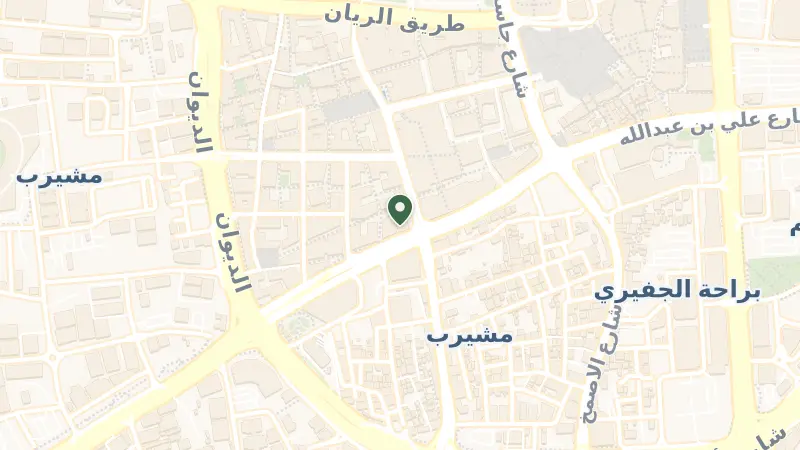
Park Hyatt properties are known for residential calm, curated art collections, and service rooted in personal connection rather than ceremony. This branch occupies a prime position in Msheireb Downtown Doha, the city's ambitious heritage district that has transformed traditional Qatari architecture into a modern, pedestrian-friendly quarter. The neighbourhood sits at the heart of the capital, a planned fusion of old souq rhythms and contemporary design, with shaded walkways and public squares that feel rare in a city otherwise built for air-conditioned cars.
Doha itself sprawls along the Persian Gulf coast, a city of rapid vertical growth and gleaming skylines that only recently emerged from pearling-village roots. Founded in the 1820s, it became Qatar's official capital in 1971 and now holds over 80% of the nation's population. The contrast is everywhere: traditional dhows anchored near glass towers, the call to prayer echoing over construction cranes. Msheireb's revival sits just blocks from Souq Waqif, the restored market where spice vendors and falcon traders still operate in earshot of the Museum of Islamic Art's sweeping geometric façade.
Hamad International Airport lies eight kilometres east, a short drive across the coastal causeway. The city's compact core makes most cultural landmarks accessible within minutes, though the sprawl of Education City and Aspire Zone stretches west into the suburbs.
Souq Waqif, just over half a kilometre away, is the beating heart of old Doha. Arrive in the late afternoon when the heat softens and the market comes alive: stalls piled with saffron, dried limes, and rosewater; falconers hawking hooded birds; alleyways branching into hidden courtyards where men smoke shisha and sip sweet tea. The Animal Souq, a short walk beyond, trades in livestock and pet birds, a glimpse of Doha before the towers. For Michelin-starred dining, head to IDAM by Alain Ducasse, perched on the top floor of the Museum of Islamic Art less than two kilometres south. The French Contemporary menu is ambitious, but the real drama is the view: the Bay of Doha, glass and steel skyline, light dissolving into water. Jamavar, four kilometres west at the Sheraton Grand, brings Kashmiri technique to Qatar's dining scene, its intricate dishes named after 16th-century shawls. Book a table at Alba, inside the Raffles hotel within the Katara Towers nearly 12 kilometres north, if you want northern Italian cuisine (the restaurant takes its name from the town famous for truffles) served under a vaulted ceiling.
Wadi Al Sail Natural Reserve, three and a half kilometres out, offers a rare stretch of desert scrubland within the city limits, though the real escape is the waterfront: Katara Beach, eight kilometres north, is lined with cafés and cultural venues; the Education City Golf Club, 11 kilometres west, is a Robert Trent Jones Jr. design.
November through March delivers the most forgiving weather, with daytime highs in the low to mid-twenties and cool evenings that make outdoor dining and souq wandering pleasant. The light softens, the Gulf breeze picks up, and the city sheds its air-conditioned torpor. Streets feel inhabited again.
April and May turn sharply warmer, climbing past 30°C, though mornings remain tolerable. By June, the heat becomes punishing: daytime temperatures hold steady above 40°C through September, the air thick and still, the city retreating indoors. October offers the first hint of relief, temperatures dropping into the mid-thirties.
December and January are peak season. Evenings dip to the mid-teens, and the Gulf's humidity recedes just enough to make walking the corniche or browsing the souq feel less like endurance sport.
Frequently Asked Questions

Quotes are personally reviewed by Natasha Hardy, founder of The Uncommon Traveller
5.0 rating · 8 Google reviewsThere is no fee or markup. The hotel pays our commission.
Request a Quote 8 Bib Gourmand