Riad Jaaneman
When you book Riad Jaaneman in Marrakech, Morocco, through our Tablet Plus partnership, your stay includes a 20 EUR hotel credit per stay and a welcome treat. You also receive a one-category room upgrade when available. No premium credit card or membership needed: request a quote and our advisor books it at the same rate as booking direct.
Exclusive Booking Perks
These perks are included with your stay at the same rate as booking direct with the hotel.
- Upgrade to next room category, based upon availability at check-in
- Welcome treat in room on arrival
- Complimentary departure gift
- 20 EUR hotel credit per room, per stay (valid towards incidentals)
Guest feedback
9.5/10 from 260 guest reviews
By category
Guests liked
- Great location
- Exceptional staff
Points to consider
- Shower safety issues
- Some noise concerns
Location
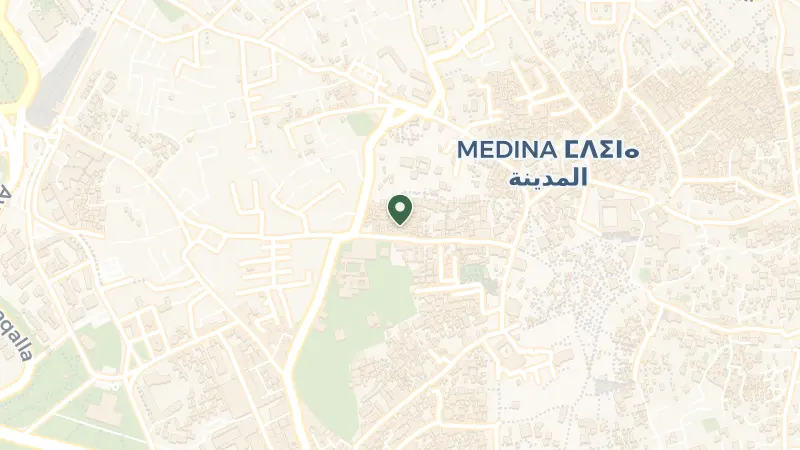
The Mouassine neighbourhood sits at the heart of Marrakech's medina, where narrow alleyways radiate from the Mouassine Mosque and fountain. Founded in 1070 by the Almoravids, this quarter preserves centuries of Maghrebi urban life: lantern-lit souks selling spices and metalwork, hammams sending steam into the streets, and riads concealing tiled courtyards behind studded doors. The medina earned UNESCO World Heritage status in 1985 for its intact medieval fabric, and Mouassine remains one of its most atmospheric pockets, walkable to the leather souks half a kilometre north and the Olive Souk just beyond.
Marrakech's red pisé walls, built in the 1120s from the ochre clay of the surrounding plains, give the city its enduring nickname. The Atlas Mountains rise to the south, their snowcapped peaks visible from the medina's rooftops in winter. Under the Saadian sultans in the sixteenth century, Marrakech became a cultural anchor for the western Islamic world, a legacy that lingers in the city's palaces, gardens, and the seven saints' tombs that draw pilgrims year-round.
Menara Airport lies five kilometres southwest, a short taxi ride through the palmery and into the medina's labyrinth.
The medina is a stage for close-quarters exploration. The Leather Souk operates half a kilometre away, where tanners still work hides in stone vats as they have for centuries; arrive in the morning when the light slants into the open-air workshops. Souk el Maasi and the Fruit and Vegetable Market unfold within walking distance, their pyramids of oranges and dried dates stacked beneath striped awnings. Book a cooking class through a local guide to learn tagine technique using ras el hanout and preserved lemons, then wind back through the souq El Kessabine to find metalworkers hammering lanterns by hand.
For golfers, Marrakech Golf City and The Montgomerie Marrakech sit four kilometres out in the palmery, their fairways lined with date palms against a backdrop of the High Atlas. The medina's riads offer rooftop terraces where you can watch swallows wheel over minarets at dusk, mint tea in hand. Don't miss the hammam ritual: spend an afternoon being scrubbed on heated marble slabs, a centuries-old practice that feels essential to understanding the city's rhythm.
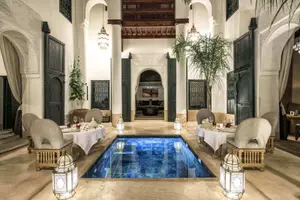
Summer in Marrakech burns white-hot. July and August push past 36 degrees, the air shimmering above the pisé walls, the medina slowing to a siesta rhythm. Courtyards offer respite, their fountains and orange trees creating microclimates of cool shadow.
Spring and autumn are ideal: March through May and September through November bring warm days in the mid-twenties, long evenings on rooftop terraces, and light that turns the red walls amber. April rains are brief, washing dust from the jasmine.
Winter surprises travelers. January mornings dip to three degrees, mist rising from the souks, the Atlas peaks dusted with snow. By midday it warms to eighteen, café terraces fill, and the city hums with energy. December and February bring occasional rain, but the cool air sharpens the scent of cedarwood fires and makes the medina's winding walks a pleasure.
Frequently Asked Questions

Quotes are personally reviewed by Natasha Hardy, founder of The Uncommon Traveller
5.0 rating · 8 Google reviewsThere is no fee or markup. The hotel pays our commission.
Request a Quote