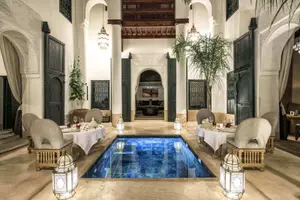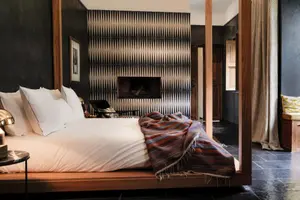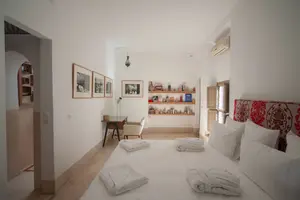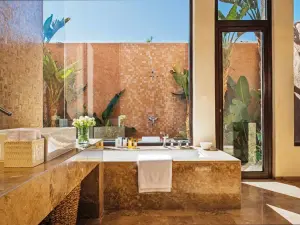
This Time Tomorrow in Marrakech
When you book This Time Tomorrow in Marrakech in Morocco through our Tablet Plus partnership, your stay includes daily breakfast for up to two guests and a welcome treat. You also receive a one-category room upgrade and late check-out when available. No premium credit card or membership needed: request a quote and our advisor books it at the same rate as booking direct.
Exclusive Booking Perks
These perks are included with your stay at the same rate as booking direct with the hotel.
- Upgrade to next room category, based upon availability at check-in
- Guaranteed 1pm late check-out
- Welcome treat in room on arrival
- Complimentary daily breakfast (max 2 guests)
Location
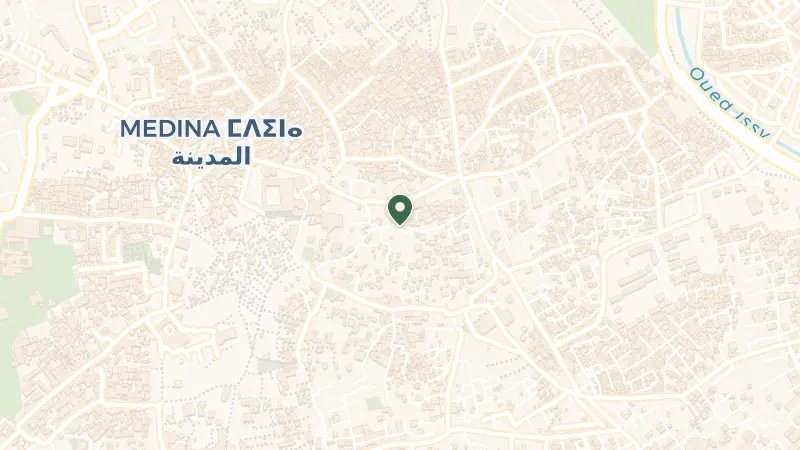
The Mouassine quarter sits in the northwestern corner of Marrakech's medina, where the labyrinth narrows into a tangle of souks and artisan workshops that has barely changed since the Almoravids first laid out these streets in the eleventh century. This is the medina at its most working and lived-in: dyers hang skeins of freshly coloured wool across alleyways, spice merchants measure out cumin and ras el hanout from burlap sacks, and the call to prayer echoes off walls built from the red sandstone that earned the city its nickname. The neighbourhood takes its name from the Mouassine Mosque and its sixteenth-century fountain, both commissioned by Saadian Sultan Abdallah al-Ghalib when Marrakech was at the height of its influence across the western Muslim world.
Walk two hundred metres in any direction and you're deep in the sensory overload of the souks: the Fruit and Vegetable Market sprawls just beyond the property, while the Leather Souk and Souq El Kessabine (the second-hand dealers' market) unfold within half a kilometre. The entire medina, a UNESCO World Heritage site since 1985, remains enclosed by the ochre ramparts Ali ibn Yusuf raised in the twelfth century.
Marrakesh Menara Airport lies six kilometres southwest, a short taxi ride through the palmery and newer quarters of Gueliz and Hivernage before the crenellated walls of the old city come into view.
The souks radiate outward from the property in a bewildering grid of covered passageways, each dedicated to a specific craft. The Leather Souk four hundred metres east is where tanners still work hides in stone vats using centuries-old techniques; the scent of pigeon dung and vegetable dyes hangs heavy in the air. Half a kilometre north, the Olive Souk offers pyramids of cured olives alongside preserved lemons and argan oil pressed in the Atlas foothills. For a slower rhythm, wander through the Fruit and Vegetable Market two hundred metres away at dawn, when vendors arrange blood oranges and pomegranates into geometric displays and mint sellers bundle their harvest into fragrant bouquets.
The medina rewards aimless wandering, but anchor your exploration with the Saadian Tombs and the intricate stucco work of the Ben Youssef Madrasa. Book a table at a rooftop overlooking Jemaa el-Fnaa at dusk, when the square fills with storytellers, acrobats, and charcoal grills sizzling with merguez and lamb brochettes, the smoke rising against the distant silhouette of the Atlas range.
Spring arrives in March with almond blossoms in the surrounding valleys and daytime temperatures climbing into the low twenties, the light turning honeyed and soft across the medina's clay walls. April and May bring the last of the rain before summer's dry heat takes hold.
June through September is uncompromising: the thermometer routinely pushes past thirty-five degrees, the air bone-dry, the streets nearly silent during the midday hours. Courtyards and shaded arcades become essential refuges. Evenings offer relief, the temperature dropping enough for terraces to fill again.
October through February is the ideal window, when daytime warmth hovers in the low twenties and nights turn crisp enough for wood fires in the riads. December and January can surprise with chilly mornings requiring a jacket, but afternoons remain temperate, the sky a relentless, cloudless blue.
Frequently Asked Questions

Quotes are personally reviewed by Natasha Hardy, founder of The Uncommon Traveller
5.0 rating · 8 Google reviewsThere is no fee or markup. The hotel pays our commission.
Request a Quote