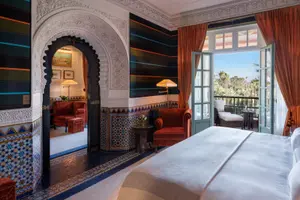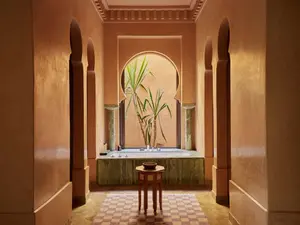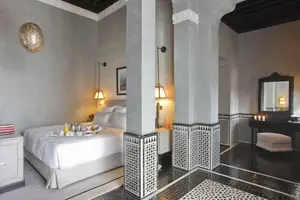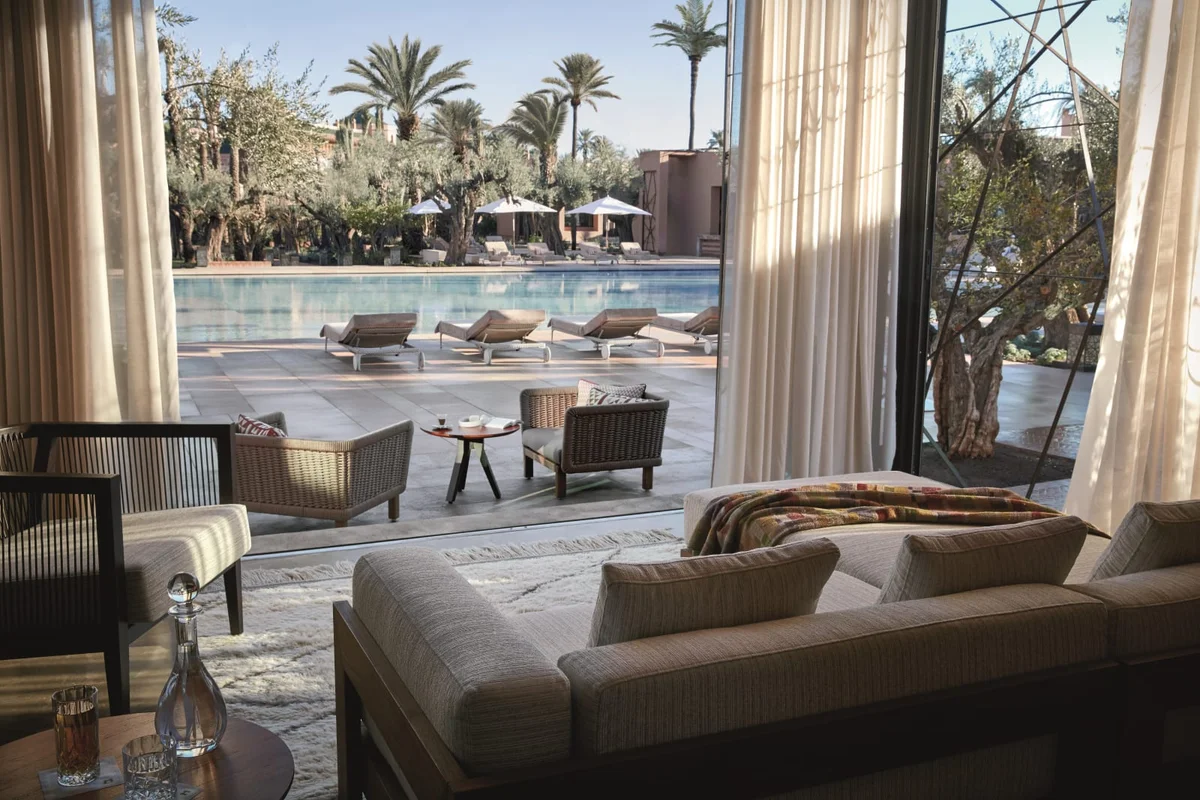
Royal Mansour Marrakech
When you book Royal Mansour Marrakech in Morocco through our Virtuoso partnership, your stay includes daily full breakfast for up to two guests and a $100 USD food and beverage credit. You also receive a room upgrade, early check-in and late check-out when available. No premium credit card or membership needed: request a quote and our advisor books it at the same rate as booking direct.
Exclusive Booking Perks
These perks are included with your stay at the same rate as booking direct with the hotel.
- Upgrade on arrival, subject to availability (up to Premier one bedroom Riad)
- Daily Full breakfast for up to two guests per bedroom, served in the restaurant and via in-room dining
- $100 USD equivalent Food & Beverage credit to be utilized during stay (not combinable, not valid on room rate, no cash value if not redeemed in full)
- Early Check-In / Late Check-Out, subject to availability
Guest feedback
9.8/10 from 185 guest reviews
Read what guests commentedBy category
Guests liked
- Exceptional hospitality
- Luxury experience
Location
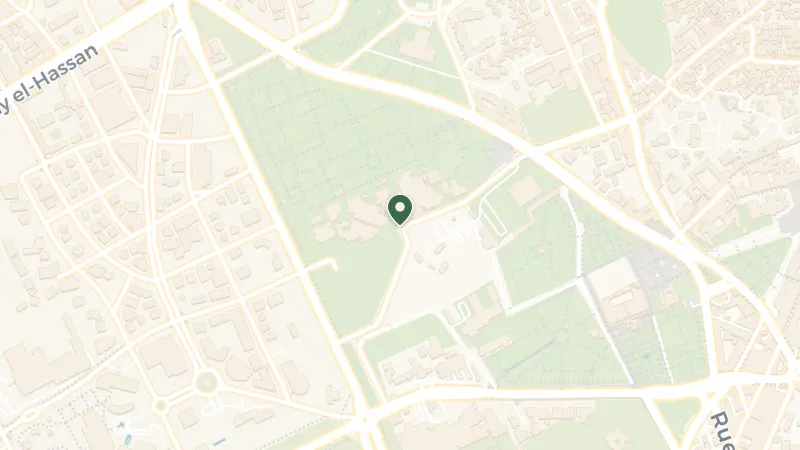
Royal Mansour Marrakech stands within the medina, the walled heart of Morocco's fourth-largest city and a centuries-old trading crossroads between the Sahara and the Atlas Mountains. Founded in 1070 by the Almoravids, Marrakech rose to become a cultural and religious fulcrum for the western Islamic world, its influence radiating from North Africa to Andalusia. The red sandstone walls built by Ali ibn Yusuf in the 12th century gave the city its enduring nickname, the Red City, and inside them a labyrinth of souqs, riads, and monuments unfolded over successive dynasties. The Saadians adorned it with palaces in the 16th century; Sufi pilgrims have venerated its seven patron saints since the 17th.
Today the medina remains a fortified tangle of narrow derbs and vendor stalls, the air thick with spice dust and the smell of cedar smoke. The property lies a short walk from Jemaa el-Fna, the vast square where acrobats, storytellers, and orange-juice sellers have gathered for generations. The Medina of Marrakesh, a UNESCO World Heritage Site inscribed in 1985, sprawls outward from here, its souqs specializing in everything from hand-tooled leather to saffron and argan oil.
Marrakesh Menara Airport sits four kilometres from the medina, a brief transfer by taxi into the old city. The drive crosses the newer Ville Nouvelle before passing through one of the monumental gates, Bab Jdid or Bab Nkob, that pierce the ochre ramparts.
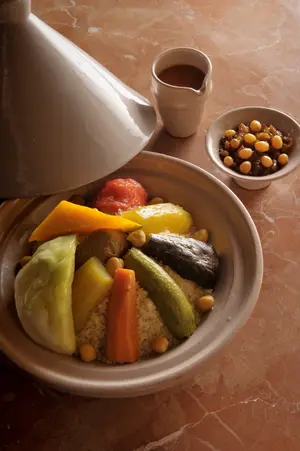
Within a kilometre, the souqs unfold in a sensory cascade. The Olive Souk and Leather Souk lie just beyond the medina's arterial alleys, where tanners still work hides in open vats of pigeon dung and pomegranate rind. Souq el Kessabine, the dried-fruit market, perfumes the air with dates and figs. Book a table at La Grande Table Marocaine on property to experience elevated Moroccan cuisine under painted ceilings, or settle into the courtyard at La Table for Mediterranean flavours. Start with b'stilla, the phyllo-wrapped pigeon pie dusted with cinnamon and icing sugar, a Marrakchi signature that balances savoury and sweet.
Jemaa el-Fna, nine hundred metres north, transforms at dusk when food stalls ignite charcoal grills and the square fills with smoke, drumbeats, and the call of vendors hawking snail soup and lamb mechoui. For quieter pursuits, the Bahia Palace and the crumbling El Badi Palace reveal Saadian grandeur through zellige tilework and sunken gardens. Golfers will find Marrakech Golf City three kilometres west, its fairways framed by olive groves and distant peaks. Don't miss the tanneries at dawn, when the light catches the dye pits in shades of saffron, indigo, and henna.
Winter, from December through February, brings cool nights that dip below five degrees and mild days around eighteen, the light sharp and golden against the red walls. The city feels quietest now, the medina less crowded, though occasional rain showers green the foothills of the Atlas.
Spring and autumn are the prime seasons. March through May and October through November offer warm days in the low to mid twenties, comfortable for walking the souqs and exploring palaces without the oppressive heat. The jacarandas bloom in April, their purple canopies shading courtyards and riads.
Summer, from June through September, is fierce. Temperatures climb above thirty-six degrees in July and August, the air dry and still, the medina's narrow lanes offering scant relief. Mornings are best for exploration; afternoons are for shaded courtyards and mint tea. The heat feels ancient, the kind that has shaped the rhythm of this city for a thousand years.
Frequently Asked Questions

Quotes are personally reviewed by Natasha Hardy, founder of The Uncommon Traveller
5.0 rating · 8 Google reviewsThere is no fee or markup. The hotel pays our commission.
Request a Quote