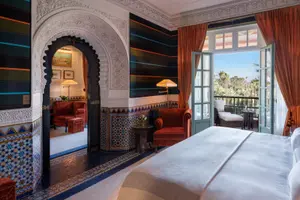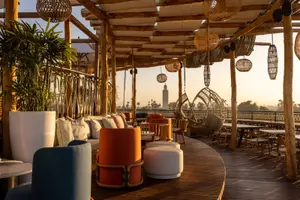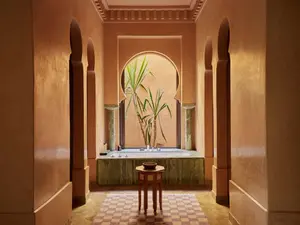
Selman Marrakech
When you book Selman Marrakech in Morocco through our Virtuoso partnership, your stay includes daily buffet breakfast for up to two guests and a $100 USD food and beverage credit. You also receive a room upgrade, early check-in and late check-out when available. No premium credit card or membership needed: request a quote and our advisor books it at the same rate as booking direct.
Exclusive Booking Perks
These perks are included with your stay at the same rate as booking direct with the hotel.
- Upgrade on arrival, subject to availability
- Daily Buffet breakfast for up to two guests per bedroom, served in the restaurant and via in-room dining
- $100 USD equivalent Food & Beverage credit to be utilized during stay (not combinable, not valid on room rate, no cash value if not redeemed in full)
- Early Check-In / Late Check-Out, subject to availability
Guest feedback
9.5/10 from 261 guest reviews
By category
Guests liked
- Excellent service
- Beautiful surroundings
Points to consider
- Overpriced restaurant
- Value for money could improve
Location
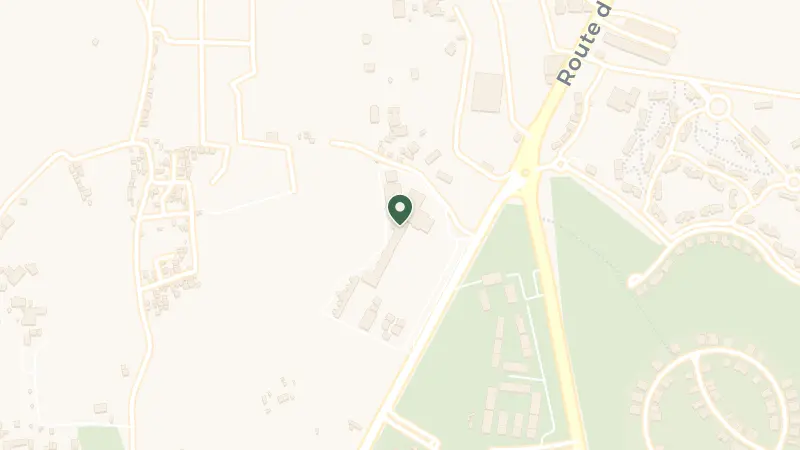
Selman Marrakech sits beyond the medina walls, where the city softens into the Palmeraie. This is the desert's edge, a landscape of date palm groves and pale earth punctuated by private estates and golf fairways. The property occupies a quiet bend of this ancient oasis, where the noise of the souks gives way to birdsong and the rustle of fronds in the breeze.
Marrakech itself pulses with a thousand years of history. Founded in 1070 by the Almoravids, it became the capital of successive dynasties who stamped the city with their architectural ambitions. The red sandstone ramparts, built in the 12th century, earned it the name "Ochre City". Within those walls, the medina unfolds in a labyrinth of alleys, riads, and the great open theatre of Jemaa El Fna. Seven kilometres separate the property from this fortified heart, a distance that feels deliberate rather than remote.
Marrakesh Menara Airport lies four kilometres away, a brief drive through the city's sprawling modern quarters. The Atlas Mountains rise to the east, their snow-capped peaks visible on clear mornings, grounding the city in its high-desert geography.
The Palmeraie stretches out from the hotel like a green ribbon, and five championship golf courses lie within a four-kilometre radius. The Montgomerie Marrakech and Marrakech Golf City both sit three kilometres out, their fairways threaded through the palmery. Noria Golf Club edges even closer, just over a kilometre away. For those drawn to the medina, the UNESCO-listed old city waits seven kilometres south, a dense tangle of souks and shrines where Almoravid bones still shape the streets. Jemaa El Fna, the medina's open-air stage, thrums with storytellers, snake charmers, and grilled meat smoke at dusk.
Start your mornings with msemmen and mint tea before venturing into the souks. The Miâara and Souq El Kessabine, both within seven kilometres, are where locals shop for leather, spices, and woven goods. Book a guide for the medina rather than wandering blind; its history deserves more than aimless meandering. Rmila reserve, eighteen kilometres north, offers a quieter counterpoint, though the Palmeraie itself provides ample escape from the city's intensity.
Winter brings sharp mornings and mild afternoons, the air crisp against the Atlas peaks. January temperatures hover around 18°C by day, dipping below 5°C at night. February can surprise with rain, though it rarely lingers.
Spring warms gradually, the city softening into bloom by April. May edges toward heat, the light turning golden and long. Summer is relentless: July and August soar past 36°C, the streets emptying by noon, the desert asserting itself.
Autumn returns breathing room. September still holds summer's heat, but by October the evenings cool and the city reopens. November through March offers the most comfortable touring weather, though you'll need layers for evening.
Frequently Asked Questions

Quotes are personally reviewed by Natasha Hardy, founder of The Uncommon Traveller
5.0 rating · 8 Google reviewsThere is no fee or markup. The hotel pays our commission.
Request a Quote