Sofitel Marrakech Palais Imperial & Spa
When you book Sofitel Marrakech Palais Imperial & Spa in Morocco through our Accor Hera partnership, your stay includes daily breakfast for two and a $100 USD hotel credit. You also receive a room upgrade, early check-in and late check-out when available. You continue earning ALL Accor points and elite night credits. No premium credit card or membership needed: request a quote and our advisor books it at the same rate as booking direct.
Exclusive Booking Perks
These perks are included with your stay at the same rate as booking direct with the hotel.
- Daily complimentary breakfast for 2, per room
- $100 USD credit to be spent on property (conditions defined at check-in)
- Early check-in & late check-out (upon availability)
- Upgrade at time of check-in (upon availability)
Guest feedback
8.3/10 from 2,391 guest reviews
By category
Guests liked
- Friendly, attentive staff (voiturier and named staff praised)
- Excellent central location
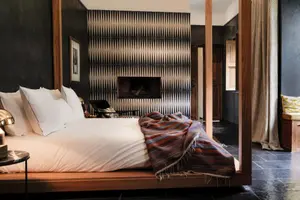
- Clean rooms and very comfortable bedding/suites
Points to consider
- Spa needs renovation and some visible wear in areas (jacuzzi tiles)
- Slow service at pool/bar and occasional delays for room requests
- Perceived poor value: high prices and overpriced items
Location
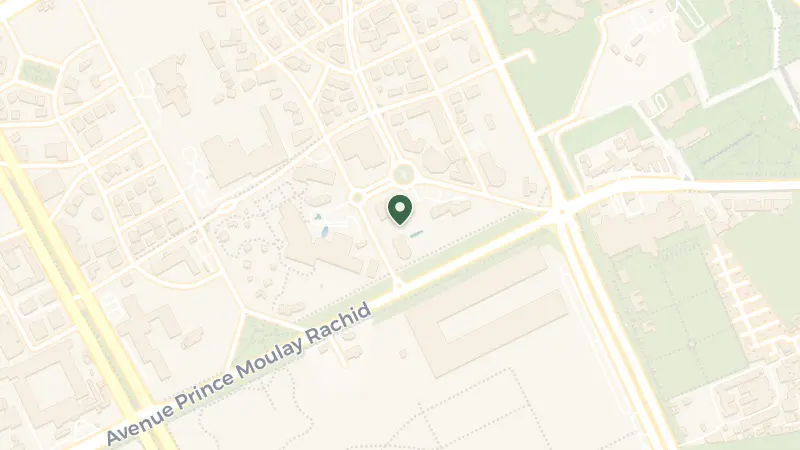
Sofitel brings French art de vivre to Marrakech, blending Parisian elegance with Moroccan craftsmanship in a brand known for design-forward interiors and refined hospitality across its global collection. The property sits in L'Hivernage, a quiet garden district southwest of the medina where jacaranda-lined avenues and modernist villas give way to the call to prayer drifting over bougainvillea walls. This neighbourhood feels like a pause between the ochre chaos of the old city and the European cafés of Gueliz, residential and green, a place where Marrakchis come to stroll in the cooler hours.
The medina itself, a UNESCO World Heritage site founded in 1070 by the Almoravids, lies two kilometres northeast. Ali ibn Yusuf raised its red sandstone ramparts in the twelfth century, earning the city its enduring nickname. The Saadian sultans later gilded it with palaces and tombs, and by the twentieth century, under the French Protectorate and the legendary Pasha T'hami El Glaoui, Marrakech had become a crossroads for artists, exiles, and pilgrims drawn to its seven patron saints.
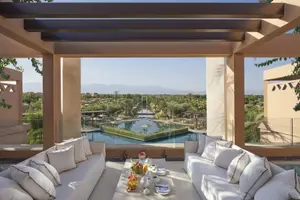
Marrakesh Menara Airport sits just four kilometres west, a quick taxi ride through the palmery and modern sprawl that now rings the ancient city. The Atlas Mountains rise in a blue-grey wall to the south, snow-capped in winter, anchoring the horizon.
The medina is the gravitational centre here. Walk northeast through L'Hivernage's quiet streets and cross Avenue Mohammed V into the souks: El Kessabine for leather, Souk el Maasi for metalwork, the Olive Souk for spices piled in conical pyramids. Jemaa el-Fna, the great square, unfolds at the medina's heart, a theatre of snake charmers, storytellers, and night-market grills smoking with merguez and lamb kebabs. Nearby, the Marche Central offers a calmer morning ritual, vendors selling olives, preserved lemons, and bundles of fresh mint for the city's endless rounds of atay.
Book a round at The Montgomerie Marrakech, a championship course designed by Colin Montgomerie, or venture slightly farther to Atlas Golf for views of the High Atlas peaks. The city's golf culture runs deep, a legacy of the French era and the reliably clear skies. For a quieter afternoon, the Jardin Majorelle, painted in cobalt blue by Jacques Majorelle and later restored by Yves Saint Laurent, sits in Gueliz, three kilometres north, a refuge of bamboo groves and cactus gardens.
Summer in Marrakech is blazing and nearly rainless, with July and August pushing past thirty-six degrees. The light turns white-hot by midday, and the souks empty until late afternoon when shadows return and the city exhales. Early mornings and evenings are golden, the air dry and forgiving.
Spring and autumn are ideal: April through May and September through October bring temperate days in the low to mid-twenties, perfect for walking the medina or lingering in rooftop cafés. The jacarandas bloom purple in spring, and the Atlas peaks still hold snow.
Winter is mild but unpredictable, with January days around eighteen degrees and chilly nights that dip below five. February can bring sudden rain, though it rarely lingers. The light is softer, the city less crowded, and the mountains gleam white against crystalline skies.
Frequently Asked Questions

Quotes are personally reviewed by Natasha Hardy, founder of The Uncommon Traveller
5.0 rating · 8 Google reviewsThere is no fee or markup. The hotel pays our commission.
Request a Quote