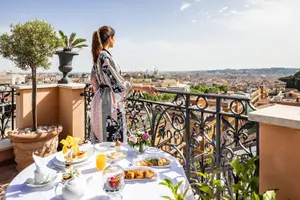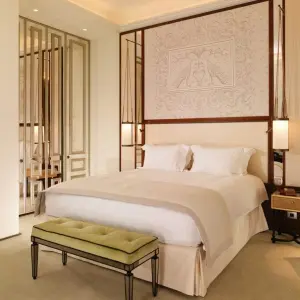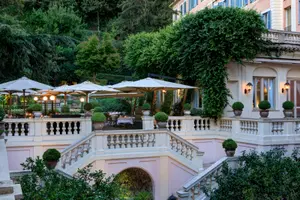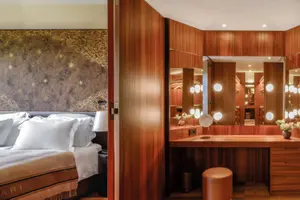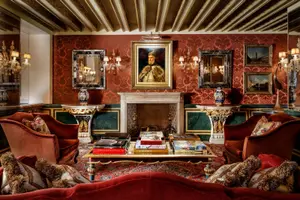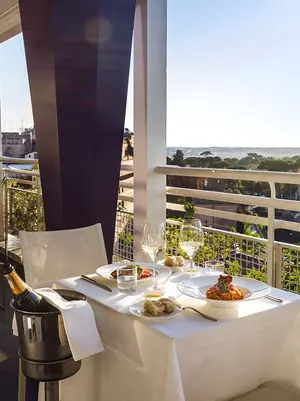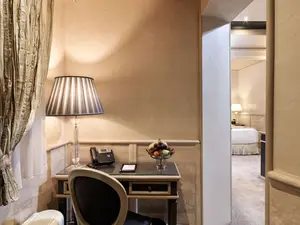
The St. Regis Rome
When you book The St. Regis Rome in Italy through our Marriott STARS partnership, your stay includes daily breakfast for two and a $100 USD hotel credit once per stay. You also receive a room upgrade, early check-in and late check-out when available. You continue earning Marriott Bonvoy points and elite night credits. No premium credit card or membership needed: request a quote and our advisor books it at the same rate as booking direct.
Special Offer
Get 10% off with a minimum stay of 3 nights Get 15% off with a minimum stay of 4 nights
Exclusive Booking Perks
These perks are included with your stay at the same rate as booking direct with the hotel.
- Personalized and customized amenity
- Complimentary breakfast daily for two guests per room
- All STARS hotels offer a hotel credit valued at $100 USD (once per stay)
- Early check-in and late check-out (when available)
- Complimentary upgrade (if available at check-in)
Location
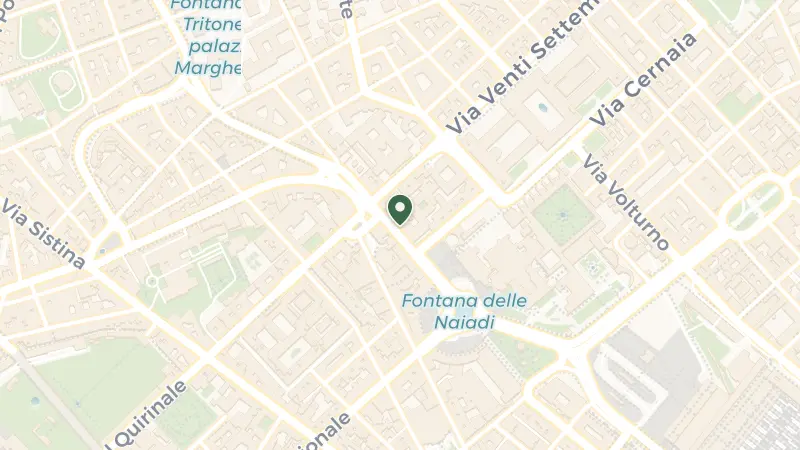
St. Regis brings John Jacob Astor IV's 1904 vision of refined hospitality to every property, pairing dedicated butler service with interiors that nod to local heritage while maintaining the brand's signature formality. In Rome, that legacy settles into the Castro Pretorio quarter of Municipio I, the administrative heart that encompasses the city's historic rioni and puts you within reach of nearly three millennia of continuous habitation.
The neighbourhood hums with the particular rhythm of central Rome: espresso pulled at corner bars before nine, the clatter of shutters opening onto ochre-washed facades, the Tiber cutting its muddy course through the valley below. This is the Eternal City in its most quotidian register, where layers of empire, papacy, and republic stack atop one another in travertine and brick. The Castro Pretorio district sits just beyond the ancient Servian Wall, close enough to the centro storico that you can walk to the Pantheon or the Spanish Steps, yet removed from the crush of tour groups that bottle up around the Trevi Fountain.
Fiumicino Airport lies 23 kilometres southwest along the Tiber corridor. The Leonardo Express train connects terminals to Termini Station in half an hour, and from there the city unfolds on foot, by metro, or via the snarled but characterful surface streets that Romans navigate with casual disregard for lane markings.
The property anchors you within striking distance of Rome's layered palimpsest. Two kilometres south, the Historic Centre of Rome UNESCO site begins: founded by Romulus and Remus in legend, by shepherds and settlers in archaeological fact, this core became the seat of republic, empire, and eventually the capital of Christendom in the fourth century. Walk the cobblestones and you're threading between epochs, each one scratched into the next. Three kilometres northwest, Vatican City rises as the world's smallest sovereign state and the spiritual headquarters of the Catholic Church, its artistic and architectural collection unmatched. For a deeper Roman excursion, head 23 kilometres east to Villa Adriana at Tivoli, the second-century complex Emperor Hadrian built to showcase the empire's architectural finest from every province he'd toured.
Dining here means access to some of Italy's most accomplished kitchens. La Pergola, 4.4 kilometres away, holds three Michelin stars and has been completely refurbished to honour Roman travertine and red tones beneath chef Heinz Beck's Mediterranean-leaning menus. Acquolina, just 1.7 kilometres out near Piazza del Popolo, brings two stars and a contemporary elegance to creative Mediterranean cuisine in the First Roma. Book a table at Il Pagliaccio, 2.4 kilometres southwest, where Anthony Genovese's two-starred kitchen takes you on a tasting journey across continents, filtered through his singular vision and technical precision.
July and August blaze: temperatures climb past 30°C, the city empties as Romans flee to coastal escapes, and the light turns white-hot over shuttered storefronts. This is when Rome slows to siesta rhythm, awake only in early morning and late evening.
Spring and autumn offer the sweetest windows. April through June and September through October bring highs in the low-to-mid twenties, ochre stone glowing under gentler sun, and café tables spilling onto piazzas without the oppressive crush of summer. October sees the most rain, but showers tend to arrive in short, dramatic bursts rather than lingering grey.
Winter is mild by northern European standards but damp and occasionally raw. Highs hover around 11 to 13°C from December through February, and while snow is rare, the air carries a penetrating chill when the tramontana wind sweeps down from the north. Churches and museums feel warmer than the streets, and the city belongs more to locals than visitors.
Frequently Asked Questions

Quotes are personally reviewed by Natasha Hardy, founder of The Uncommon Traveller
5.0 rating · 8 Google reviewsThere is no fee or markup. The hotel pays our commission.
Request a Quote 10 Bib Gourmand