Gallery Hotel Art - Lungarno Collection
When you book Gallery Hotel Art - Lungarno Collection in Florence, Italy, through our Fora Reserve partnership, your stay includes daily buffet breakfast for two. You also receive a room upgrade, early check-in and late check-out when available. No premium credit card or membership needed: request a quote and our advisor books it at the same rate as booking direct.
Exclusive Booking Perks
These perks are included with your stay at the same rate as booking direct with the hotel.
- Complimentary daily breakfast buffet for two
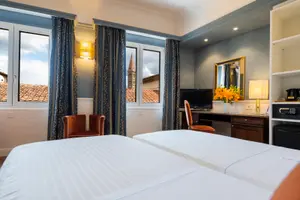
- Free upgrade (upon availability at arrival)
- Complimentary early check-in/late check-out (upon availability)
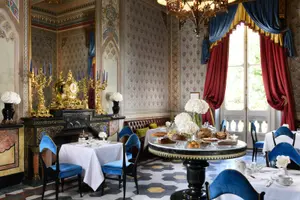
- 20% discount in Fusion Bar & Restaurant (not valid for mini bar consumption)
Guest feedback
9.1/10 from 421 guest reviews
By category
Guests liked
- Great location
- Friendly staff
- Clean rooms
Points to consider
- Overpriced
- Room darkness
- Noise
Location
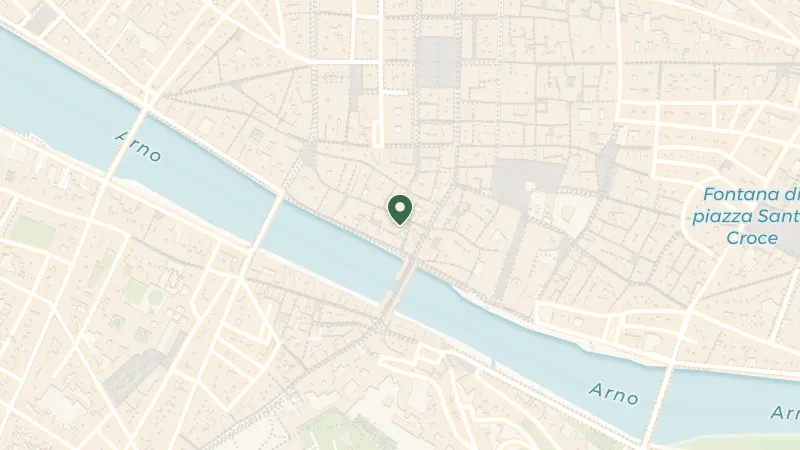
The Lungarno Collection represents a small circle of Florentine hotels distinguished by contemporary art collections and the owners' intimate knowledge of the city. Gallery Hotel Art belongs to this family, positioned where the medieval heart of Florence meets the quieter rhythms of the Oltrarno. This is the quarter where artisan workshops still operate behind heavy wooden doors, where the scent of leather and sizing drifts from framemakers' studios, and where the morning light strikes the Arno in a way that hasn't changed since the Medici commissioned their portraits.
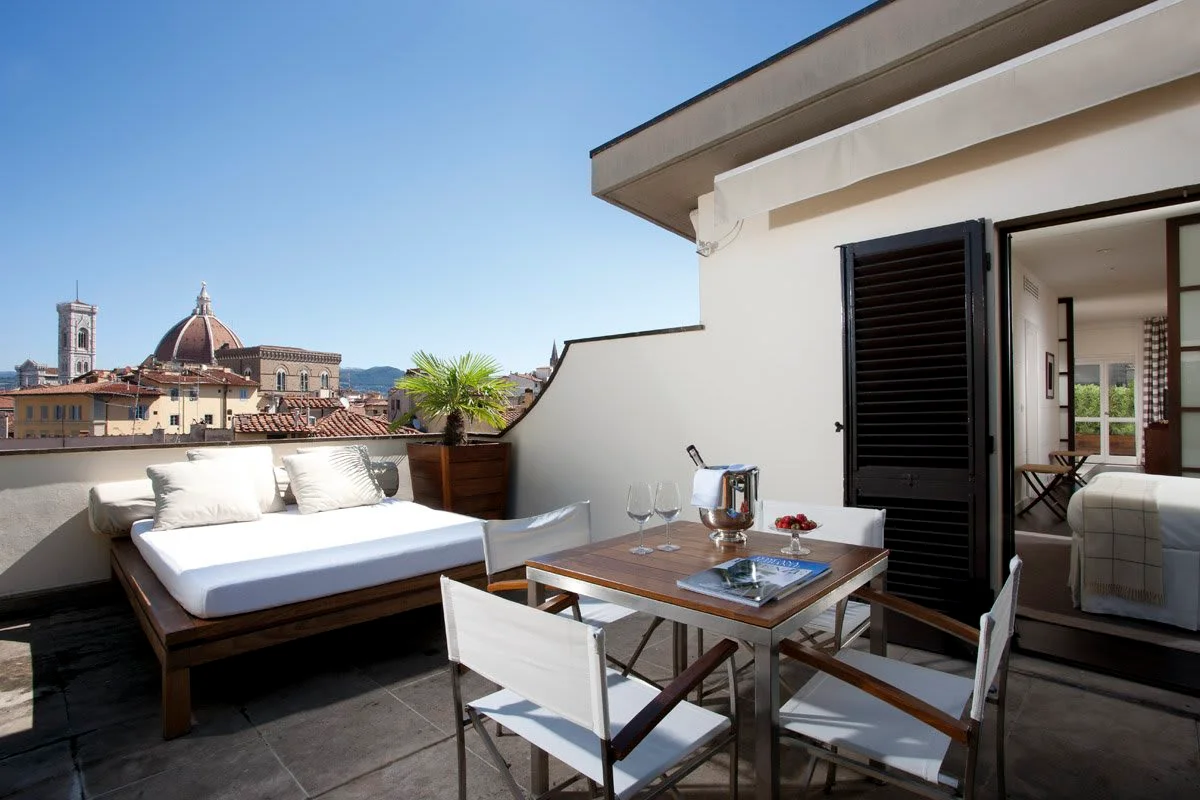
The property sits near Ponte Vecchio, the bridge lined with goldsmiths that survived World War Two intact. Walk south and you're crossing into the Oltrarno proper, Santo Spirito and Palazzo Pitti within easy reach. Walk north and the Duomo's terracotta dome rises above the roofline, impossibly large even when you know it's coming. The Historic Centre of Florence, a UNESCO World Heritage Site since 1982, unfolds in all directions: six centuries of architecture compressed into streets that follow their medieval lines.
Florence Airport sits six kilometres northwest, a fifteen-minute drive that traces the Arno upstream. Pisa's airport, seventy kilometres west, connects to the city by train in under an hour.
Borgo San Jacopo, one of Tuscany's seventeen Michelin-starred restaurants, occupies a prime riverside perch just 170 metres along the Lungarno. The dining room overlooks the Arno's gentle curve, its modern Italian menu showcasing seasonal Tuscan produce with a lighter touch than tradition demands. For a more ambitious culinary pilgrimage, Enoteca Pinchiorri holds three Michelin stars within its seventeenth-century palazzo on Via Ghibellina, less than a kilometre east. The wine cellar here is legendary, the Italian contemporary tasting menus precise and cerebral. Book a table at the hotel's Fusion Bar & Restaurant for aperitivo hour, when Negronis and spritzes arrive alongside cicchetti and the evening light turns the façade of the Uffizi across the river golden.
The Mercato del Porcellino spreads its stalls just a hundred metres north of the river, vendors hawking leather goods beneath the bronze boar whose snout has been rubbed smooth by centuries of tourists. Cross the Ponte Vecchio at dawn to watch jewellers unlock their shuttered workshops. The Belvedere Fort climbs the hill above Oltrarno, its ramparts offering sweeping views over terracotta rooftops to the Apennines beyond. Piazzale Michelangelo rewards the climb with sunset vistas, the entire city laid out in ochre and stone.
July and August bring heat that settles into the stone, thirty-degree afternoons when the city empties for pranzo and the only sensible place is a shaded courtyard with something cold. September softens without losing warmth, the light turning golden as grape harvest begins in the surrounding hills.
Spring arrives unpredictably, March still cool and wet, April capable of anything, May reliably mild with temperatures in the low twenties. This is when the city shakes off winter and cafe tables reappear along Via de' Tornabuoni.
Winter sees few crowds and temperatures that hover near ten degrees, occasionally dipping to freezing overnight. The Duomo's marble facade looks particularly fine under low grey skies, and museums like the Uffizi become navigable again. Rain comes more often than snow, but either way, the terracotta rooftops glisten.
Frequently Asked Questions

Quotes are personally reviewed by Natasha Hardy, founder of The Uncommon Traveller
5.0 rating · 8 Google reviewsThere is no fee or markup. The hotel pays our commission.
Request a Quote 10 Bib Gourmand