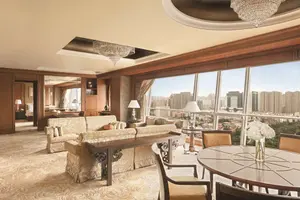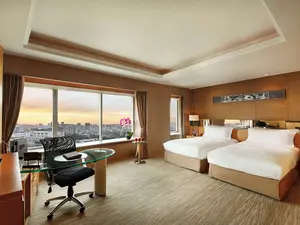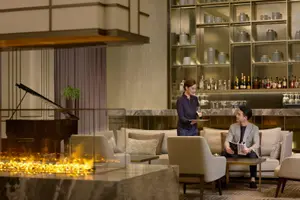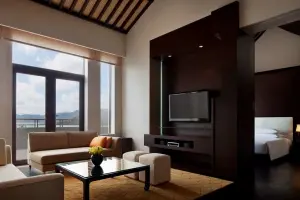
Grand Hyatt Xi An
When you book Grand Hyatt Xi An in Xi'an, China, through our Hyatt Privé partnership, your stay includes daily full breakfast for up to two guests and a property credit. You also receive a priority room upgrade when available. You continue earning World of Hyatt points and elite night credits. No premium credit card or membership needed: request a quote and our advisor books it at the same rate as booking direct.
Exclusive Booking Perks
These perks are included with your stay at the same rate as booking direct with the hotel.
- Welcome amenity provided to guests upon arrival.
- Daily complimentary full breakfast at a hotel restaurant for up to two guests.
- Property credit (value varies by property).
- Priority for room upgrade (response within 24 hours of booking, subject to forecasted occupancy).
- Early check-in/late check-out/connecting rooms (response within 24 hours of request, subject to forecasted occupancy).
Location
Grand Hyatt properties occupy the intersection of commerce and arrival, designed to absorb the scale of a global city with multiple dining venues, expansive wellness facilities, and the architectural confidence that suits both deal-makers and multi-day explorers. This is luxury calibrated for size and momentum, not intimacy.
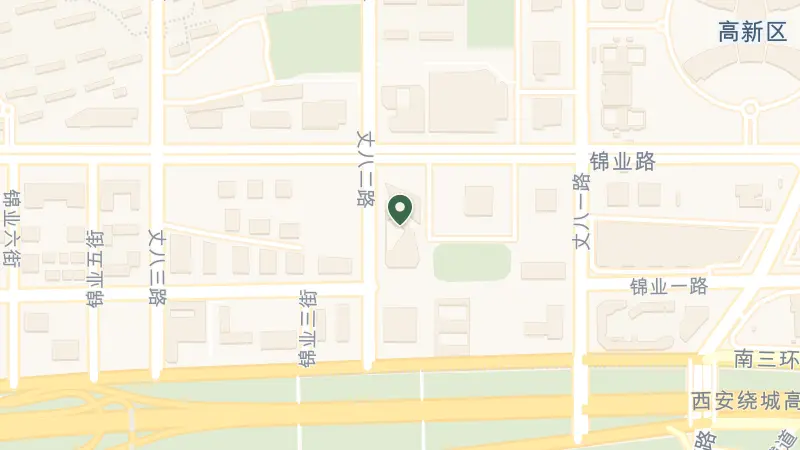
Xi'an is a city built on layers. Once Chang'an, capital of thirteen dynasties and the eastern terminus of the Silk Roads, it hums now with the energy of a tech hub while its ancient city walls still encircle the old town. The Gaoxin district sits southwest of that historic core, a landscape of wide boulevards, glass towers, and innovation parks where the past feels distant until you turn a corner and find a Tang-era pagoda silhouetted against a shopping complex. The neighbourhood's newness is the point: this is where contemporary Xi'an unfolds, efficient and forward-facing.
Xi'an Xianyang International Airport lies thirty kilometres northwest. Taxis and the airport express make the journey straightforward, depositing arrivals into a city that has spent three millennia learning how to welcome travellers from elsewhere.
The Mausoleum of the First Qin Emperor, forty-one kilometres east, is where Qin Shi Huang rests beneath a man-made mountain surrounded by thousands of terracotta soldiers discovered only in 1974. The site continues to yield statues; archaeologists estimate entire battalions remain buried. Closer in, the Silk Roads UNESCO designation marks the Chang'an-Luoyang corridor twelve kilometres away, a 5,000-kilometre network that once funnelled jade, spices, and ideas between East and West. Book a guide who can translate the scale of what stood here when this was the world's largest city.
Gaoxin's dining landscape leans contemporary Chinese and international; Michelin has not yet surveyed this region. For a break from urban rhythms, Lotus Paradise lies nine kilometres out, a landscape park built around water features and seasonal blooms. The neighbourhood rewards those who treat Xi'an as a base camp rather than a museum, with the ancient imperial core a short drive north whenever the terracotta army calls.
Winter settles hard over Xi'an. January mornings drop well below freezing, and a brittle clarity sharpens the city walls and temple eaves. The cold keeps crowds thin at archaeological sites, though indoor exhibition halls offer relief.
Spring and autumn frame the best windows: April and October bring temperatures in the high teens to low twenties, with light that flatters the golden rooftiles of the old city. May rains begin the shift toward summer humidity. September through early November is prime, the air cooling after the July-August heat peaks above thirty degrees.
Summer is sweltering and damp, thunderstorms rolling through in pulses. The terracotta warriors stand in covered pits, mercifully, but outdoor exploration turns sluggish by midday.
Frequently Asked Questions

Quotes are personally reviewed by Natasha Hardy, founder of The Uncommon Traveller
5.0 rating · 8 Google reviewsThere is no fee or markup. The hotel pays our commission.
Request a Quote