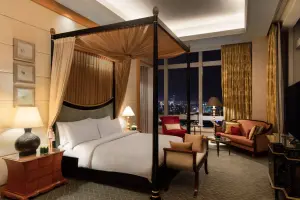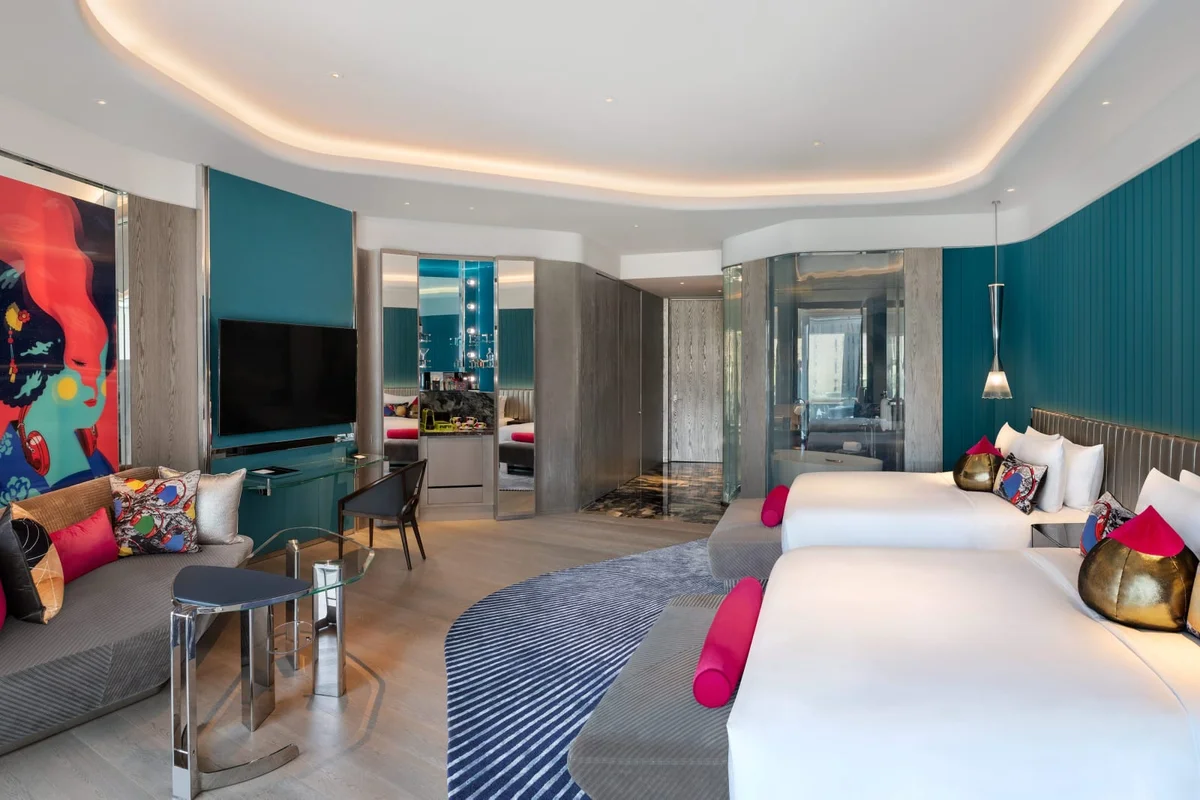
W Xi'an
When you book W Xi'an in China through our Marriott Luminous partnership, your stay includes daily breakfast for two and a welcome amenity. You also receive a room upgrade, early check-in and late check-out when available. You continue earning Marriott Bonvoy points and elite night credits. No premium credit card or membership needed: request a quote and our advisor books it at the same rate as booking direct.
Exclusive Booking Perks
These perks are included with your stay at the same rate as booking direct with the hotel.
- Welcome amenity
- Complimentary breakfast daily for two guests per room
- Early check-in and late check-out (when available)
- Complimentary upgrade (if available at check-in)
Location
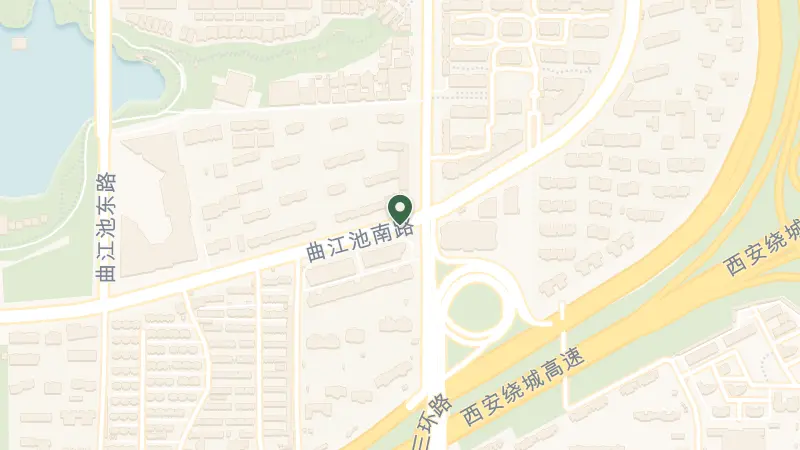
W Hotels brings its signature Living Room lobby concept and bold contemporary aesthetic to Xi'an, where design-forward spaces meet a social atmosphere tuned to nightlife and music programming. The property sits in Qujiang, a modern district south of the ancient walled city that blends parkland, cultural institutions, and wide boulevards with reminders of Xi'an's role as Chang'an, the eastern terminus of the Silk Roads during the Han and Tang dynasties. This is China's capital of antiquity, where emperors ruled for over a millennium and where the country's most extraordinary archaeological discovery, the Terracotta Army, was unearthed in 1974.
The neighbourhood itself feels expansive and purposeful, with green space threading through residential towers and cultural venues. Qujiang contrasts with the older city core to the north, offering a quieter base from which to explore one of China's most historically dense cities. Lotus Paradise waterfall lies under three kilometres southeast, a landscaped park feature that draws local families.
Xi'an Xianyang International Airport sits 35 kilometres northwest, connected by metro and expressway, making arrival straightforward even for first-time visitors navigating a city whose modern infrastructure belies its ancient bones.
The Mausoleum of the First Qin Emperor, 32 kilometres east, holds the Terracotta Army in its silent ranks: life-sized warriors, horses, and chariots buried in 210 BCE to guard China's unifier in death. Thousands remain underground, and the site's scale alone justifies the journey. Book early-morning entry to avoid tour groups massing in the exhibition halls. Closer to the property, 17 kilometres northwest, the Silk Roads corridor that once connected Chang'an to Central Asia earned UNESCO recognition in 2014, tracing the route that moved silk, spices, and ideas across continents.
Back in the city, street food vendors near the Muslim Quarter (accessible by metro) serve yangrou paomo, a crumbled flatbread soaked in lamb broth, and roujiamo, the local answer to a pork sandwich, its cumin-spiced filling tucked into charred bread. The neighbourhood's lack of Michelin-starred dining shifts focus to exploring Xi'an's robust culinary traditions in markets and family-run stalls, where the city's Hui Muslim community has shaped the table for centuries.
Winter bites hard, with January lows plunging below minus six and a brittle dryness that makes scarves essential. The city empties of tourists, leaving the Terracotta Army and city walls relatively quiet.
Spring warms quickly from March onward, with April bringing mild afternoons ideal for cycling the fortifications that ring the old city. Dust occasionally hazes the air, carried from the Loess Plateau to the north, softening the light over tiled rooftops.
Summer peaks in July with heat that sends locals to shaded teahouses and night markets, where the city's social life stretches past midnight. Autumn, particularly September and October, offers the most comfortable temperatures and the clearest skies, though afternoon showers remain frequent enough to justify an umbrella.
Frequently Asked Questions

Quotes are personally reviewed by Natasha Hardy, founder of The Uncommon Traveller
5.0 rating · 8 Google reviewsThere is no fee or markup. The hotel pays our commission.
Request a Quote