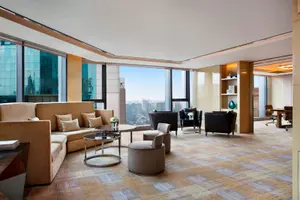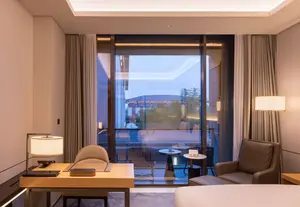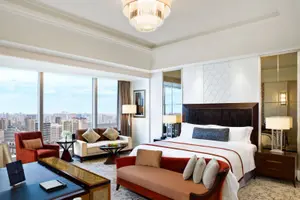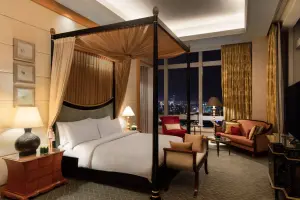
W Chengdu
When you book W Chengdu in China through our Marriott Luminous partnership, your stay includes daily breakfast for two and a welcome amenity. You also receive a room upgrade, early check-in and late check-out when available. You continue earning Marriott Bonvoy points and elite night credits. No premium credit card or membership needed: request a quote and our advisor books it at the same rate as booking direct.
Exclusive Booking Perks
These perks are included with your stay at the same rate as booking direct with the hotel.
- Welcome amenity
- Complimentary breakfast daily for two guests per room
- Early check-in and late check-out (when available)
- Complimentary upgrade (if available at check-in)
Location
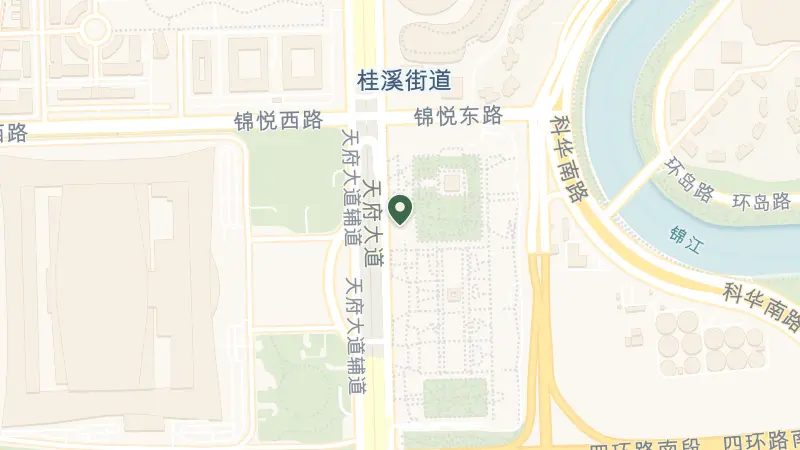
W Hotels brings its signature cocktail-forward, design-led energy to Chengdu, where contemporary aesthetics meet the capital of Sichuan Province. This is a city that moves to its own rhythm: teahouse culture persists alongside rooftop bars, and the scent of chili oil and Sichuan peppercorn drifts through streets lined with both ancient temple walls and glass towers. Chengdu's identity is bound to its culinary prowess (the city holds more Michelin stars than any other in western China) and its role as the gateway to giant panda conservation, though the urban core pulses with nightlife and a thriving creative scene that attracts China's younger, design-conscious set.
The property sits in a district where the Xin River curves through the city, close to the Twin Towers that anchor the skyline. Within walking distance, contemporary Chengdu unfolds: art galleries, specialty coffee roasters, and the hum of a neighbourhood that balances work and leisure without the crush of older tourist quarters. Jiaozi Gongyuan park offers respite, a stretch of green where locals practice tai chi at dawn and gather for evening promenades.
Chengdu Shuangliu International Airport lies twelve kilometres south, connected by metro and taxi. The newer Tianfu International Airport, forty-six kilometres out, handles intercontinental traffic and offers a glimpse of the city's ambitions as a central hub for southwestern China.
The property's dining offerings reflect W Hotels' social programming, though the real draw lies beyond the lobby. Xin Rong Ji, a three-Michelin-starred Taizhou specialist, sits just over a kilometre away, its spacious dining room overlooking the Twin Towers while serving seafood flown in from coastal markets. For a deeper dive into Sichuanese haute cuisine, Yu Zhi Lan occupies a quaint ceramic-filled room nearly eleven kilometres out, where chef Lan Guijun has spent decades elevating regional techniques into something quietly radical. Book weeks ahead. Closer to the property, Co- turns out innovative tasting menus that draw on produce from across China, modern technique applied to seasonal ingredients with a kilometre-and-a-half journey from the hotel.
Off-property exploration should include the morning chaos of Yimin Marketplace, four kilometres away, where vendors hawk Sichuan peppercorns, preserved vegetables, and the fermenting doubanjiang that underpins the region's cooking. The Dujiangyan Irrigation System, a third-century BCE engineering marvel still controlling the Minjiang River, lies 65 kilometres northwest at the base of Mount Qingcheng, both UNESCo-listed and worth the drive for context on how this basin became China's breadbasket.
Winter settles dry and cool over Chengdu, with highs around nine degrees in January and pale sunlight filtering through the basin's persistent mist. The air feels still, and teahouses fill with locals seeking warmth and conversation. Spring arrives gradually, temperatures climbing into the mid-twenties by May, but rain increases as the season progresses.
Summer belongs to the monsoon: July sees heavy downpours and humidity that clings to the skin, though temperatures rarely exceed thirty degrees. The city slows slightly, and covered arcades become the preferred routes. Autumn is the sweet spot, from September through November, when skies clear, temperatures drop back into the low twenties, and the light turns golden over the river.
Plan for late September through early November if you want the best balance of weather and culinary energy, when the humidity lifts and the city feels most alive.
Frequently Asked Questions

Quotes are personally reviewed by Natasha Hardy, founder of The Uncommon Traveller
5.0 rating · 8 Google reviewsThere is no fee or markup. The hotel pays our commission.
Request a Quote 32 Bib Gourmand