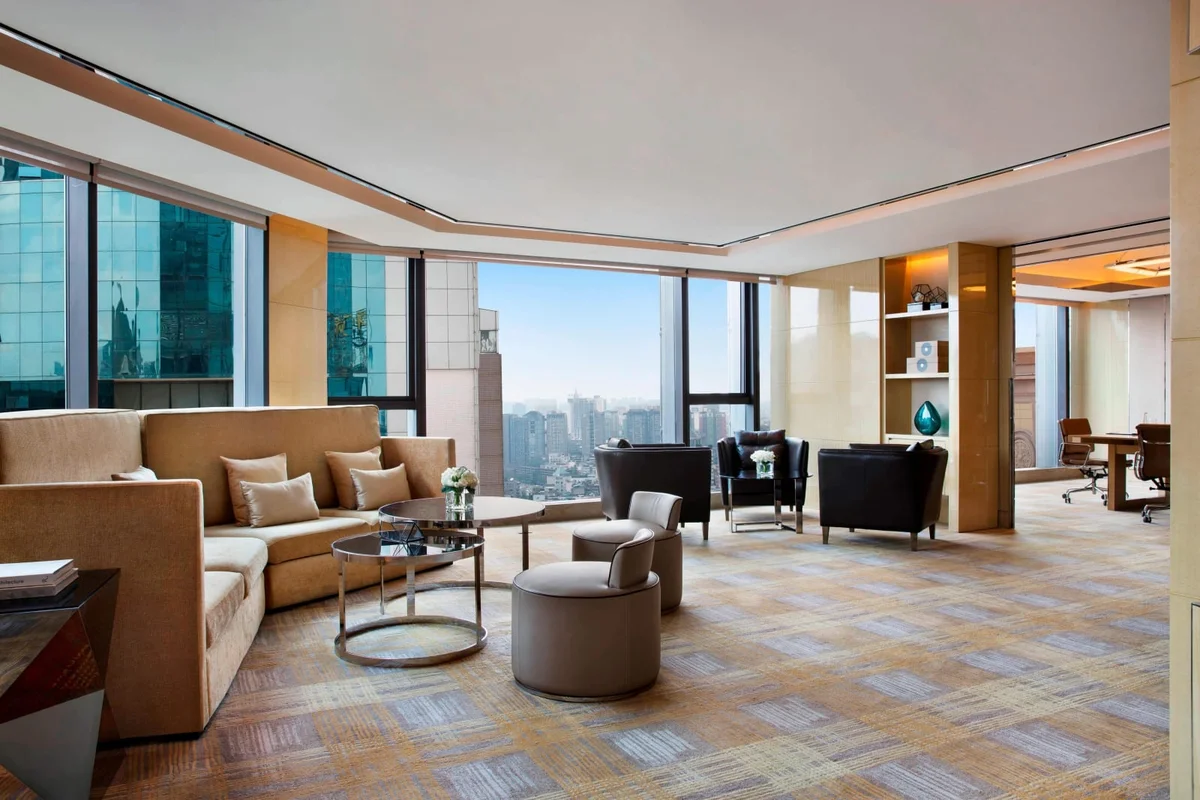
JW Marriott Hotel Chengdu
When you book JW Marriott Hotel Chengdu in China through our Marriott Luminous partnership, your stay includes daily breakfast for two and a welcome amenity. You also receive a room upgrade, early check-in and late check-out when available. No premium credit card or membership needed: request a quote and our advisor books it at the same rate as booking direct.
Exclusive Booking Perks
These perks are included with your stay at the same rate as booking direct with the hotel.
- Welcome amenity
- Complimentary breakfast daily for two guests per room
- Early check-in and late check-out (when available)
- Complimentary upgrade (if available at check-in)
Guest feedback
9.8/10 from 307 guest reviews
Read what guests commentedBy category
Guests liked
- Excellent location
- Friendly and helpful staff
- Great amenities
Points to consider
- Communication issues
- Need for improved non-smoking policy
Location
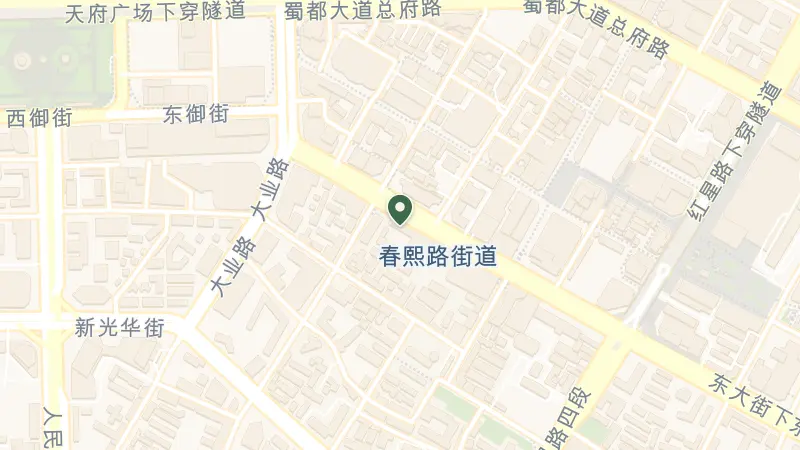
Chengdu's pulse thrums loudest along Chunxi Road, the pedestrianized artery where over 700 shops blur from department-store grandeur to street-stall hustle. The hotel sits within steps of this retail theatre, a base for exploring Sichuan's capital where teahouse culture and high-tech ambition coexist without friction. Modern cafes face public squares animated by evening crowds; the neighbouring Yanshikou commercial circle extends the energy eastward.
Beyond the shopping corridors, Chengdu reveals deeper layers. This is the homeland of Sichuanese cooking, where chilli oil and numbing peppercorns define a culinary identity recognized globally. The city's 2,000-year history as a trade hub on the ancient Southern Silk Road lingers in its layout, though the skyline now rises in glass and steel. Giant pandas draw admirers to research centres on the urban fringe, but the city's own residents claim the real draw: a leisurely pace that resists the breakneck tempo of coastal megacities.
Lines 2 and 3 of the Chengdu Metro converge nearby, making forays across the sprawling city straightforward. Chengdu Shuangliu International Airport lies 16 kilometres southwest; the newer Tianfu International Airport, 52 kilometres east, handles long-haul routes.
Two kilometres north, Yu Zhi Lan operates without signage, such is chef Lan Guijun's reputation. This two-Michelin-starred private dining room elevated Sichuanese cooking to haute cuisine, and the quaint space doubles as a gallery for the chef's own ceramic work. Book weeks ahead. Closer still, The Hall occupies a 1730s heritage building just 874 metres away, its original brick walls and perforated wood windows framing Louis Vuitton's first restaurant in China. The European contemporary menu feels unexpected against the courtyard's worn stone. For coastal precision, Xin Rong Ji commands views of the Twin Towers eight kilometres northeast, flying in Taizhou seafood daily to supply its three-starred menu.
Beyond the table, the Dujiangyan Irrigation System rewards the 59-kilometre journey north. Built in the third century BC, this UNESCO-listed marvel still channels the Minjiang River across Chengdu's plains, a feat of engineering that predates the Roman aqueducts. Kowloon Plaza, 300 metres from the hotel, offers a quick dive into local retail. For deeper flavour, head to Dacheng Market four kilometres out, where morning vendors stack fresh produce and the air thickens with the funk of fermented doubanjiang.
Winter from December through February brings cool, overcast days, temperatures hovering between 4°C and 12°C. The city rarely sees snow, but a persistent grey haze softens the skyline. Locals bundle into wool coats and crowd hotpot restaurants, steam clouding windows.
Spring arrives hesitantly in March, warmth building through April as the basin shakes off its winter damp. By May, humidity rises alongside temperatures near 27°C, a prelude to the summer monsoon. June through August drenches Chengdu in afternoon downpours; July peaks with 400 millimetres of rain, though mornings often break clear and sticky before clouds roll in.
Autumn from September to November offers the year's finest visiting window. October's mild days, highs around 21°C, pair with low rainfall and sharper light. The city's plane trees turn gold, and outdoor teahouse tables fill again before December's chill returns.
Frequently Asked Questions

Quotes are personally reviewed by Natasha Hardy, founder of The Uncommon Traveller
5.0 rating · 8 Google reviewsThere is no fee or markup. The hotel pays our commission.
Request a Quote 32 Bib Gourmand