InterContinental Chengdu Global Center by IHG
When you book InterContinental Chengdu Global Center by IHG in China through our IHG Destined partnership, your stay includes daily breakfast for two and a $100 USD hotel credit per stay. You also receive a room upgrade when available. You continue earning IHG One Rewards points and elite night credits. No premium credit card or membership needed: request a quote and our advisor books it at the same rate as booking direct.
Exclusive Booking Perks
These perks are included with your stay at the same rate as booking direct with the hotel.
- $100 USD (or local currency equivalent) hotel credit per stay
- Daily complimentary breakfast for 2 guests (full or continental, depending on the hotel)
- Complimentary room upgrade (subject to availability)
- Local welcome amenity
- Early check-in / late check-out (subject to availability)
Guest feedback
10.0/10 from 155 guest reviews
By category
Guests liked
- Excellent service
- Great food
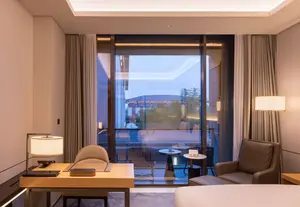
- Stunning rooms
Points to consider
- Lobby decor
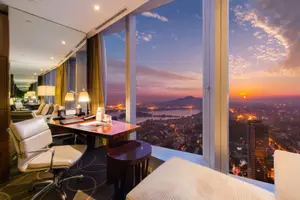
- Room view over a deserted Water Park
- Poor wifi
Location
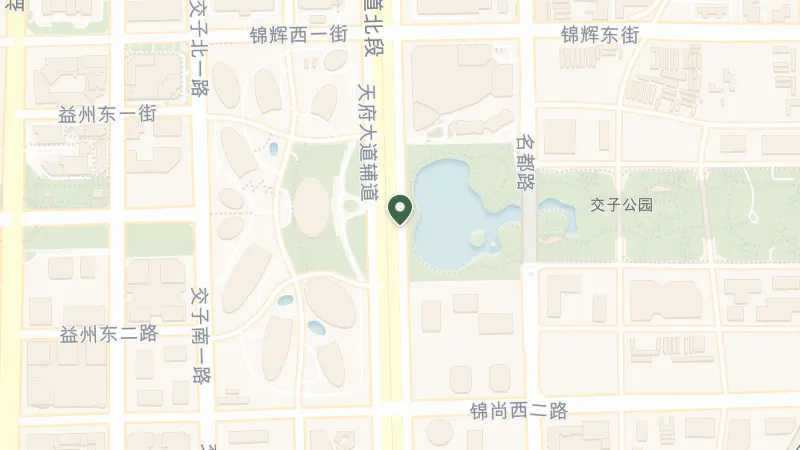
InterContinental Hotels and Resorts brings its Insider Experiences programme to Chengdu, balancing the brand's global scale with personalised service and a gateway to the city's deep cultural roots. The property sits in the Jiaozi Gongyuan area of southwestern Chengdu, the ancient capital of Sichuan province and a modern megalopolis where teahouse culture thrives alongside gleaming towers. Chengdu's identity is inseparable from its cuisine: this is the birthplace of mapo tofu, the spiritual home of the hotpot, and a city where breakfast means dan dan noodles eaten at a low stool on a street corner while the morning mist lifts.
The neighbourhood offers a quieter perspective on the city, with local markets and residential rhythms mixing with contemporary Chengdu life. Yimin Marketplace, under three kilometres from the hotel, hums with vendors selling Sichuan peppercorns, pickled mustard greens, and mountains of fresh produce. The wider city reveals itself in layers: the 2,200-year-old Dujiangyan irrigation system still channels the Minjiang River to the plains, a feat of engineering that made Sichuan the land of abundance; sacred Mount Qingcheng rises to the northwest, its Taoist temples half-hidden in bamboo groves.
Chengdu Shuangliu International Airport lies twelve kilometres from the property, connected by metro and taxi. The newer Tianfu International Airport sits forty-seven kilometres southeast, expanding the city's reach across the basin.
Xin Rong Ji, barely five hundred metres from the property, holds three Michelin stars and specialises in seafood flown in from Taizhou. The dining room overlooks the city's Twin Towers, and the kitchen treats yellow croaker and razor clams with the precision of a jeweller. Co-, also within walking distance, offers a one-star tasting menu that synthesises regional Chinese ingredients through modern technique, each course a study in controlled invention. Book a table at Yu Zhi Lan, nine kilometres north, where chef Lan Guijun has elevated Sichuanese cooking to haute cuisine over decades. The ceramic art dotting the rustic dining room is his own handiwork, and the mapo tofu here rewrites what the dish can be.
Beyond the table, the Dujiangyan Irrigation System, sixty-four kilometres northwest and a UNESCO World Heritage Site, has channelled the Minjiang River since the third century BC. The engineering still functions, a living relic surrounded by terraced fields. Mount Qingcheng rises beside it, its Taoist temples half-hidden in mist. Closer in, Yimin Marketplace, three kilometres away, offers morning produce runs: bundles of garlic stems, baskets of dried chillies, vendors haggling in rapid Sichuanese dialect.
Winter arrives dry and cool, with January mornings dipping to two degrees and afternoons barely reaching nine. The city's famous fog settles into the basin, muting the light and wrapping teahouses in silvery quiet. Spring warms gradually, cherry blossoms appearing in March as temperatures climb to the high teens, though April showers begin to intensify.
Summer is the monsoon season: June through August see heavy rains and dense humidity, with July receiving 400 millimetres of precipitation. The city slows under thick cloud cover, but the heat, hovering near thirty degrees, never becomes oppressive. Autumn is the city's finest hour. September and October bring clear skies, mild days in the low twenties, and the golden light that makes Sichuan's tea terraces glow.
The shoulder seasons of late March through May and mid-September through November offer the most comfortable conditions for exploring markets, temples, and the streets where Chengdu's pace reveals itself in full.
Frequently Asked Questions

Quotes are personally reviewed by Natasha Hardy, founder of The Uncommon Traveller
5.0 rating · 8 Google reviewsThere is no fee or markup. The hotel pays our commission.
Request a Quote 32 Bib Gourmand