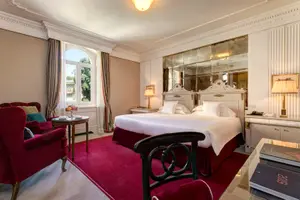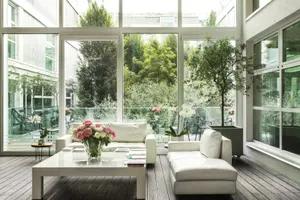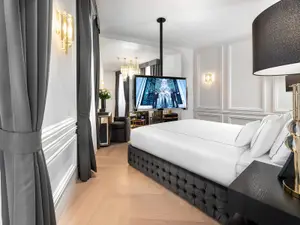
Palm Suite
When you book Palm Suite in Rome, Italy, through our withIN by SLH partnership, your stay includes daily continental breakfast for two and a hotel credit of $50-$100 USD per stay. You also receive a one-category room upgrade and early check-in when available. No premium credit card or membership needed: request a quote and our advisor books it at the same rate as booking direct.
Exclusive Booking Perks
These perks are included with your stay at the same rate as booking direct with the hotel.
- A credit worth $50-$100 (USD) per room, per stay to be spent only on extras such as F&B or Spa, only on property and during the stay
- Daily Continental breakfast for two people
- Room upgrade to next room category, subject to availability at the time of check-in
- Early check-in, subject to availability at the time of check-in
- Late check-out, subject to availability
Guest feedback
9.4/10 from 395 guest reviews
By category
Guests liked
- Great location
- Friendly staff
- Clean and stylish rooms
Points to consider
- Limited amenities
- Issues with bathroom
- High price for value
Location
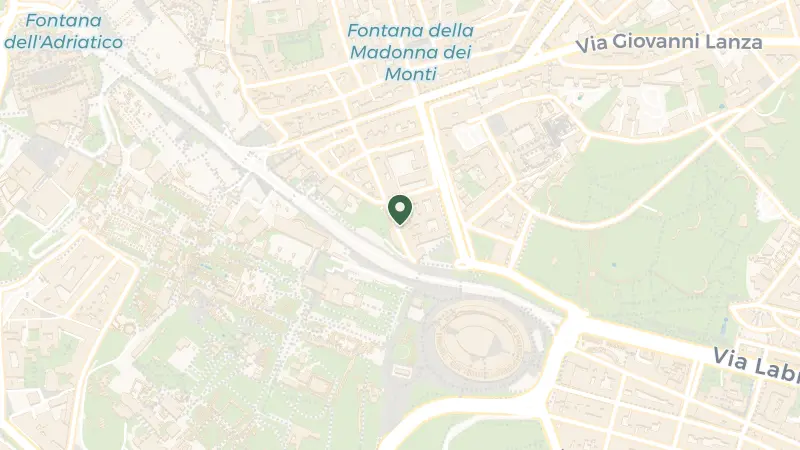
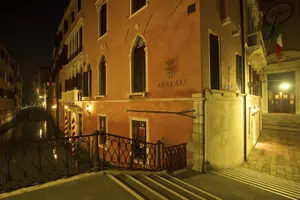
Palm Suite places you in Monti, Rome's most liveable rione, where ivy spills over ochre walls and artisans still work from street-level studios. This is the neighbourhood that feels least like a museum, where espresso bars open onto cobbled lanes and locals argue football over morning cornetti. The Colosseum rises four hundred metres south, its bulk visible from certain corners, but Monti keeps its own rhythm: slower, more residential, punctuated by the weekend vintage market and the clatter of shutters opening at dawn.
Walk ten minutes west and you're at the Forum, the skeletal heart of the ancient city. Walk east and the streets climb toward Santa Maria Maggiore, one of Rome's great patriarchal basilicas, its gilded ceiling still glowing with New World gold. The entire Historic Centre of Rome, inscribed as a UNESCO site in 1980, unfolds from here: layers of empire, papacy, and republic compressed into travertine and tufa.
Rome–Fiumicino lies twenty-two kilometres southwest, connected by the Leonardo Express train into Termini station.
Book a table at Il Pagliaccio, two kilometres west in the centro storico, where Anthony Genovese maps a gastronomic world tour across two Michelin stars and plates that touch nearly every continent. Closer still, Acquolina holds two stars near Piazza del Popolo, its dining room understated, its service dynamic. For a pilgrimage meal, La Pergola sits 4.7 kilometres north, Rome's only three-star, its new incarnation dressed in Travertine and Roman red.
On Saturday mornings, Mercato di Monti fills Via Leonina with vintage clothing, ceramics, and prints, while Campo de' Fiori's daily market, 1.6 kilometres northwest, spreads vegetables and flowers across the square where Giordano Bruno was burned. The Colosseum and Forum need no introduction, but don't miss the keyhole view at the Aventine Hill: peer through the Knights of Malta gate and you'll frame St. Peter's dome in perfect miniature. Tivoli's Villa Adriana, twenty-four kilometres east, preserves Hadrian's sprawling second-century retreat, its pools and pavilions still speaking of imperial ambition.
Spring arrives early, the city flooded with wisteria and light that turns the Tiber golden by late afternoon. April and May hover around eighteen to twenty-two degrees, ideal for long walks through the Forum before the crowds thicken. Summer is relentless: July peaks above thirty degrees, the streets emptying at midday, locals fleeing to the coast while tourists queue in the glare. August is hotter still, many restaurants shuttered for ferragosto.
September softens everything, the air still warm but breathable, the city rousing itself after the summer stupor. October rains begin, heavy and sudden, but the light between storms is incomparable, slanting low through umbrella pines.
Winter is mild, rarely dipping below freezing, the city at its quietest and most Roman, cafe windows fogged with steam.
Frequently Asked Questions

Quotes are personally reviewed by Natasha Hardy, founder of The Uncommon Traveller
5.0 rating · 8 Google reviewsThere is no fee or markup. The hotel pays our commission.
Request a Quote 10 Bib Gourmand