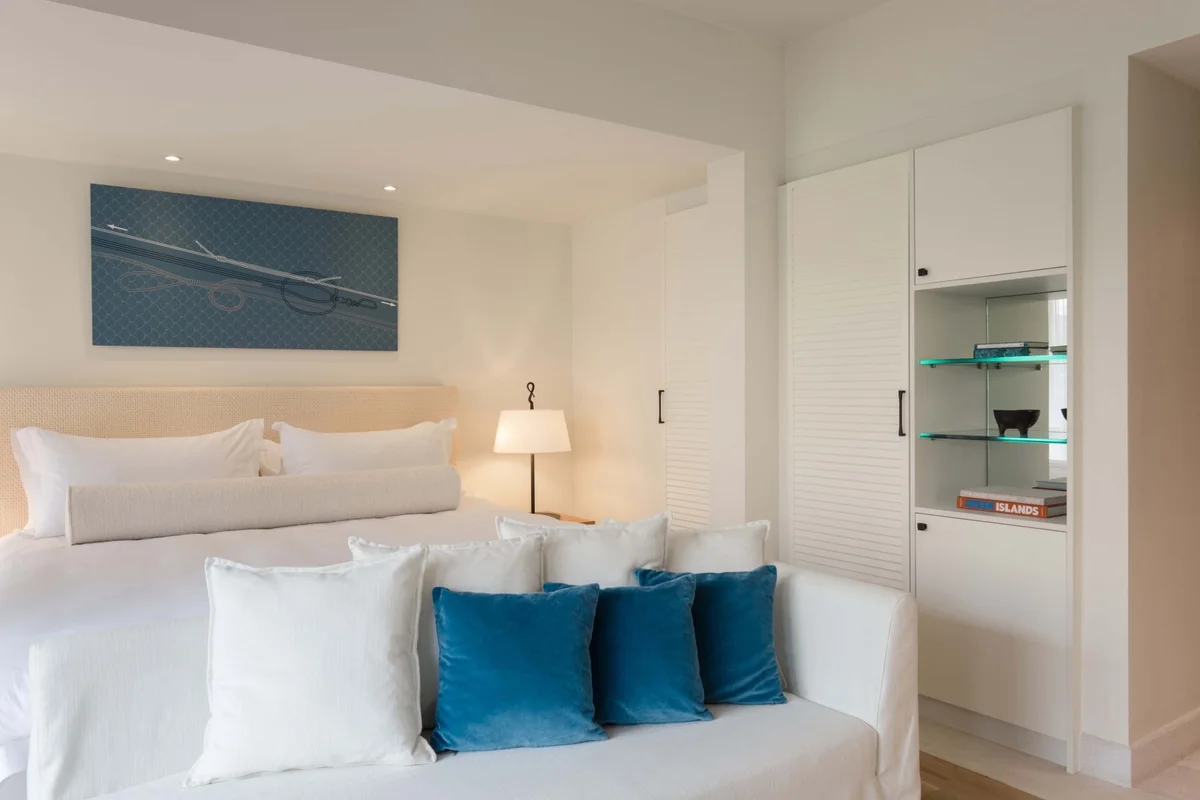
Phāea Blue
When you book Phāea Blue in Crete, Greece, through our withIN by SLH partnership, your stay includes daily continental breakfast for two and a $100 USD food and beverage credit per stay. You also receive a one-category room upgrade and early check-in when available. No premium credit card or membership needed: request a quote and our advisor books it at the same rate as booking direct.
Exclusive Booking Perks
These perks are included with your stay at the same rate as booking direct with the hotel.
- $100 USD hotel credit per room, per stay redeemable only on-property for food
- Daily Continental breakfast for two guests.
- Room upgrade to the next room category (subject to availability at check-in).
- Early check-in (subject to availability).
- Late check-out (subject to availability).
- The following room categories now receive a $150 USD hotel credit per room, per stay
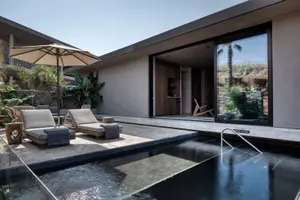
- Island Suite Sea View Private Heated Pool
- The Phaea Blue Villa
Location
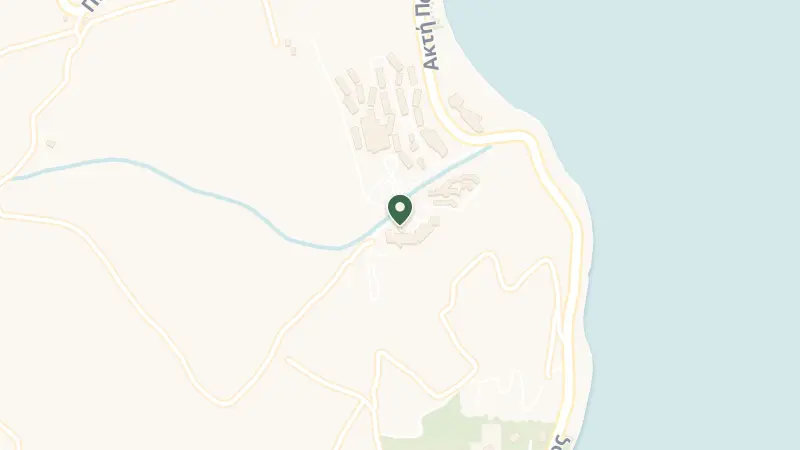
Phāea Blue occupies the northeastern coast of Crete, where the island's mountainous spine meets the Sea of Crete in a series of sheltered coves and rocky headlands. The property sits near the village of Elounta, a quieter pocket of the island's northern shore that has drawn discreet visitors for decades without the density of Crete's busier resort corridors. This is the Mirabello Gulf, named for the "beautiful view" Venetian merchants noted when sailing past, and the water here glows in shades that shift from turquoise to deep cobalt depending on the hour and the wind.
Crete's history stretches back to the Minoan civilization, Europe's earliest advanced society, which flourished here from 2700 BC until the Mycenaean takeover. The island's scale (260 kilometres from west to east, 100 kilometres south of mainland Greece) gives it a geography more diverse than most Mediterranean islands: snow-capped peaks in winter, fertile plateaus, deep gorges, and a coastline that spans 1,046 kilometres. The newly inscribed Minoan Palatial Centres, a UNESCO site comprising six archaeological complexes, lie 76 kilometres west and offer vivid proof of Crete's ancient sophistication.
Heraklion's international airport is 50 kilometres southwest, about an hour by car along the coastal highway. Sitia's smaller airport sits 35 kilometres east, serving seasonal European routes. The drive to either threads through olive groves and stone villages where shepherds still move flocks along roadsides.
Plaka beach is one kilometre away, a crescent of coarse sand facing Spinalonga Island, the Venetian fortress-turned-leper colony whose story has made it one of Crete's most visited offshore sites. The beach at Schisma, just over three kilometres away, is quieter and backed by tamarisk trees. Kolokitha, reachable by boat from Marina Elounda (3.3 kilometres), offers pale sand and shallow water ideal for extended swimming. Book a sailing excursion from the marina to explore the gulf's hidden coves and the Oxia nature reserve (5.7 kilometres), where Cretan goats navigate cliffs above the water.
The Minoan Palatial Centres, 76 kilometres west, include Knossos, Phaistos, and four other sites that reveal the frescoed halls, storage magazines, and drainage systems of a civilization that traded across the Mediterranean three millennia ago. Closer to the property, the old town of Agios Nikolaos (11 kilometres) centres on a circular lake once thought bottomless, now ringed by cafés where locals gather for evening kafes and plates of dakos, the twice-baked barley rusk topped with tomato and feta. Start with mezze at the harbourfront tavernas: grilled octopus, Cretan graviera cheese, snails stewed in rosemary.
Summer on Crete's northern coast is hot and almost rainless. July and August see midday temperatures around 32°C, the light white and unrelenting, the water warm enough to swim at sunrise. The meltemi winds blow south across the Aegean in afternoon gusts that cool terraces and keep the air moving. September remains warm (highs near 29°C) with gentler light and fewer crowds; this is the best month for extended stays.
Spring arrives early. By April, wildflowers blanket the hillsides and temperatures reach the low twenties, ideal for walking the coastal paths and exploring archaeological sites before the heat sets in. May is warmer still, the island green from winter rains, the sea finally swimmable for most.
Winter is mild by northern European standards (highs around 15°C in December and January) but brings Crete's rainy season. The mountains inland sometimes hold snow, and the island takes on a quieter, more domestic rhythm. Locals harvest olives, and tavernas fill with island families rather than tourists.
Frequently Asked Questions

Quotes are personally reviewed by Natasha Hardy, founder of The Uncommon Traveller
5.0 rating · 8 Google reviewsThere is no fee or markup. The hotel pays our commission.
Request a Quote