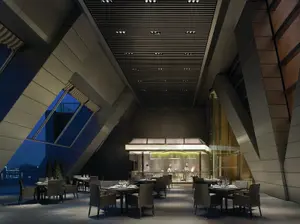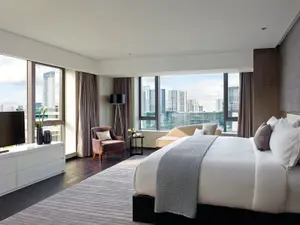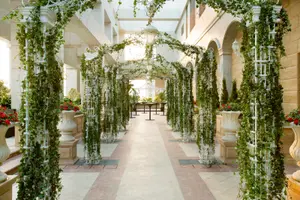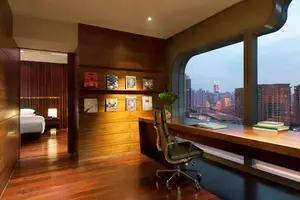
The Langham, Shanghai, Xintiandi
When you book The Langham, Shanghai, Xintiandi in China, through our Couture by Langham partnership, your stay includes daily breakfast for two, a 125 GBP hotel credit and a welcome amenity. You also receive a one-category room upgrade, early check-in and late check-out when available. No premium credit card or membership needed: request a quote and our advisor books it at the same rate as booking direct.
Exclusive Booking Perks
These perks are included with your stay at the same rate as booking direct with the hotel.
- 125 GBP Hotel Credit (varies per property)
- Daily Breakfast For 2
- VIP Welcome Amenity
- Next tier room upgrade, subject to availability
- Early check-in and late check-out, subject to availability
Location
The Langham carries a legacy that began with London's original 1865 property, establishing a tradition of refined hospitality now expressed across major cities worldwide. The brand's signature afternoon tea ritual and Chuan Spa concept translate its European heritage into each location, including this Shanghai address where the interiors echo architectural provenance rather than generic luxury.
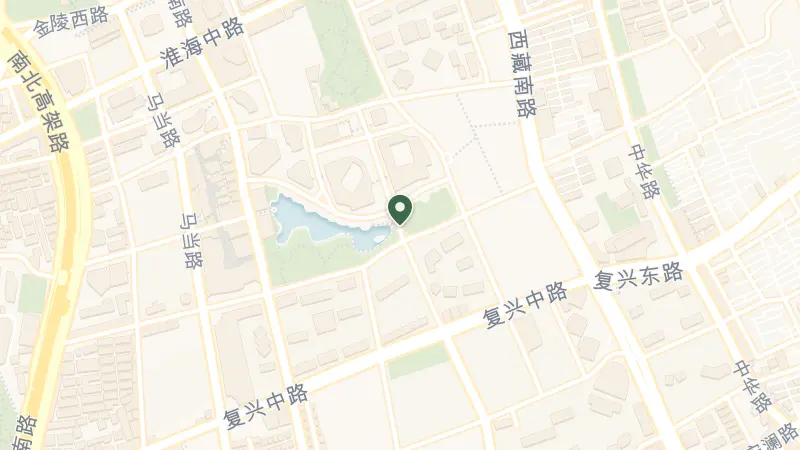
The property sits in Taipingqiao, where the French Concession's heritage shikumen lane houses meet contemporary Shanghai. Xintiandi district, immediately surrounding the hotel, reimagines traditional stone-gate architecture as a pedestrian quarter of boutiques, galleries, and restaurants behind preserved brick facades. The lanes open onto tree-lined streets where Art Deco apartment blocks from the 1930s still stand, their wrought-iron balconies and tiled entryways intact. Walk five minutes south to find the site of the First National Congress of the Chinese Communist Party, preserved in a restored shikumen building that anchors the neighbourhood's role in modern Chinese history.
Shanghai Hongqiao International Airport lies fourteen kilometres west, a straightforward taxi or metro ride into the city. Pudong International, the main international gateway, sits thirty-three kilometres east across the Huangpu River, connected by the Maglev train and expressway routes that cut through the city's expanding periphery.
Shanghai's Michelin-starred dining scene clusters within walking or short driving distance. Canton 8 in Huangpu, less than two kilometres away, serves handmade dim sum and Cantonese classics under Chef Mak, whose four decades of experience yield painstaking preparations rarely found beyond Hong Kong. Da Vittorio, also two kilometres from the property, translates Lombard traditions through Chinese ingredients, a deft interpretation helmed by a chef trained at the Brusaporto flagship. Book a table at Taian Table, 4.4 kilometres north, where Stefan Stiller's ten- or twelve-course menus change every few weeks and counter seating encircles the island kitchen for an intimate view of the brigade's precision.
The Marriage Market convenes 1.5 kilometres away in Renmin Park, where parents gather on weekends to post matrimonial advertisements for their adult children, a cultural ritual that unfolds beneath plane trees and speaks to Shanghai's blend of tradition and pragmatism. Tianshan Tea City, six kilometres west, stocks oolong, pu'er, and white teas from across China's growing regions, the vendors demonstrating gongfu cha brewing in small ceramic gaiwans. The Classical Gardens of Suzhou, ninety-eight kilometres northwest, exemplify Chinese landscape design in miniature, their pavilions and water features inscribed as a UNESCO site for their philosophical representation of nature within contained courtyards.
January and February bring high temperatures barely reaching ten degrees, the air sharp and dry along the Bund's riverfront promenade where walkers bundle against wind sweeping off the Huangpu. Spring arrives in April and May, when temperatures climb into the low twenties and plane trees flush green along the French Concession's avenues, though rainfall increases steadily through this period.
Summer heat peaks in July and August, with temperatures above thirty degrees and humidity that settles over the city like a weight, the air conditioning in shopping arcades and subway stations providing necessary refuge. Monsoon rains arrive in June, tapering through autumn but leaving streets slick and the sky overcast.
October and November offer the clearest conditions, with temperatures in the high teens and low twenties and a crispness that makes walking the city's neighbourhoods comfortable. The light turns golden in late afternoon, illuminating the brick facades and casting long shadows through the sycamore-lined streets.
Frequently Asked Questions

Quotes are personally reviewed by Natasha Hardy, founder of The Uncommon Traveller
5.0 rating · 8 Google reviewsThere is no fee or markup. The hotel pays our commission.
Request a Quote 34 Bib Gourmand