Atlantis Bay - The Leading Hotel of the World
When you book Atlantis Bay - The Leading Hotel of the World in Sicily, Italy, through our Fora Rates partnership, your stay includes a €50 hotel credit and a welcome amenity. You also receive a room upgrade, early check-in and late check-out when available. No premium credit card or membership needed: request a quote and our advisor books it at the same rate as booking direct.
Exclusive Booking Perks
These perks are included with your stay at the same rate as booking direct with the hotel.
- Room upgrade, subject to availability
- €50 F&B services credit (not applicable to room service)
- €50 wellness services credit
- Early check-in / Late check-out, subject to availability
- Welcome amenity on arrival (traditional sweets and Sicilian liquor)
Location
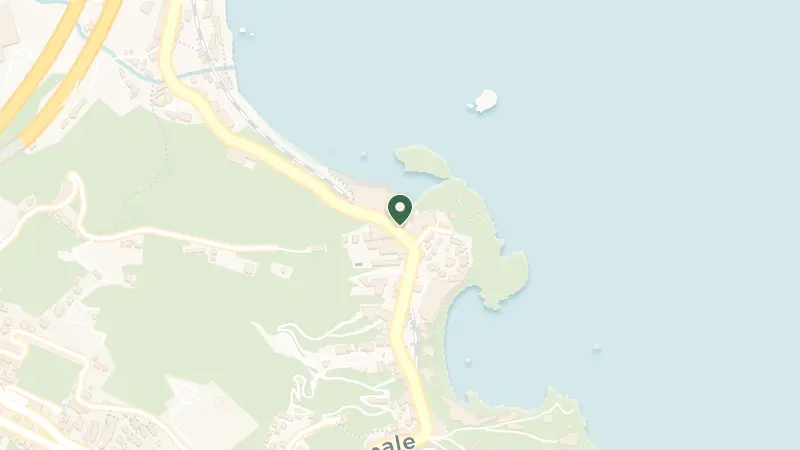
The Ashbee villa sits at the eastern edge of Taormina, where the ancient hillside town dissolves into terraced gardens and the cobalt expanse of the Ionian Sea. Below, the pebble beaches of Mazzaro and Spisone curve around limestone headlands, their turquoise water cool even in August. Above, Taormina's historic centre climbs in tiers of honey-coloured stone, its Greek theatre framing Mount Etna's smoking cone against an endless sky. This is Sicily at its most theatrical: a landscape shaped by millennia of volcanic fire and Mediterranean light, where Phoenician traders, Greek colonists, and Norman conquerors each left their mark on the island's architecture and soul.
The neighbourhood of Spisone and Mazzeo stretches along the coast below the clifftop town, connected by winding roads that cut through citrus groves and bougainvillea-draped villas. Taormina itself is a ten-minute drive up the hill, its narrow streets opening onto piazzas where gelato melts faster than you can eat it. The Riserva naturale orientata Isola Bella, less than a kilometre south, is a protected island connected to the mainland by a slender sandbar at low tide, its scrubby vegetation sheltering rare bird species.
Catania-Fontanarossa Airport lies 48 kilometres south, reachable in under an hour along the coastal autostrada. Reggio Calabria Airport, across the Strait of Messina, is 39 kilometres north.
Two Michelin two-starred restaurants anchor the immediate dining landscape. St. George by Heinz Beck occupies an early twentieth-century villa nine hundred metres away at The Ashbee Hotel, where creative haute cuisine unfolds against Taormina's panoramic sweep. Closer still, La Capinera, seven hundred and fifty metres south, serves Sicilian cooking that organizes its tasting menus around elemental themes, the Benjamin Button dish featuring fresh pasta buttons with veal ragù. Just under a kilometre away, Otto Geleng at Hotel Timeo presents Roberto Toro's marriage of Sicilian ingredients and international technique on a bougainvillea-shaded terrace overlooking the bay and Etna. Book a table at any of these well ahead.
The Spiaggetta delle Sirene lies directly below the property, a sand cove between volcanic rocks where the water runs clear and cold. Two hundred metres north, Mazzaro beach stretches wider, pebblestones giving way to deeper swimming. The Gole dell'Alcantara, eleven and a half kilometres inland, cuts a dramatic gorge through basalt columns where you can wade between towering walls of cooled lava. Mount Etna itself, a UNESCO natural site since 2013, rises twenty-nine kilometres northwest, its summit currently at 3,403 metres and perpetually reshaping itself through eruption and collapse.
Summer stretches from June through September, with temperatures climbing to 30°C in July and August, the air dry and haze-softened by afternoon. The sea warms to its peak in August, making dawn and dusk the best hours for exploring Taormina's sun-baked streets. Rain is nearly absent; the light is relentless and white.
Spring and autumn bring cooler days, mid-teens to low twenties, and more frequent showers that turn the hillsides green. October sees the heaviest rainfall, but between storms the light turns golden, the crowds thin, and the terrace dining feels more intimate.
Winter is mild, rarely dropping below eight degrees, with the most precipitation between November and February. Etna's summit wears snow, the beaches empty, and the fishing villages along the coast return to their off-season rhythms. The clarity of the air in winter makes the volcano's plume visible from greater distances.
Frequently Asked Questions

Quotes are personally reviewed by Natasha Hardy, founder of The Uncommon Traveller
5.0 rating · 8 Google reviewsThere is no fee or markup. The hotel pays our commission.
Request a Quote 3 Bib Gourmand