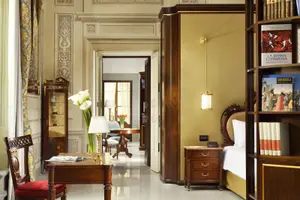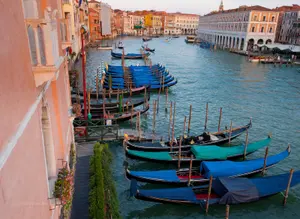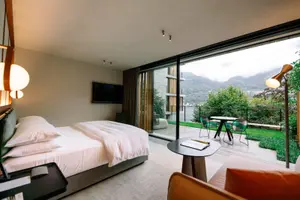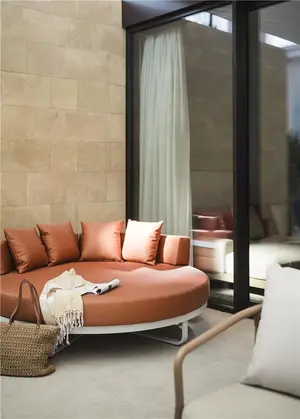
Grand Hotel Timeo
When you book Grand Hotel Timeo in Sicily, Italy, through our Virtuoso partnership, your stay includes daily breakfast for up to two guests and a $100 USD food and beverage credit. You also receive a room upgrade, early check-in and late check-out when available. No premium credit card or membership needed: request a quote and our advisor books it at the same rate as booking direct.
Exclusive Booking Perks
These perks are included with your stay at the same rate as booking direct with the hotel.
- Upgrade on arrival, subject to availability
- Daily breakfast for up to two guests per bedroom, served in the restaurant (alr...)
- $100 USD equivalent Food & Beverage credit (not comb...)
- Early Check-In / Late Check-Out, subject to availability
Location
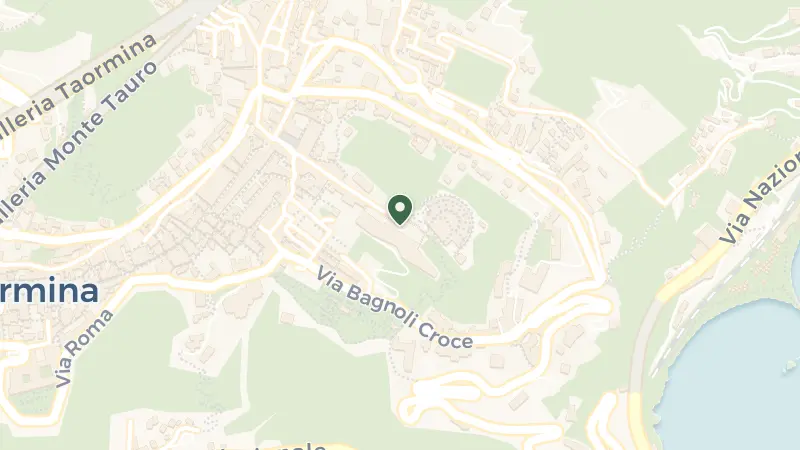
Taormina clings to the eastern edge of Sicily like a theatre box overlooking the Ionian Sea. The town's Greek and Roman past announces itself in the Teatro Antico di Taormina, a second-century amphitheatre where Mount Etna rises in the distance, its volcanic plume visible on clear mornings. The medieval quarter spills down terraced hillsides, its stone lanes lined with aristocratic palazzos and bougainvillea cascading over iron balconies. This is the Sicily that drew Goethe and D.H. Lawrence, where the light turns golden against ancient stone and the air smells of jasmine and sea salt.
Below the town centre, the coast unfolds in a series of coves and promontories. Isola Bella's nature reserve juts into the sea, connected to the mainland by a narrow sand isthmus that disappears at high tide. The neighbourhood of Mazzarò hugs the waterline, accessible from Taormina via a cable car that drops through terraced gardens and lemon groves.
Catania-Fontanarossa Airport lies forty-seven kilometres south, connected by the A18 autostrada, which traces the coast past the Greek theatre ruins of Naxos. Reggio Calabria Airport sits forty kilometres north across the Strait of Messina.
Otto Geleng, the hotel's Michelin-starred restaurant, occupies a terrace where bougainvillea frames views of the bay and Etna's summit. The eight-table dining room serves Mediterranean and Sicilian cuisine with the precision that earned it a star. Within walking distance, St. George by Heinz Beck commands two stars at The Ashbee Hotel, four hundred metres away in a converted villa where palm-lined terraces look across the ancient town. Book a table at Vineria Modì, three hundred metres closer in the historic centre, where the Italian contemporary menu evolved from the restaurant's origins as a wine bar.
The Greek theatre hosts summer concerts and theatrical performances, its stone tiers still intact after two millennia. Below, the Riserva naturale orientata Isola Bella protects Mediterranean scrub and migratory birds on a rocky outcrop eight hundred metres offshore. Dive sites include the Canyon di Angelo and Canyon del Diablo, both within one kilometre, where underwater walls drop into the Ionian depths. Mount Etna, a UNESCO site since 2013, rises twenty-eight kilometres inland, its summit accessible by cable car and four-wheel drive. The Gole dell'Alcantara gorges, eleven kilometres north, cut through basalt columns formed by ancient lava flows.
Summer arrives fierce and rainless. July and August push temperatures near thirty degrees, the midday sun bleaching stone facades and driving crowds to the sea. The Ionian stays warm through September, when the light softens and the town empties slightly.
Winter brings rain, particularly December and January when clouds drape the mountain and the theatre stones glisten wet. February sees the almond trees blossom across the hillsides, their white flowers appearing before the leaves. Temperatures hover in the low teens.
Spring and autumn deliver the best conditions for walking the medieval lanes and climbing to ancient ruins. May through June and September through October balance warmth with manageable crowds, the air clear enough to trace Etna's profile from the Greek theatre. The mountain's snow cap lingers through April, visible above terraced vineyards and citrus groves.
Frequently Asked Questions

Quotes are personally reviewed by Natasha Hardy, founder of The Uncommon Traveller
5.0 rating · 8 Google reviewsThere is no fee or markup. The hotel pays our commission.
Request a Quote 3 Bib Gourmand