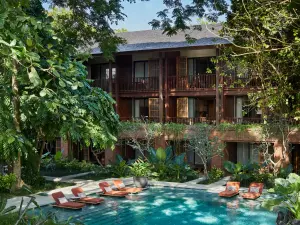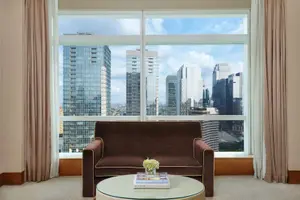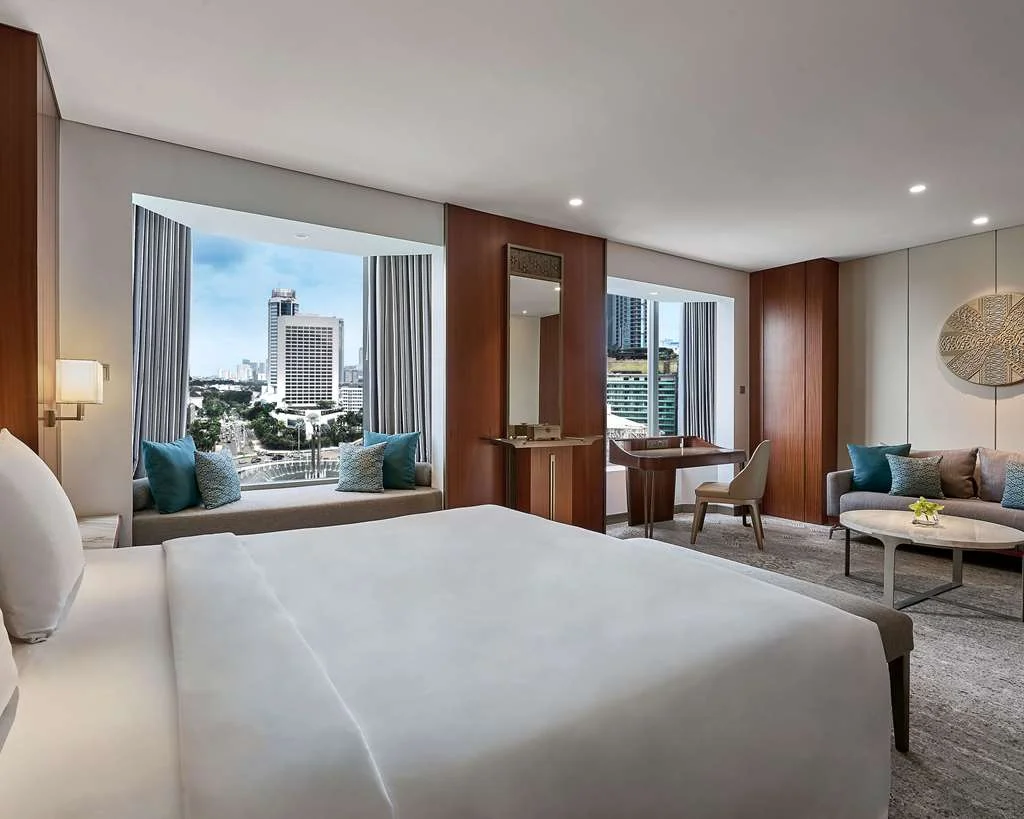
Grand Hyatt Jakarta
When you book Grand Hyatt Jakarta in Indonesia through our Hyatt Privé partnership, your stay includes daily full breakfast for up to two guests and a property credit. You also receive a priority room upgrade, early check-in and late check-out when available. You continue earning World of Hyatt points and elite night credits. No premium credit card or membership needed: request a quote and our advisor books it at the same rate as booking direct.
Exclusive Booking Perks
These perks are included with your stay at the same rate as booking direct with the hotel.
- Welcome amenity provided to guests upon arrival.
- Daily complimentary full breakfast at a hotel restaurant for up to two guests.
- Property credit (value varies by property).
- Priority for room upgrade (response within 24 hours of booking, subject to forecasted occupancy).
- Early check-in/late check-out/connecting rooms (response within 24 hours of request, subject to forecasted occupancy).
Location
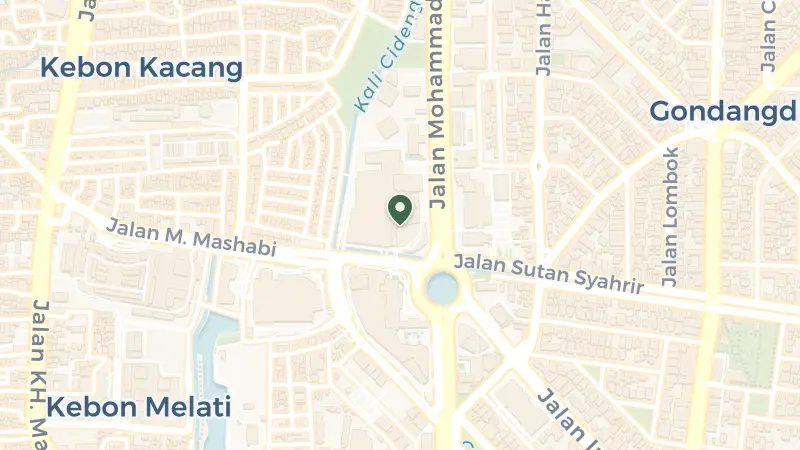
Grand Hyatt properties are built for scale and contemporary ease, with multiple dining venues and extensive amenities designed to serve both extended business stays and leisure travellers who value a full range of on-site services. Jakarta itself sprawls across the northwestern coast of Java, facing the Java Sea, and functions as Indonesia's political, economic, and cultural engine. The wider Jabodetabek metropolitan area is one of the world's most populous urban agglomerations, and the city's history layers the Sunda Kingdom's early port of Sunda Kelapa, the Demak Sultanate's 1527 renaming to Jayakarta, and more than three centuries as Batavia under Dutch colonial rule before independence brought the name Jakarta in 1945.
The property sits in Gondangdia, part of the Menteng district, a neighbourhood that retains pockets of colonial-era planning amid the high-rise momentum of central Jakarta. The streets here feel quieter than the outer arterials, with tree-lined blocks and a walkable grid that gives way to wider boulevards as you move toward the national monuments and government offices. ASEAN's secretariat, corporate headquarters, and the apparatus of a capital city hum just beyond.
Halim Perdanakusuma International Airport lies eleven kilometres southeast, while Soekarno-Hatta International Airport is twenty kilometres west, connected by toll roads and the airport rail link that has eased the commute into the city centre.
Markets pulse with the rhythm of daily Jakarta life. Pasar Lontar Kebon Melati, just over a kilometre away, offers early-morning produce and spice stalls where galangal, lemongrass, and kencur root are sold by the bundle. Pasar Pintu Air, 1.5 kilometres north, unfolds in narrow aisles crowded with textiles, household goods, and vendors selling nasi uduk and gorengan from handcarts. Pasar Kembang Cikini, two kilometres east, specialises in cut flowers and potted plants, a burst of colour and jasmine scent before noon. For those drawn to the history beneath the present city, the colonial core of Batavia lies to the north, where the old town square (Taman Fatahillah) preserves Dutch warehouses now converted into museums documenting the VOC era and Jakarta's layered past.
Start with a visit to Pasar Lontar for ingredients, then trace the canals and alleyways that map the old port geography. Jakarta Golf Club, six kilometres out, provides a green escape from the density, while Marina Ancol and Pantai Laguna along the northern waterfront offer weekend beach outings, though the Java Sea here is more about the scene than pristine swimming.
Jakarta's equatorial climate holds steady warmth year-round, with highs hovering between 28°C and 31°C and nights rarely dipping below 23°C. The dry season from June through September brings the clearest skies and the sharpest light, with August and September peaking near 31°C and rainfall at its lowest. Mornings feel crisp by Jakarta standards, and the streets dry quickly after any brief shower.
The wet season from November through March brings heavy afternoon downpours that drum on awnings and flood low-lying intersections within minutes. January and December see the most persistent rain, but the storms usually break by evening, leaving the air thick and warm. The city slows during these months, though the intensity has its own appeal if you enjoy watching the monsoon sweep through from a sheltered vantage.
May and October sit at the edges of the seasons, offering a middle ground: warm days, occasional rain, and fewer crowds at markets and cultural sites. The best time to visit is June through September, when humidity drops and the city's outdoor rhythms are easiest to follow.
Frequently Asked Questions

Quotes are personally reviewed by Natasha Hardy, founder of The Uncommon Traveller
5.0 rating · 8 Google reviewsThere is no fee or markup. The hotel pays our commission.
Request a Quote